
One of the world’s oldest and most significant archaeological museums, housing treasures from Pompeii, Herculaneum, and the broader Campania region.
At a glance
MANN ranks among Europe’s most important repositories of archaeological material. Its collections span the Farnese dynasty’s artistic legacy and millennia of finds from Vesuvian cities and southern Italian excavations, making it essential to understanding Roman life and Mediterranean culture.
History
The museum’s formation began under Charles III of Bourbon, who ascended the Neapolitan throne in 1734 and championed systematic excavation of Pompeii and Herculaneum following the volcanic eruption of 79 A.D. He also transferred the celebrated Farnese Collection—inherited through his mother Elisabetta Farnese—from Rome and Parma to Naples.
Ferdinand IV, Charles’s son, consolidated these dual collections in the current building, originally constructed in the late 1500s as a riding academy and later serving as the university seat from 1616 to 1777. Architects Francesco Fuga and P. Schiantarelli oversaw extensive renovations beginning that year. The institution became the Real Bourbon Museum in 1816, following the Bourbon restoration, and assumed its National designation in 1860.
Conceived as a universal museum, it initially housed the Royal Library, Academy of Design, and the Officina dei Papiri (papyrus workshop). These institutes were relocated elsewhere by 1957, the same year the Pinacoteca collection transferred to Capodimonte, shaping MANN’s modern identity as a dedicated archaeological institution.
What you see
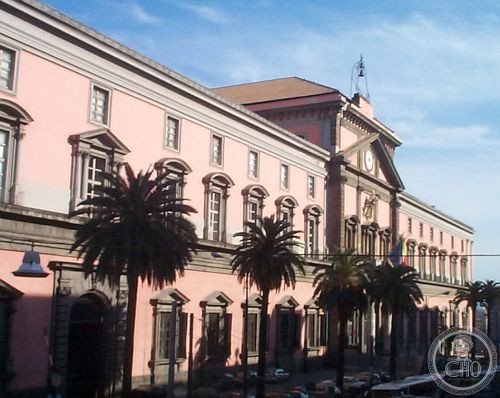
The building’s neoclassical structure, expanded and refined over the 18th century, provides purpose-built galleries for displaying sculpture, mosaics, frescoes, and domestic objects. The Grand Atrium and state rooms reflect the elegance of the era in which the museum was established.
Cultural significance
MANN’s wealth derives from continuous archaeological work across Campania and southern Italy. Its Vesuvian collection—particularly materials from Pompeii and Herculaneum—offers unparalleled insight into Roman daily life, religious practice, and artistic achievement. The Farnese Collection anchors the museum’s standing within European cultural heritage, bridging Renaissance connoisseurship with modern archaeological methodology.
Key facts
- Address: Piazza Museo Nazionale, 19, Naples, Campania
- Coordinates: 40.8535°N, 14.2511°E
- Phone: +39 081 4422149 or +39 081 4422273
- Official website: museoarcheologiconapoli.it
Practical information
The museum is closed Tuesdays (or Wednesdays when Tuesday is a public holiday), December 25th, and January 1st. The ticket office closes 30 minutes before the museum closes. For current hours and admission rates, consult the official website.
Getting there
The museum occupies Piazza Museo Nazionale in central Naples. Local transit and parking information are best obtained from current tourist guides or the official website.
Sources & resources
Find it on the map
See this place and what’s around it →Historical events at this place (7)
- 2019 Canova e l’antico - Da Canova agli Assiri
- 2018 Terza edizione del Festival Barocco Napoletano
- 2019 Nel vulcano. Cai Guo-Qiang a Napoli e Pompei
- 2019 Thalassa. Il mare, il mito, la storia, l'archeologia
- 2019 Canova: la grande mostra a Napoli
- 2021 Claude Monet the Immersive Experience a Napoli
- 2021 La mostra Gladiatori
📷 Become a Cultural Heritage Online photographer
Share your photos of places: they stay published under your name as the author. The more they're seen, the more you get noticed — and soon a contest will reward the most appreciated photos.
Log in or sign up free to add a photoIs this page about you?
This page is read by travellers and heritage enthusiasts who find it on Google. Tell us how you are connected to this place and we will take it from there.