
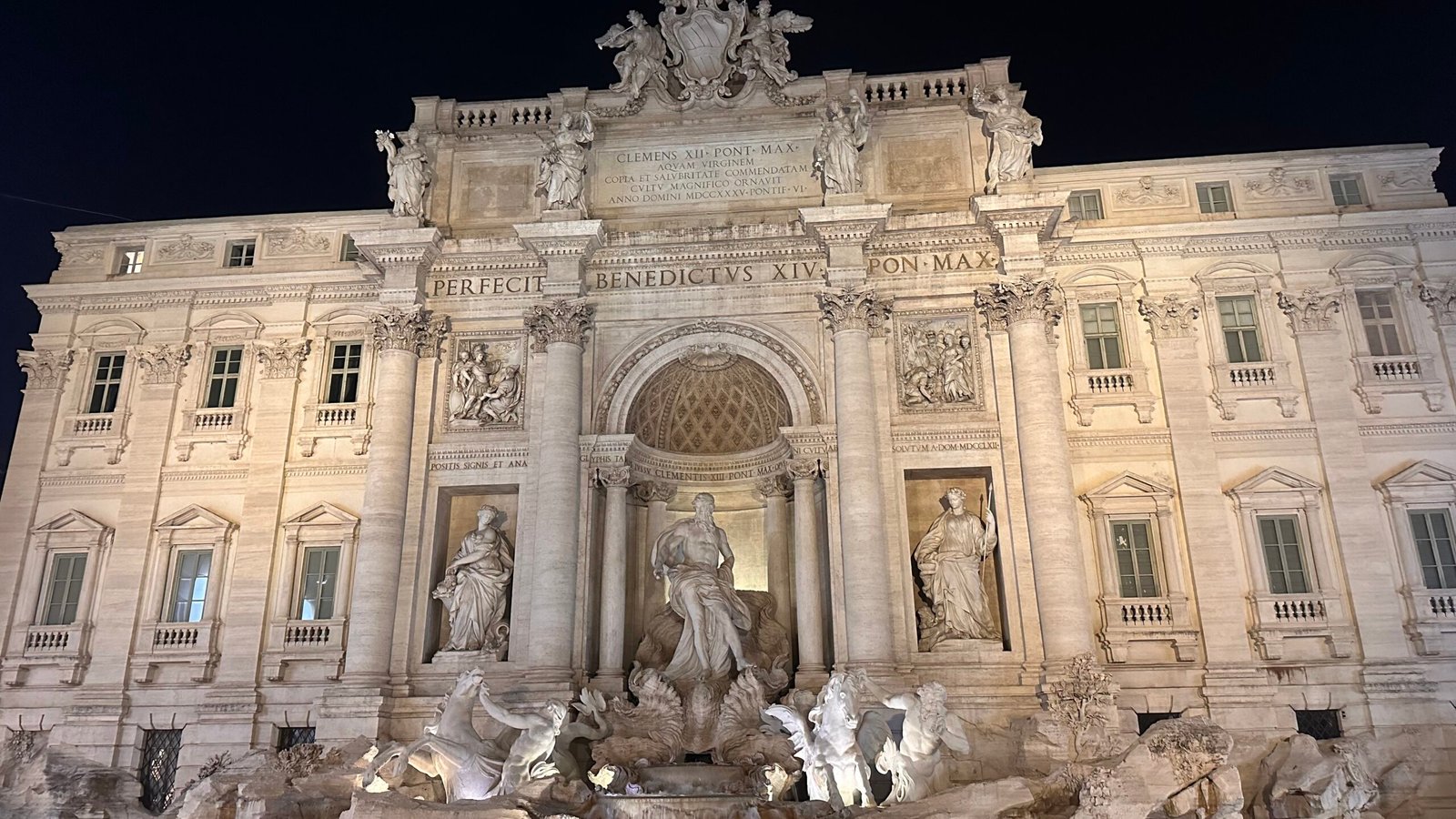
Rome’s largest fountain fills an entire square with the sound of water — Oceanus riding out from the wall of a palace as if the building had opened onto the sea.
At a glance
The Trevi Fountain closes the small Piazza di Trevi against the flank of Palazzo Poli. It is theatre in travertine and marble: a triumphal arch, a rocky reef, and a god of the sea, all fed by an aqueduct that has run for two thousand years. Nicola Salvi designed it; the crowds have never thinned.
History
Pope Clement XII held a competition for a fountain to mark the end of the Acqua Vergine aqueduct. Nicola Salvi won and began work in 1732. He did not live to see it finished: Salvi died in 1751, and Giuseppe Pannini completed the fountain in 1762.
The water itself is ancient. The Acqua Vergine follows the course of the Aqua Virgo, the aqueduct that Agrippa opened in 19 BC to supply his baths near the Pantheon. The fountain is, in effect, the monumental full stop of a Roman engineering line still in service.
What you see
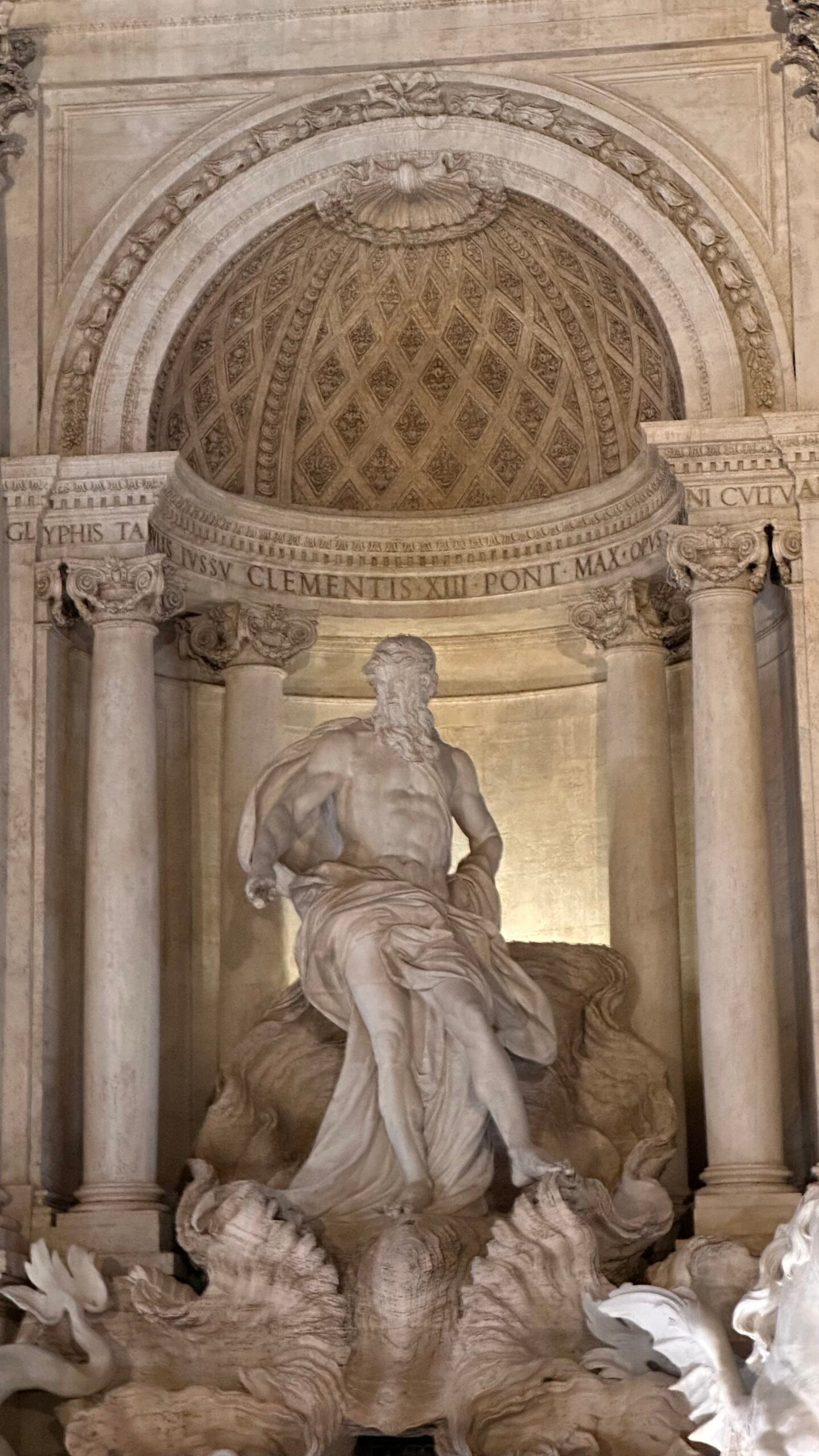
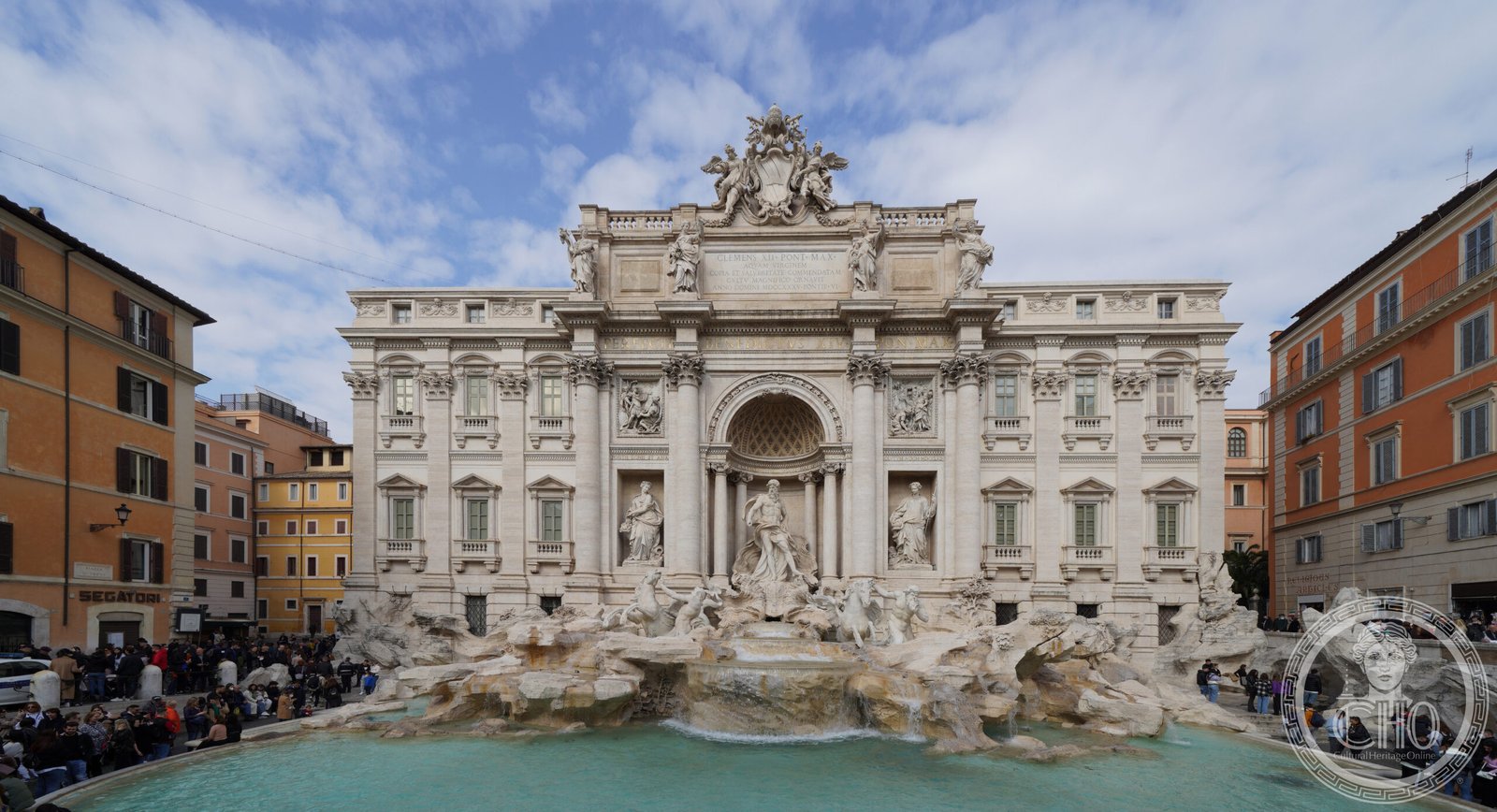
At the centre stands Oceanus, god of all water, in a shell chariot drawn by two sea-horses. One horse rears and one goes calm — the moods of the sea — each led by a triton. To the sides, statues of Abundance and Health stand in their niches, and the whole composition seems to grow out of a reef of carved travertine.
Behind it all rises the sober facade of Palazzo Poli, which Salvi turned into a backdrop. The contrast is the point: a flat palace wall above, and below it water breaking over rock as if the building were a cliff.
Cultural significance
Tradition says a coin thrown over the left shoulder into the basin will bring you back to Rome. The fountain reached a wider audience through cinema, above all Federico Fellini’s La Dolce Vita (1960), with Anita Ekberg wading through the water at night — the image that fixed the Trevi in the global imagination.
Key facts
- Location: Piazza di Trevi, Rome, Lazio, Italy
- Designed by: Nicola Salvi; completed by Giuseppe Pannini
- Built: begun 1732, completed 1762
- Style: late Roman Baroque
- Central figure: Oceanus in a shell chariot drawn by sea-horses and tritons
- Water: the Acqua Vergine, following Agrippa’s Aqua Virgo of 19 BC
Practical information
- Free; open at all hours
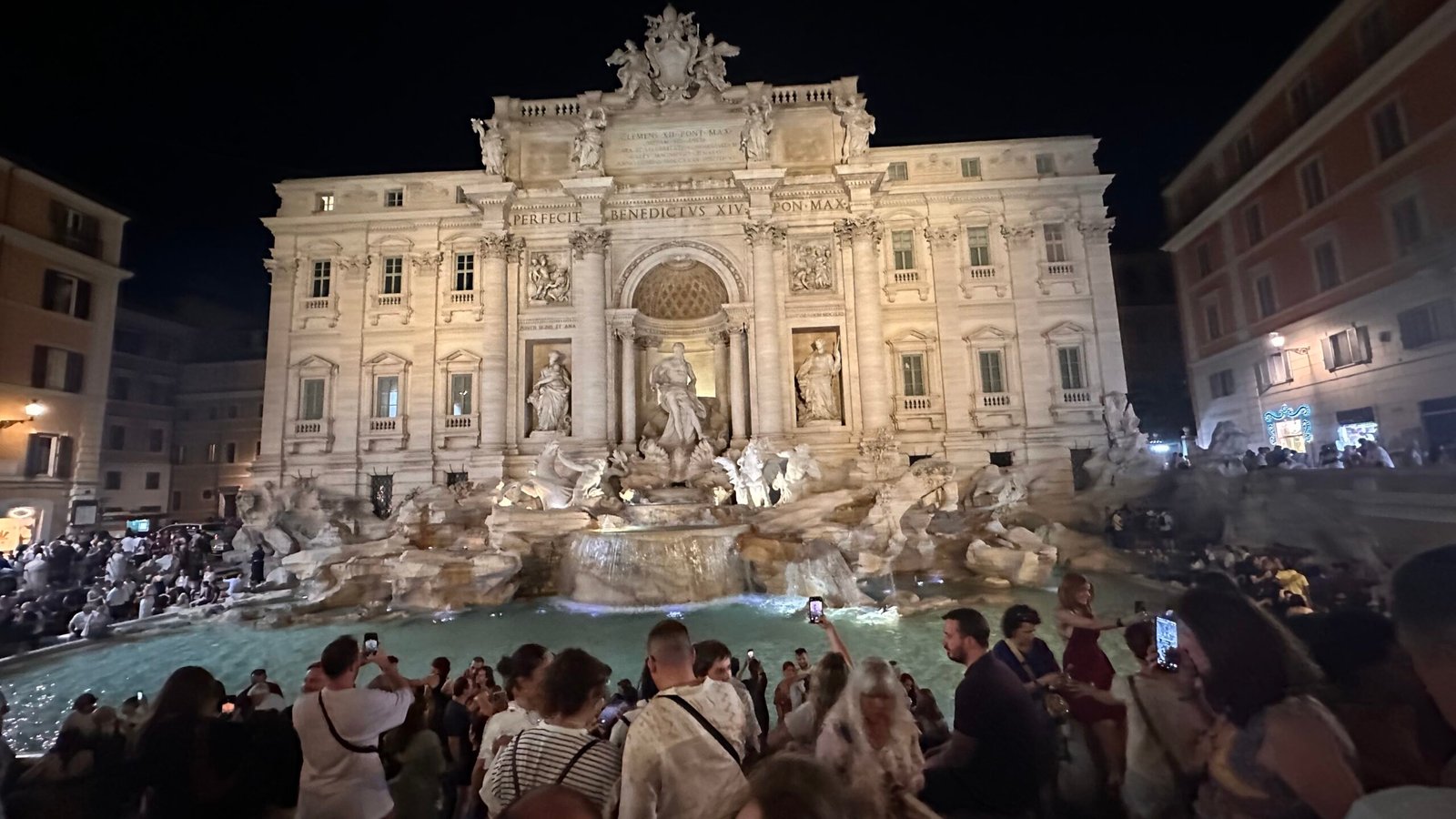
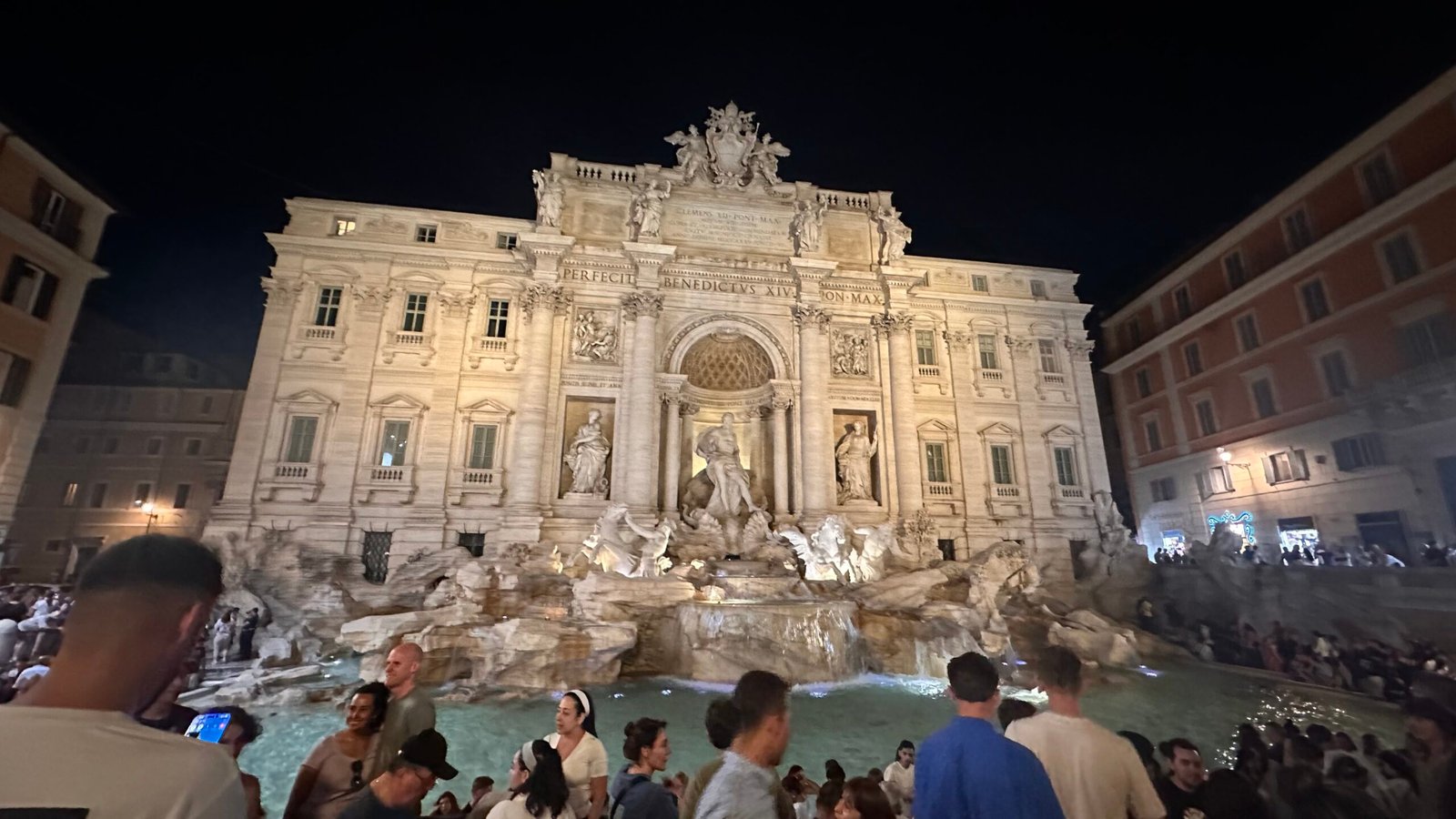
- Extremely crowded by day — early morning or late evening are far quieter, and the fountain is floodlit at night
- Bathing, climbing and coin-fishing are prohibited
Getting there
The Trevi Fountain is tucked into a knot of narrow streets between the Quirinal and the Corso. The nearest Metro station is Barberini (Line A), about a five-minute walk. It sits within an easy stroll of the Pantheon, Piazza Colonna and the Spanish Steps.
Gallery
Rome, photographed by Luigi De Marchi.
See the place
Sources
- Turismo Roma — official tourism of Roma Capitale (turismoroma.it)
- Sovrintendenza Capitolina ai Beni Culturali (sovraintendenzaroma.it)
Gallery
Find it on the map
See this place and what’s around it →Historical events at this place (2)
📷 Become a Cultural Heritage Online photographer
Share your photos of places: they stay published under your name as the author. The more they're seen, the more you get noticed — and soon a contest will reward the most appreciated photos.
Log in or sign up free to add a photoIs this page about you?
This page is read by travellers and heritage enthusiasts who find it on Google. Tell us how you are connected to this place and we will take it from there.