

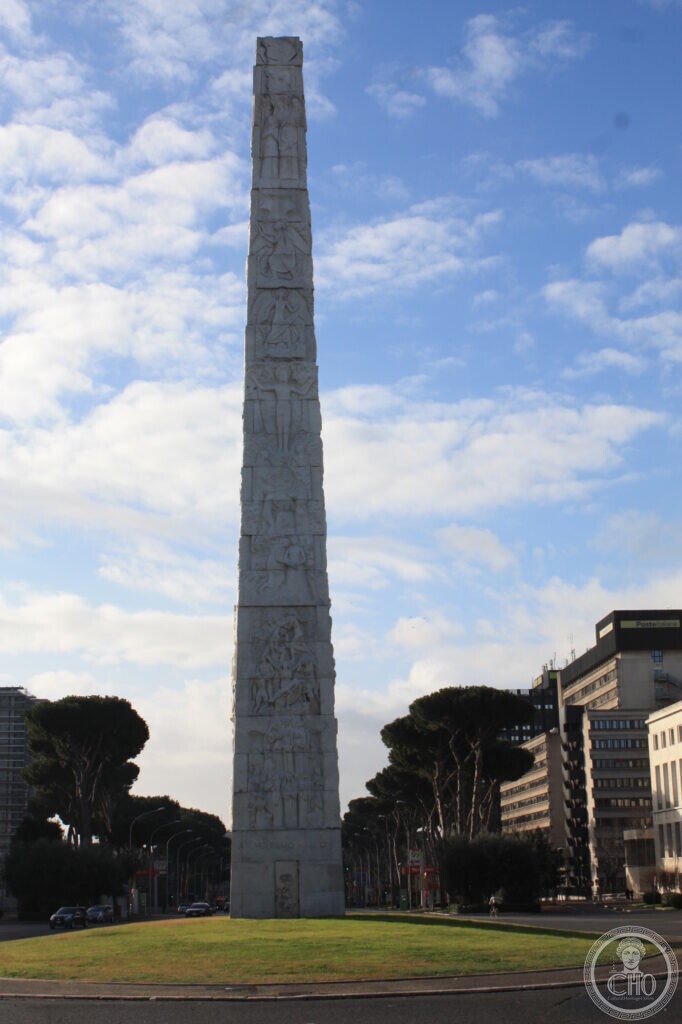
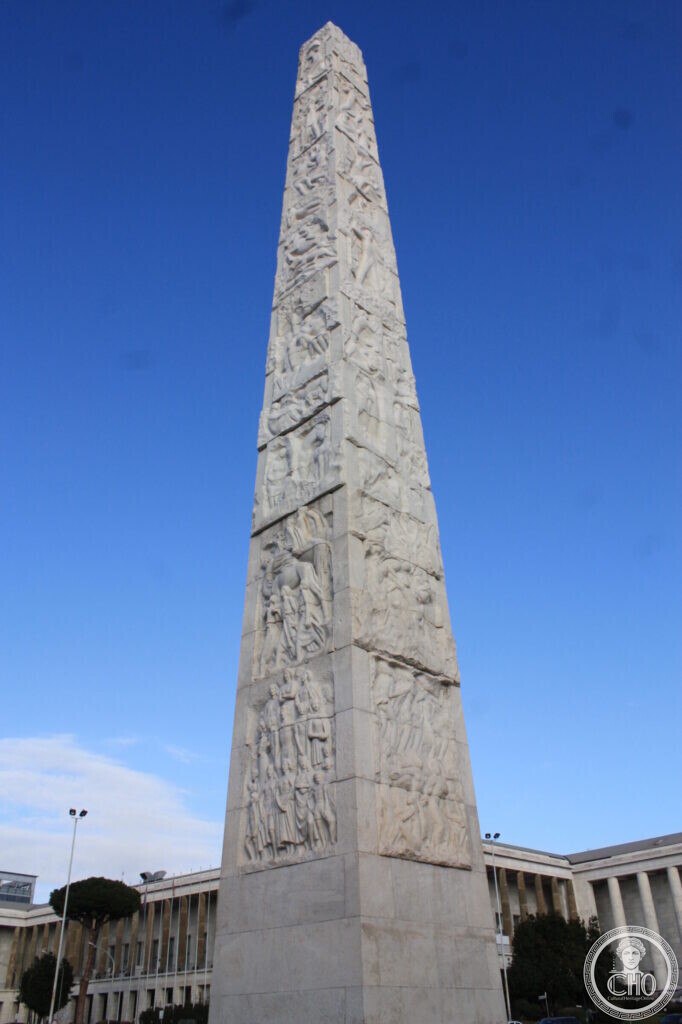
A 45-metre reinforced concrete obelisk faced with 92 Carrara marble relief panels stands at the centre of Piazza Guglielmo Marconi in Rome’s EUR district, dedicated to the Italian radio pioneer.
At a glance
Planned for the 1942 Esposizione Universale and completed for the 1960 Rome Olympics, this work by Arturo Dazzi combines classical obelisk form with modern sculptural reliefs depicting scenes of thanksgiving for Marconi’s discoveries.
Key facts
- Where: Piazza Guglielmo Marconi, EUR, Roma
- What: Monument
- When: Inaugurated 12 December 1959
- GPS: 41.8335, 12.4708 · Open in Google Maps
History
The obelisk was commissioned from sculptor Arturo Dazzi in 1937 by Benito Mussolini’s government, intended as a focal point for the 1942 World’s Fair in the planned EUR district. Work halted when war reached Rome, with only the first two registers of marble bas-relief completed. When construction resumed in 1951, the Ministry for Public Works proposed demolishing the unfinished monument. In 1953, during the Agricultural Exhibition held at EUR, Dazzi refused to cover the reinforced concrete armature with temporary plaster panels, which led to the proposal that new funding should complete the work permanently. With the approach of the 1960 Rome Olympics, the decorative marble panels were finally finished, and the obelisk was inaugurated on 12 December 1959.
What you see
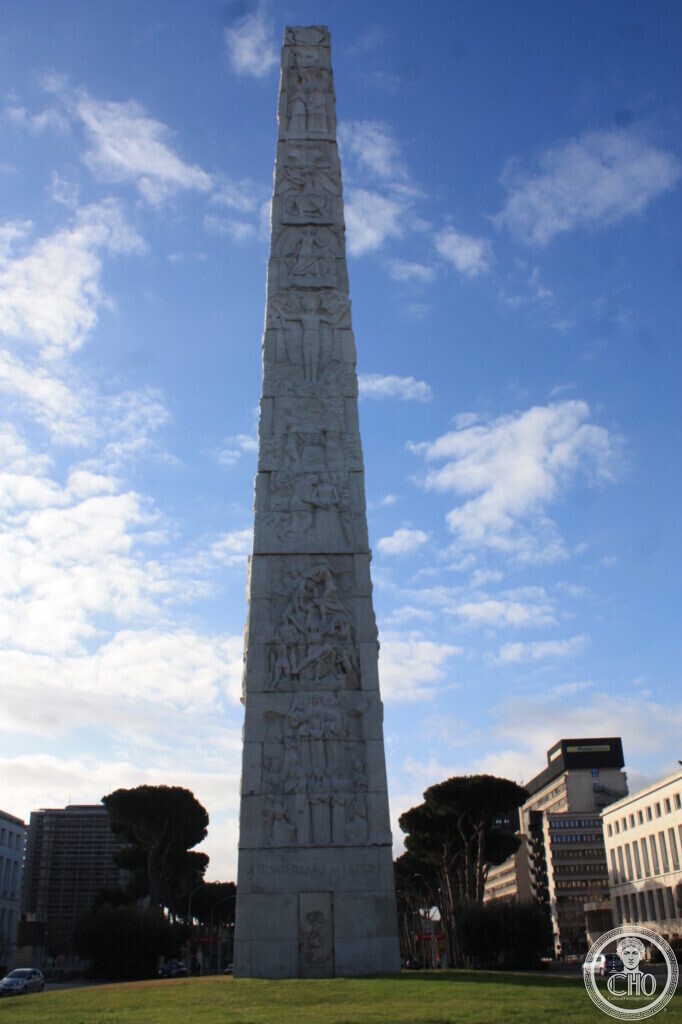
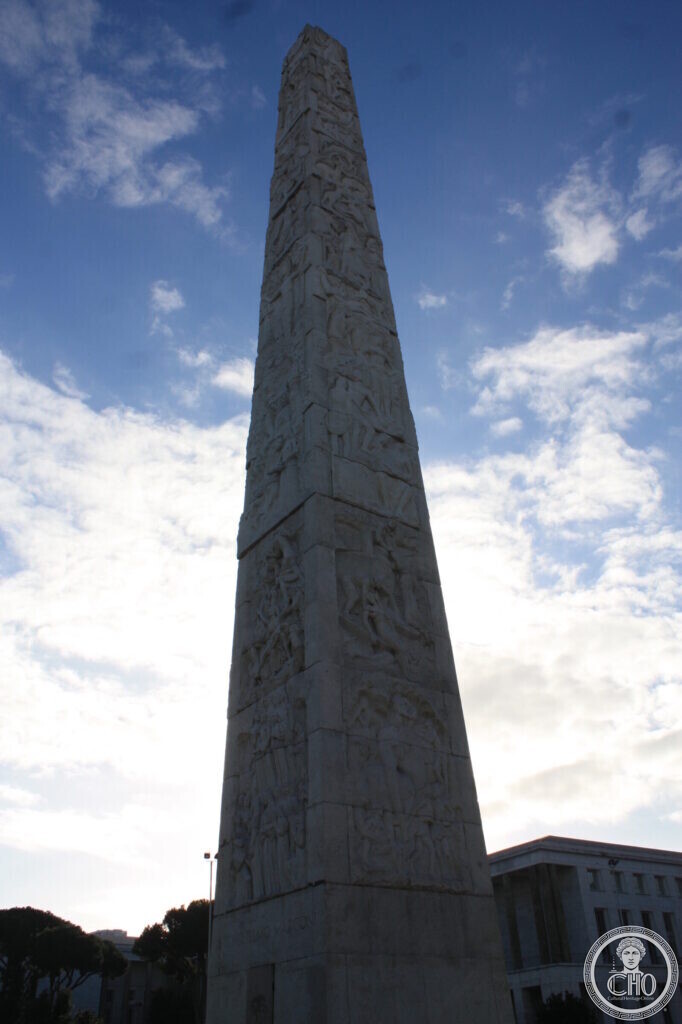
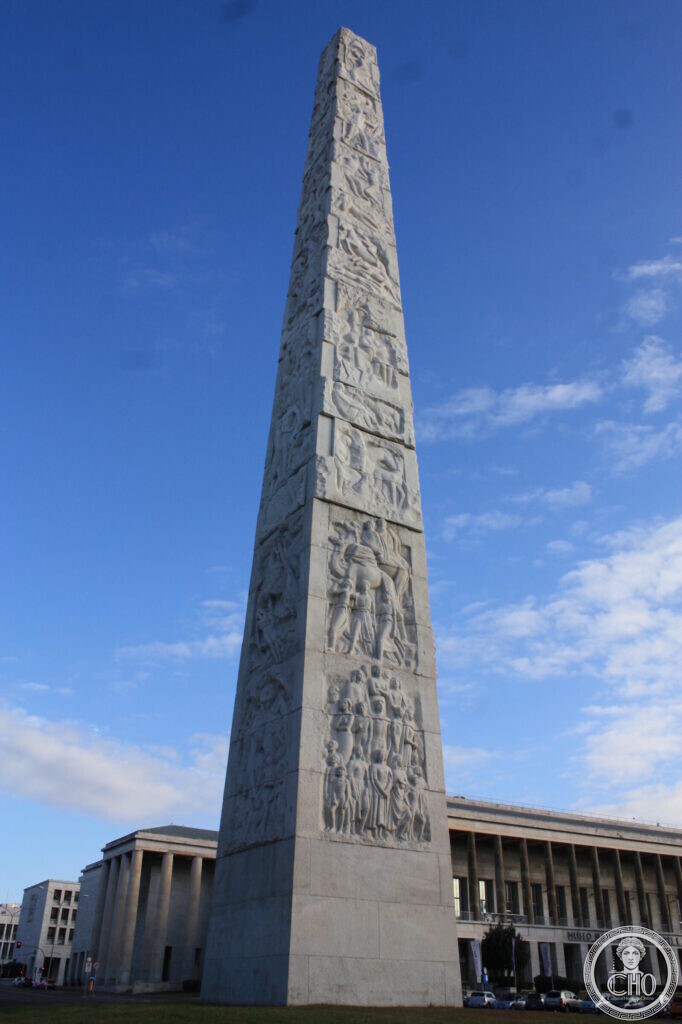
The photographs show a tall white shaft rising from a circular lawn. The lower section is covered with high-relief panels; one photograph shows the carved friezes and an inscription band reading «GUGLIELMO MARCONI» near the base. The reliefs depict dances, songs, prayers and animals in a modern take on hieroglyphics. A clear stylistic difference is visible between the smoother, more defined panels prepared in the 1940s and the later ones, where primitive faces, exotic figures and contorted poses emerge from the roughly finished marble surface. Behind the obelisk in two photographs stands a large colonnaded building with the words «MUSEO NAZIONALE DELLE ARTI…» on its entablature.
Do you know more about this place?
If you know a date, a name, a document, a plaque or a photograph that tells its story, write to Sofia at [email protected] or through the contact page. What arrives with a source goes into this page, with your name as the contributor.
Nearby
- Palazzo dei Congressi — EUR by Adalberto Libera — monumental congress hall in the EUR district
- Museo Nazionale dell’Alto Medioevo, Rome — national museum in the EUR district
Gallery
Sources
- EUR SpA, Obelisco Guglielmo Marconi – Arturo Dazzi | EUR Roma: commission, chronology, inauguration date, number of panels, materials, stylistic description
- Turismo Roma, Stele to Guglielmo Marconi (EUR obelisk) | Turismo Roma: address, location, construction history, inauguration date
- Pro Loco di Roma, Obelisco Marconi – Pro Loco di Roma: height, materials, construction dates, number of panels
- FUNES.WORLD, Marconi Obelisk: commission by Mussolini, 1937 commission date, Carrara marble, stylistic differences, inauguration date
- Sotterranei di Roma, Obelisco di Marconi: height, materials, construction dates, number of panels
- Renato Prosciutto, Marconi Obelisk Rome. monument to Italian inventor.: Carrara marble panels, construction history
- OpenStreetMap, Obelysk Marconi: address and coordinates for the location
- Stefano Vigolo, photographs and notes to the editorial staff (2026): identification of the subject. Not a published source
Find it on the map
See this place and what’s around it →📷 Become a Cultural Heritage Online photographer
Share your photos of places: they stay published under your name as the author. The more they're seen, the more you get noticed — and soon a contest will reward the most appreciated photos.
Log in or sign up free to add a photoIs this page about you?
This page is read by travellers and heritage enthusiasts who find it on Google. Tell us how you are connected to this place and we will take it from there.