We have been telling organisers that most readers arrive from the page of the building. We had never measured it. Here is the measurement, including the part that makes the claim smaller than it sounded.
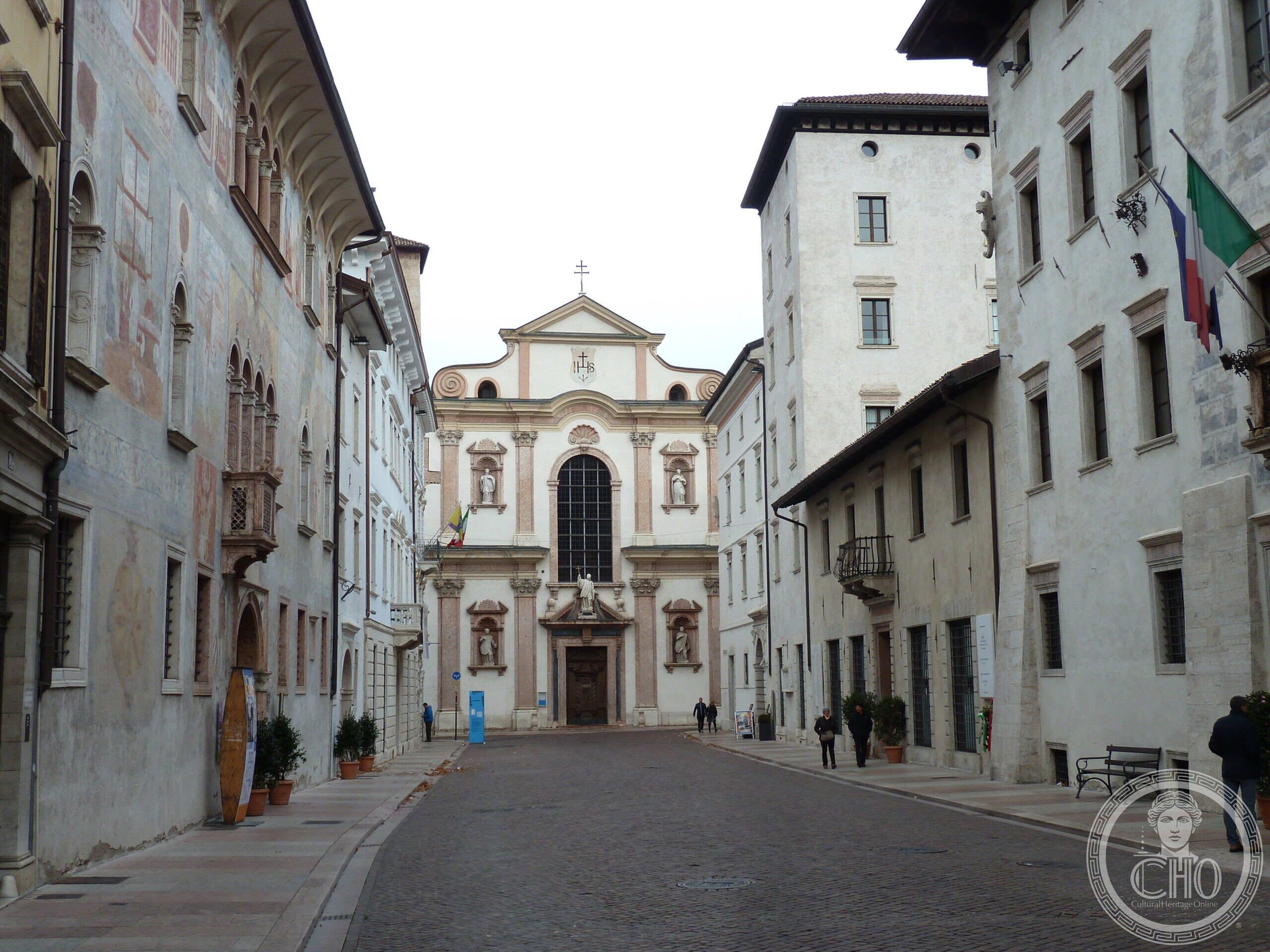
An event has a date, and the date is the problem. Before it, almost nobody is looking. After it, nobody is looking at all. In between there is a window of a few weeks in which the only people searching are the ones who already know the event exists.
A building does not work that way. It is searched in February and in August, this year and next, by people who have never heard of you.
That is the argument for attaching a festival, a concert or an exhibition to the venue that hosts it, and until this week it was only an argument. We have now measured it on our own archive, and it is worth reading to the end: one part of the claim turns out smaller than the way we had been putting it, and another part turns out sharper.
What we had been saying
In our own guide to publishing an event, written last week, a line tells organisers to open the page of the place, "which is where most of the readers come from". That sentence was true in spirit and unmeasured in fact. Our editorial rules say a standing claim has to be measured before it is repeated, so here is the number underneath it. It arrives with the day we read it, which is the rule we now apply to every audience figure we publish: a number without a date quietly becomes a different number.
Ninety days, two kinds of page
Google Search Console, this property, window 22 July to 19 October 2026, read on 28 October 2026:
- Pages of places: 1,482,421 impressions, 13,699 clicks, average position 14.7.
- Pages of events: average position 8.7, and a small fraction of the attention.
Then the correction we owe you. At the close of that window the archive held 16,882 places and 5,630 events, counted on 28 October 2026, so there are three times as many place pages in the first line. Divide, and the fair comparison is this: page for page, a place was seen about twenty-one times more often than an event. Not the sixty-two times the raw totals suggest. The claim survives the correction comfortably, and it is a better claim for having one.
What three months did to each of them
The sharper part is what three months did, which is why every number here carries a date. Against the previous ninety days, 23 April to 21 July 2026:
- Clicks to our pages of places grew 403 per cent, impressions 95 per cent. The archive itself grew 43 per cent, so this is not simply a matter of more pages: per page, a place was seen 36 per cent more often than three months earlier.
- Event pages went the other way. We published 56 per cent more of them and their impressions rose 11 per cent, which means that per page an event was seen roughly 29 per cent less.
Read across those two lines. The same work, on the same site, in the same season, multiplied the audience of the buildings and did not move the audience of the dates.
The detail that settles it
One more figure rules out the comfortable explanation. Between the two windows the average position of our event pages improved from 20.9 to 8.7 — twelve places up the results, and better than our place pages sit today. Their visibility per page fell anyway.
So this is not event pages being badly built, badly titled, or buried. They are doing well in the results. There is almost no search to be well placed in.
The queries say why. Of the five most-clicked searches that reached our event pages in those ninety days, three carry a year: taormina arte festival 2026, taormina arte 2026, static cinema 2026. Demand for an event is demand for one edition of it, from people who already know the name. Demand for a building has no year in it.
What this changes when you publish
One field on our form does most of this work, and it is the one organisers skip: the place.
Name the building, not the town. "Palazzo Something, Trento" is a page that can be found. "Trento" is a page about a city with hundreds of things in it.
If the building is not in the archive, let the form open a page for it. It takes the same two minutes and it leaves behind something that outlives your dates. Next year’s edition arrives at a page that has been accumulating readers in the meantime.
Accept that your first visitors came for the building. They were reading about a facade and found that something is happening inside it. A reader who already cares about the building is a warmer introduction than any "what’s on" category page can give you, and that is the whole mechanism of a venue listing.
What it does not prove
Three honest limits. The window is ninety days on one site, and Search Console reports a sample rather than a census. Our record on this property begins in June 2026, so there is no year-earlier window to compare. And none of this says anything about bookings: we have not measured a single paid booking through our own till, so we cannot tell you that a reader arriving from a venue page buys a ticket more often than anyone else. We do not know. When we do, it will be published here with the same numbers, the same caveats and the date we read them.
What we can say is narrower and still useful. If your event lives on a page of its own, it waits for its own name. Attached to a building, it meets people who were already on their way there.
Frequently asked questions
Can I publish an event without naming a place?
You can, and we would rather you did than not publish at all. But the event then sits where nobody is looking.
My venue is a private house, not a monument. Does it count?
If it has a documented history, yes. The archive covers buildings, squares, gardens, bridges and villages, not only museums.
The building already has a page. Do I need to do anything?
Only name it in the form. The event attaches itself.
What happens to the listing once the closing date has passed?
The event page stays online as a record of what happened there, and search engines keep it. The venue page carries on gathering readers as before, which is the entire point of attaching one to the other.
Is any of this behind a payment?
No. Publishing an event and naming its place are free, with no ceiling and no card.
Publish your first event, free: culturalheritageonline.com/organiser/
Sources
- Google Search Console, property https://culturalheritageonline.com/ — search analytics for pages containing /places/ and /events/, windows 22 July – 19 October 2026 and 23 April – 21 July 2026, both read 28 October 2026
- Cultural Heritage Online, published pages counted 28 October 2026: 16,882 places and 5,630 events online at 19 October 2026, against 11,792 places and 3,600 events at 21 July 2026
- Cultural Heritage Online, "Publishing an event on Cultural Heritage Online, step by step", 27 October 2026 — the claim measured here: https://culturalheritageonline.com/magazine/publishing-an-event-on-cultural-heritage-online-step-by-step/
- Cultural Heritage Online, Church of San Francesco Saverio, Trento — our page citing Visit Trento on sacred music concerts: https://culturalheritageonline.com/places/church-of-san-francesco-saverio-trento/ (read 28 October 2026)
- Cultural Heritage Online, editorial guidelines, https://culturalheritageonline.com/editorial-guidelines/ — read 28 October 2026
Spotted an error? Write to [email protected] and we correct it the same day.