The story of a government body created to take scattered state-owned monuments into public care, and what that responsibility looks like today.
The Centre des monuments nationaux is a French government body. It is responsible for conserving, restoring and managing historic buildings and sites that belong to the French state. Its work is overseen by the French Ministry of Culture. From its headquarters at the Hôtel de Sully, 62 rue Saint-Antoine in Paris, it coordinates a network of over 100 national monuments. It is not a single collection or museum. It is a public instrument, built over time, for holding on to places that would otherwise slip out of reach.
A long public assumption of care
Many of the monuments now under the Centre des monuments nationaux were not always state property. They came into public hands in different ways: through confiscation, purchase, abandonment or state acquisition. Over the years, the French state became the owner of churches, castles, towers and walled cities that had lost their original economic or political purpose. They were no longer private homes, nor active fortresses, nor functioning abbeys. They had become something else: objects of collective memory.
The practical difficulty was that these places were scattered across the country. Each had its own materials, climate and rate of decay. A single administrative body was needed to keep them from being treated as isolated ruins. The Centre des monuments nationaux grew out of that need. It was not founded to build new monuments. It was created to hold on to what already existed.
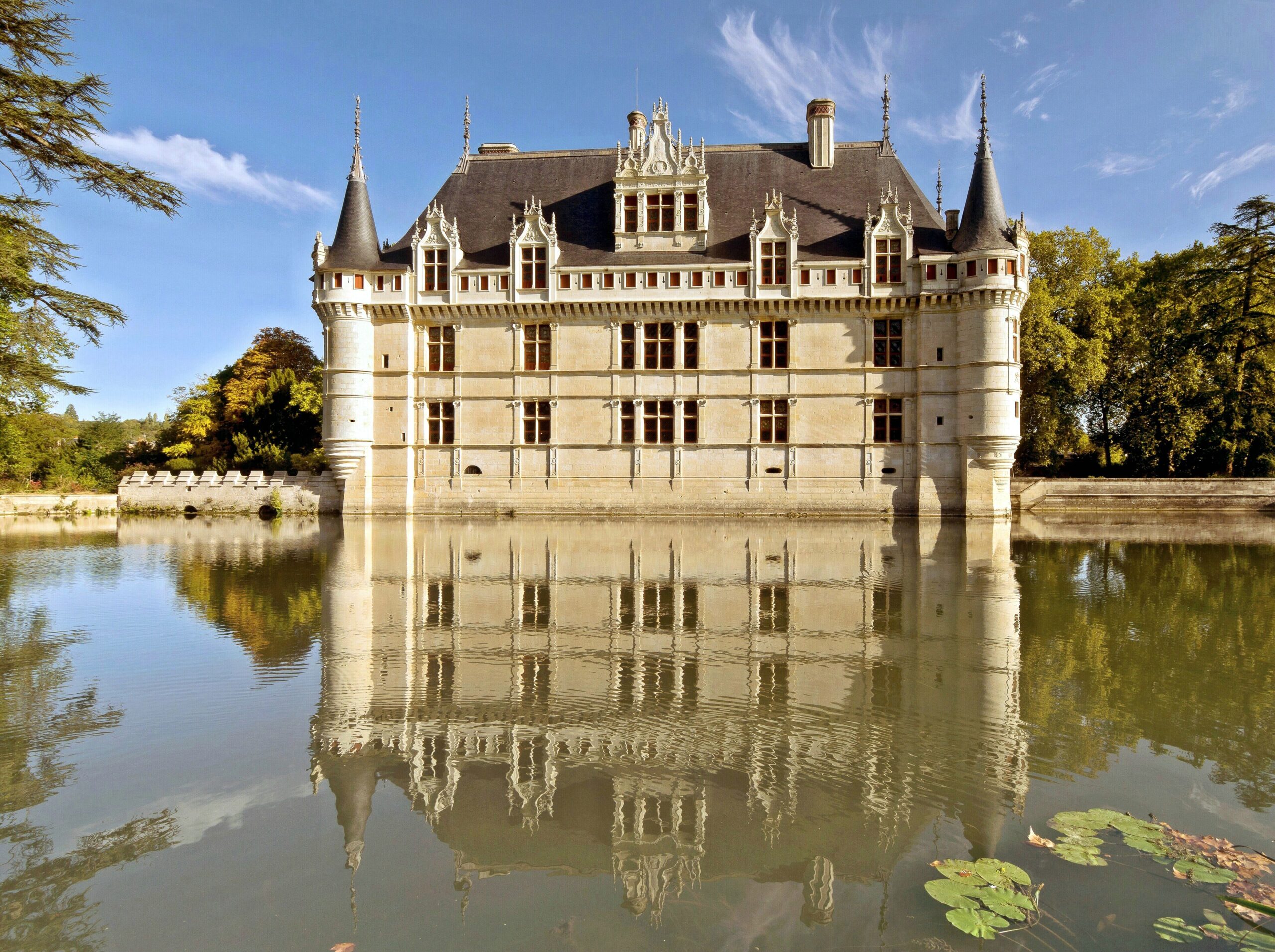
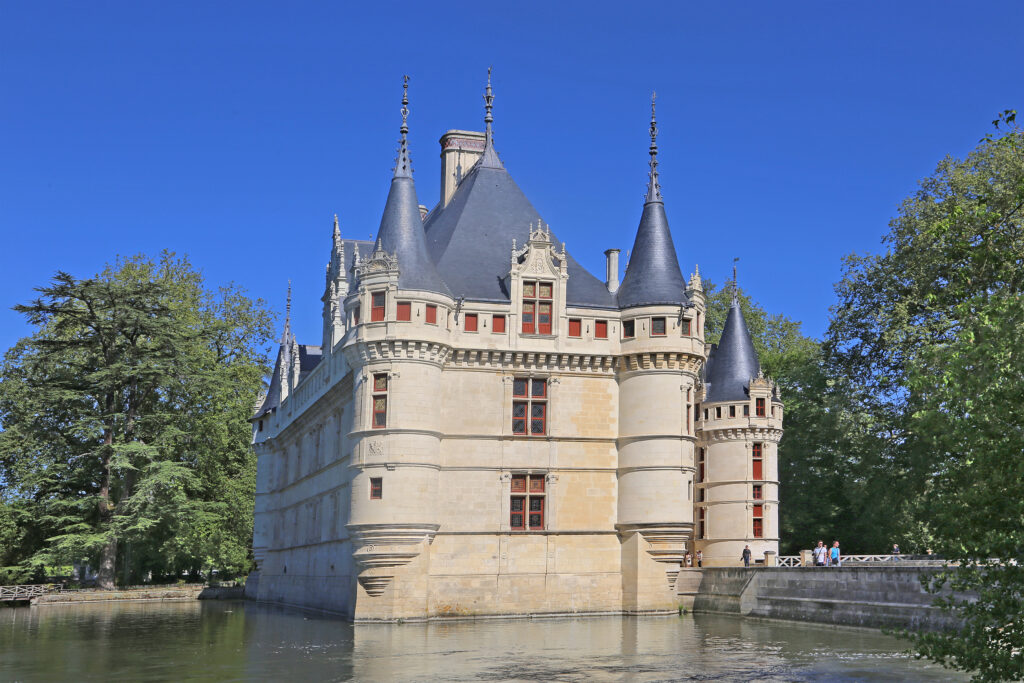
Among the sites that became part of its responsibility are the Château d’Azay-le-Rideau, the Cité de Carcassonne, the Mont-Saint-Michel Abbey, the Arc de Triomphe and the Sainte-Chapelle in Paris, and the Château d’Angers. Each of these places has a distinct history. The Centre des monuments nationaux did not write those histories. It inherited them.
The question of conservation
The mission of the Centre des monuments nationaux is to prevent degradation and extend the lifespan of the monuments and collections under its responsibility. This is not a passive role. Restoration is a major part of the work. It involves difficult choices about materials, techniques and timing. A restoration can stabilise a structure without erasing the marks of age. It can also reveal things about the building that were not visible before.
One significant project was carried out at the Château d’Azay-le-Rideau. The restoration cost 20 million euros and lasted three years, reaching completion around 2017. Work of this scale shows the long horizon of the organisation’s activity. A single intervention can take years. The result is not a new building, but a continuation of the old one.
The organisation also manages a publishing house called Éditions du Patrimoine. Through publication, it extends its work beyond the physical sites. It produces knowledge about the monuments. It turns conservation into a public record.
The routine of today
Today the Centre des monuments nationaux manages over 100 national monuments across France. It performs the daily work of maintenance, security, research and public access. The network includes fortifications, religious buildings, urban landmarks and domestic interiors. Some sites are large and heavily visited. Others are quieter. All require the same basic attention: roofs, stone, drainage, documentation and careful observation.
The Centre des monuments nationaux is not a private trust or a charity. It is a government body. Its role is to ensure that state property remains legible to future generations. That means resisting the drift of time, but also resisting the idea that a monument is only valuable when it is useful. The organisation exists because the French state decided that certain places are worth keeping, even when they no longer serve their original function.
Sources
- Wikipedia, ‘Centre des monuments nationaux’, https://en.wikipedia.org/wiki/Centre_des_monuments_nationaux
- Ministère de la Culture, ‘Centre des monuments nationaux (CMN)’, https://www.culture.gouv.fr/rechercher-une-publication-du-ministere-de-la-culture/repertoire-des-informations-publiques/Etablissements-de-gestion/centre-des-monuments-nationaux-cmn
- Il Giornale dell’Arte, ‘Il castello che affascinò Balzac e Mérimée’, https://www.ilgiornaledellarte.com/Articolo/Il-castello-che-affascin%C3%B2-Balzac-e-M%C3%A9rim%C3%A9e-
Spotted an error? Write to editorial@culturalheritageonline.com and we correct it the same day.