
Originating in the late 1920s in the eastern industrial sector of Zagreb, the manufacturing district of Borongaj and Donje Svetice represents a cornerstone of modern Croatian pharmaceutical science, dietary chemistry, and regional nutritional innovation.
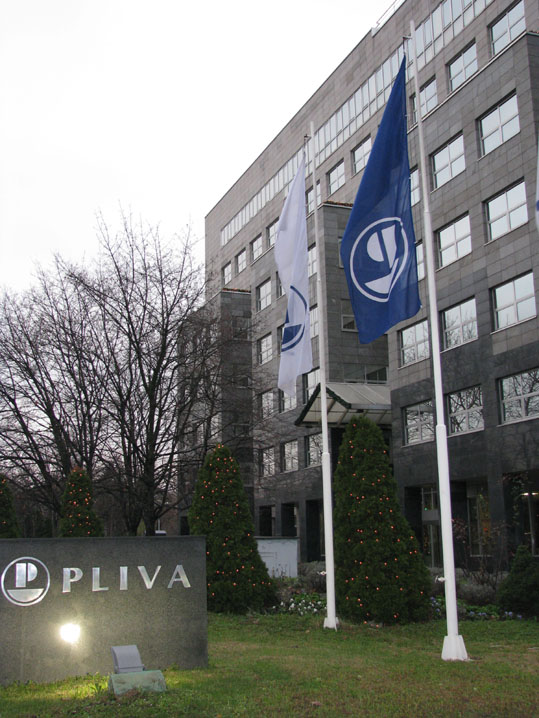
At a glance
Situated within the Peščenica-Žitnjak district along Planinska ulica in eastern Zagreb, the Borongaj industrial corridor was master-planned during the interwar Kingdom of Yugoslavia to accommodate chemical laboratories, vitamin synthesisation, and medical manufacturing. Born from the foundational research institutes that later coalesced into Pliva and specialized dietary offshoots, this complex served as the crucible where biochemical engineer Martin Stanković formulated Cedevita in 1969, an instant multivitamin beverage that became a household cultural staple across Central and Southeastern Europe.
Key facts
- Location: Planinska ulica 15, 10000 Zagreb (Gradska četvrt Peščenica – Žitnjak), Croatia
- Industrial foundation: 1929 (consolidation of Zagreb municipal dietary and chemical laboratories)
- Key innovation: 1969 development of powdered multivitamin granulates enriched with nine vital vitamins
- Urban development: Part of Zagreb’s planned interwar eastern industrial expansion along railway logistics arteries
- Current status: Functioning food and beverage processing, packaging facility, and corporate offices (Atlantic Grupa)
- Coordinates: 45.80816, 16.01002 · open in Google Maps
History and nutritional science heritage
During the late 1920s, the University of Zagreb’s school of chemical engineering and progressive public health advocates established local facilities to synthesise therapeutic compounds, infant formulas, and yeast derivatives to combat widespread interwar dietary deficiencies. The railway-connected flats of Borongaj offered ideal open acreage away from the residential Upper Town.
Throughout the mid-twentieth century, the facility grew into a major pharmaceutical powerhouse. In the late 1960s, laboratory researchers engineered an innovative dry-granulation method to stabilise sensitive ascorbic acid and B-complex vitamins against moisture degradation. Packaged initially in glass apothecary jars for pharmacy distribution, the resulting drink quickly achieved mass popularity across Yugoslav consumer markets.
Industrial architecture and urban context
The Borongaj and Donje Svetice industrial zone features mid-twentieth-century functionalist factory buildings, brick-clad utility blocks, and concrete warehousing structures. Standardized modular manufacturing bays with reinforced concrete lintels border Planinska ulica, integrated directly with railway spurs that historically carried raw sugars and packaging materials.
The neighborhood forms a transition belt between the residential neighborhoods of Maksimir to the north and the larger Žitnjak industrial logistics parks to the south.
What you see today
Today, visitors navigating Planinska ulica observe an active, bustling industrial zone characterized by commercial transport vehicles, corporate logistics depots, and administrative offices. The aroma of citrus essence and vitamin powders frequently drifts across the perimeter during production shifts.
While production floors and automated packaging lines are strictly closed to casual public visitors for sanitary and food-safety regulations, the external industrial complex remains a well-known civic reference point in eastern Zagreb.
Practical information and visits
- Visiting conditions: Planinska ulica 15 is an operational manufacturing facility and corporate campus; interior tourist visits are not permitted.
- Public environment: The street, surrounding pedestrian sidewalks, and nearby industrial architecture can be viewed freely from public thoroughfares.
- Cultural context: The Zagreb City Museum (Muzej grada Zagreba) in the Upper Town hosts permanent exhibitions exploring the history of Zagreb’s interwar industries and mid-century consumer design.
Getting there
The site is conveniently accessed from central Zagreb via the Zagreb Tram network (ZET). Tram routes 2, 3, and 13 run along Ulica grada Vukovara to the “Donje Svetice” stop, located a five-minute walk west of Planinska ulica. The Borongaj regional train station is also situated within easy walking distance.
Related enterprise history
This place card documents the physical manufacturing complex, urban geography, and architectural context of Planinska ulica in Zagreb. For the corporate biography, nutritional chemical patents, and consumer history of the brand, read our companion magazine feature on Cedevita and interwar Zagreb nutritional science (1929).
Sources
- Državni arhiv u Zagrebu (DAZG): Municipal industrial records, cadastral registry, and factory development permits for the Peščenica district (1925–1940).
- Ministarstvo kulture i medija Republike Hrvatske: Spatial database of 20th-century industrial architecture and urban ensembles in Zagreb.
- OpenStreetMap: Cadastral boundary, street alignment, and coordinates of Planinska ulica / Donje Svetice (Way 129728145), Zagreb, Croatia.
Find it on the map
See this place and what’s around it →📷 Become a Cultural Heritage Online photographer
Share your photos of places: they stay published under your name as the author. The more they're seen, the more you get noticed — and soon a contest will reward the most appreciated photos.
Log in or sign up free to add a photo