
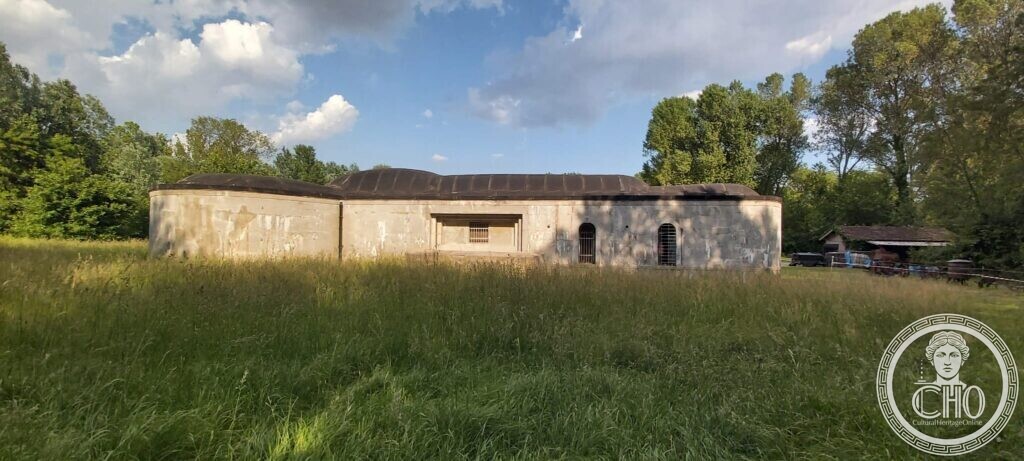
Built to stop an army on the road to Treviso, this fort never fired in anger: its guns were taken away in the summer of 1915. Today its vaults hold exhibitions instead of shells.
At a glance
Forte Carlo Mezzacapo, also called the forte alla Gatta after the locality, stands at Zelarino on the Venetian mainland, in Via Scaramuzza. It was built in concrete between 1909 and 1912 to strengthen the campo trincerato of Mestre, the ring of forts that defended Venice from the land side. Its task was to control the road to Treviso and the railway to Udine.
Key facts
- Built: 1909–1912, in concrete
- Designer: the military engineer Enrico Rocchi, according to the Italian Wikipedia
- Role: part of the Campo trincerato di Mestre, covering the road to Treviso and the railway to Udine
- Armament: six gun positions and four disappearing machine guns
- Disarmed: July 1915; afterwards a powder magazine and munitions depot
- Today: a cultural centre; events by the association Dalla guerra alla pace since 2004
- Address: Via Scaramuzza 82, Zelarino (Venice)
- GPS: 45.53187, 12.22028 · Open in Google Maps
History
The fort is named after General Carlo Mezzacapo. It belongs to the second generation of forts around Mestre, built in reinforced concrete when the older brick works of the entrenched camp no longer answered to new artillery. Its guns sat under steel cupolas.
The fort had hardly been finished when the First World War showed that works of this kind were of no use, and in July 1915 it was disarmed. It was turned into a powder magazine and a depot for munitions and materials. Since 2004 the association Dalla guerra alla pace has held cultural and historical events there, and the fort is today a cultural centre.
What you see
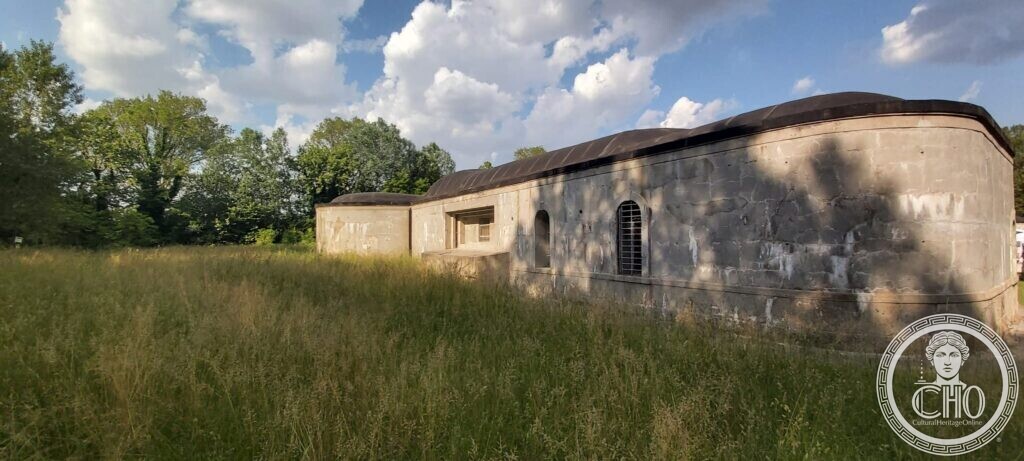
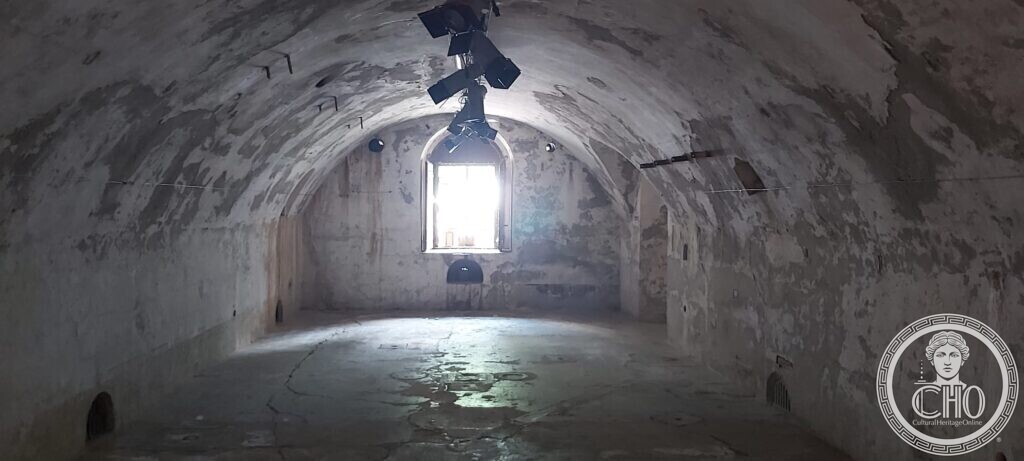
A long, low block of grey concrete, half sunk into the ground behind a meadow of tall grass, with a curved front, a dark flat roof and a few arched, barred openings. Inside, the rooms are long barrel vaults of plastered concrete, lit from a single window at the end.
Gallery
Sources
- storiAmestre — Forte Mezzacapo: built in concrete in 1909–1912 to strengthen the Mestre entrenched camp, the steel cupolas, disarmed in 1915 and turned into a munitions depot, the association active since 2004
- Forte Carlo Mezzacapo, Italian Wikipedia: designer Enrico Rocchi, control of the road to Treviso and the railway to Udine, six guns and four disappearing machine guns, disarmed in July 1915
- Forte Mezzacapo — the association’s website: address, and the book Il Forte Mezzacapo di Zelarino by Claudio Zanlorenzi and Rodolfo Marcolin
Visiting
The fort is open for events and guided visits organised by the association: check its website for dates.
Find it on the map
See this place and what’s around it →📷 Become a Cultural Heritage Online photographer
Share your photos of places: they stay published under your name as the author. The more they're seen, the more you get noticed — and soon a contest will reward the most appreciated photos.
Log in or sign up free to add a photoIs this page about you?
This page is read by travellers and heritage enthusiasts who find it on Google. Tell us how you are connected to this place and we will take it from there.