Incorporated in Milan in 1926 by lawyer Felice Bianchi Anderloni, Carrozzeria Touring discarded heavy wooden coachwork to pioneer the Superleggera patent—a bird-cage of thin steel tubes that clothed the greatest Alfa Romeos and Aston Martins of the 20th century.
Milan in 1926 was the feverish motor capital of Southern Europe. In the north-western industrial zone of Portello, the testing tracks of Alfa Romeo echoed with the straight-eight engines of Nicola Romeo and Vittorio Jano. At the Monza racetrack just fifteen kilometres north, Grand Prix racers were breaking speed records. Yet the styling and construction of passenger car bodies remained chained to horse-carriage methods: heavy ash-wood skeleton frames, covered in bolted sheet steel or glued pegamoid fabric, which creaked, warped, and weighed down high-performance chassis.
On 25 March 1926, lawyer Felice Bianchi Anderloni (1882–1948) and businessman Gaetano Ponzoni (1888–1977) acquired the majority share of Carrozzeria Falco on Via Ludovico da Breme in Milan, renaming it Carrozzeria Touring. Anderloni had served as test driver for Isotta Fraschini and possessed a rare structural vision: he understood that an automobile body should not fight the air as a carriage did, but should slice through it like an aeroplane fuselage.
The invention of Superleggera
In 1936, after years of aerodynamic experimentation in aviation wind tunnels, Anderloni patented the construction system that secured Touring’s immortality: Superleggera (“Superlight”). Instead of heavy timber framing, Touring constructed an intricate, freestanding lattice cage of thin, high-tensile hollow alloy steel tubes, following the exact contours of the coachwork. Over this rigid spatial birdcage, master panel beaters hand-hammered paper-thin sheets of duralumin (*avional*), securing them with folded hems.
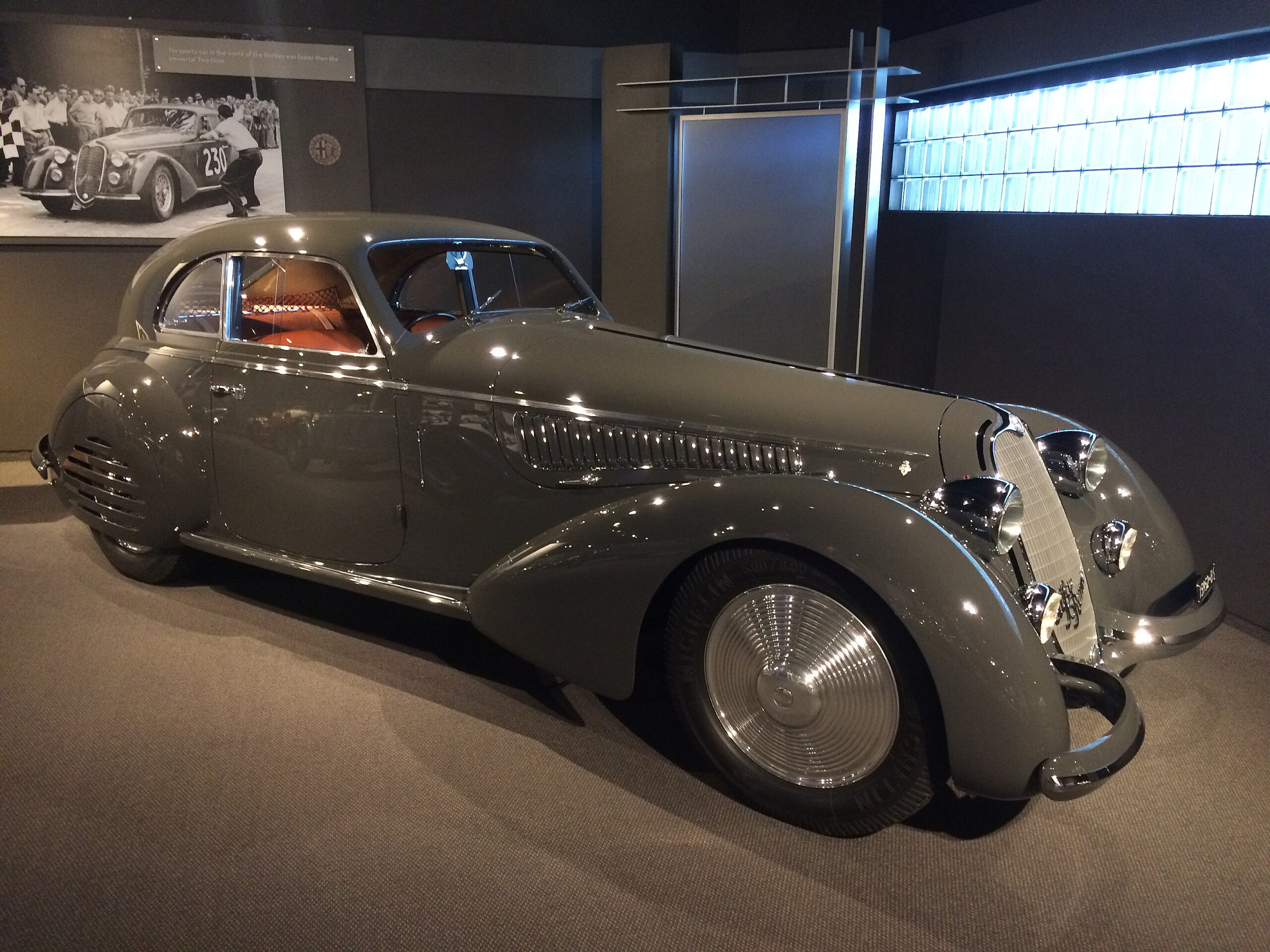
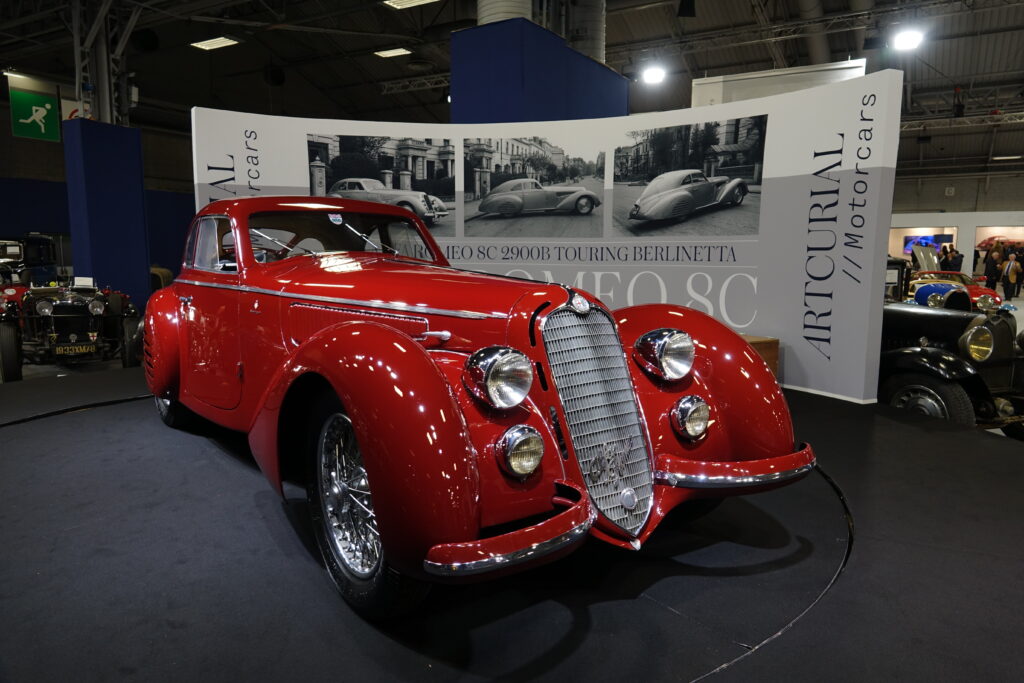
The result was miraculous: a complete four-seater coupe body weighed less than half of a conventional coachbuilt body, while offering vastly superior torsional stiffness and structural safety. On the mechanical masterpieces of Alfa Romeo—most famously the 8C 2900B Berlinetta—Touring created rolling sculptures whose teardrop fenders, flush door handles, and raked radiator grilles captured the Mille Miglia, Le Mans, and the Concorso d’Eleganza at Villa d’Este.
The international golden age and the industrial twilight
Following the Second World War, Carlo Felice Bianchi Anderloni took the artistic helm, designing foundational post-war icons: the Ferrari 166 MM Barchetta (which christened the term *barchetta* in automotive vocabulary), the Aston Martin DB4 and DB5 (famously driven by James Bond), and the Maserati 3500 GT.
Yet Touring’s brilliance was inextricably tied to artisanal hand-craftsmanship. When automobile manufacturers shifted toward automated monocoque unibody stamping in the mid-1960s, Touring struggled to scale. In December 1966, after forty incandescent years, the factory doors on Via da Breme closed forever.
What remains today
Because Carrozzeria Touring built cars not merely as vehicles, but as architectural monuments to the machine age, its surviving creations are among the most revered and valuable works of twentieth-century industrial art. The 1938 Alfa Romeo 8C 2900B Lungo Berlinetta and Ferrari 166 Barchetta are crown jewels in the Museo Storico Alfa Romeo in Arese and the Museo Nazionale dell’Automobile (MAUTO) in Turin. While modern boutique coachbuilders have revived the trademark, the historic red-brick footprint on Via Ludovico da Breme in Milan remains a sacred precinct for automotive historians—the place where aerodynamic steel tubes first liberated speed from weight.
Historic Views & Archives
From the Archives: Historical Newsreels
Cernobbio, Villa d’Este: concorso internazionale di carrozzeria per automobili
Historical newsreel documenting the prestigious Concours d’Elegance on the shores of Lake Como, where Carrozzeria Touring routinely triumphed with its bespoke aerodynamic coachwork for Alfa Romeo, Lancia, and Isotta Fraschini.
Visiting the Site: Street View & Modern Geography
Via Ludovico da Breme in north-western Milan stood right in the vibrant heart of the city’s automotive district, just a short distance from the monumental Alfa Romeo Portello plant. Here, Touring’s metal craftsmen beat aircraft-grade alloy panels over full-scale wooden bucks.
Historic Address: Via Ludovico da Breme 61 (Certosa / Portello), 20156 Milano, Italy
Sources
- Carlo Felice Bianchi Anderloni & Angelo Tito Anselmi, Carrozzeria Touring: Superleggera, Milan, Edizioni dell’Automobilia, 1983
- Museo Storico Alfa Romeo, Archivio del Portello: Rapporti tra Alfa Romeo e i carrozzieri milanesi (1926–1965), Arese
- Treccani, Dizionario Biografico degli Italiani, entry on Felice Bianchi Anderloni
- Centro Documentazione Museo Nazionale dell’Automobile di Torino (MAUTO), Fondo Carrozzeria Touring