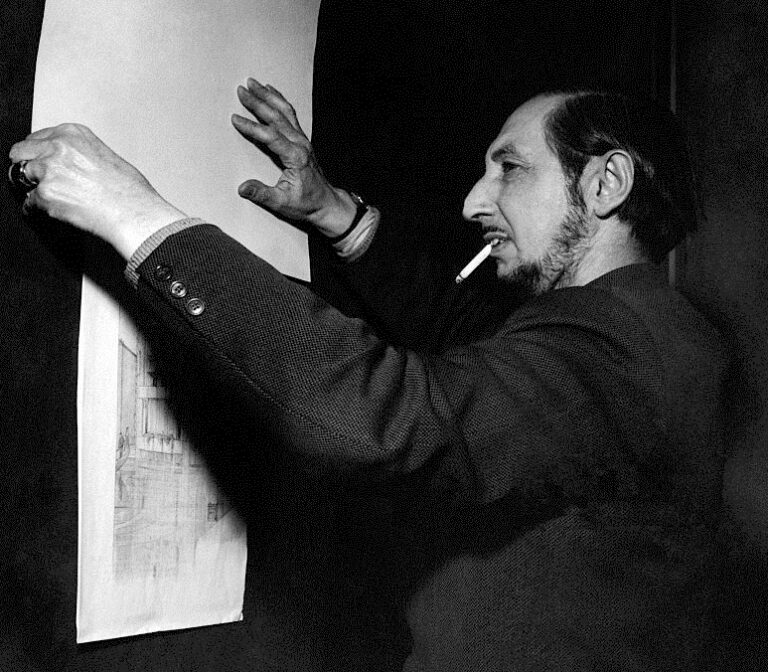
In 1927, brothers Cesare and Amadeo Cassina set up a carpentry shop in Meda. Their transition from classical hand-carving to architectural serial production laid the bedrock for modern Italian industrial design.
Meda in 1927 was a bustling artisan hub in the rolling plain of Brianza, twenty kilometres north of Milan. For over two centuries, this dense cluster of towns between the Seveso and Lambro rivers had served as the woodworking capital of northern Italy. Generations of cabinetmakers, lathe-turners, and wood-carvers passed their craft down through family courtyards, producing French Louis XV commodes, baroque gilt frames, and faux-antique dining suites for the Milanese middle class.
That year, two young brothers—Amadeo Cassina (1905–1992) and Cesare Cassina (1909–1979)—pooled their modest tools and registered their firm, Amedeo Cassina, in Meda. Initially, their work looked like that of any other Brianza carpenter: walnut tables, bespoke wardrobe panelling, and solid timber chairs. Yet the Cassina brothers had an acute sense of the changing economic horizon. They noticed that Milan was rebuilding itself around modern architecture, commercial offices, and ocean liner interiors, where heavy historicist furniture looked clumsy and out of place.
From bespoke sawdust to serial engineering
Rather than rejecting industrial machinery as a threat to craft, Cesare and Amadeo embraced high-precision woodworking tools. They began standardizing joint geometries, experimenting with kiln-dried hardwoods, and accepting difficult structural commissions for luxury cruise ships and grand hotels. By the end of the Second World War, Cassina possessed what few furniture makers in Europe had: the precision discipline of a factory married to the intimate material knowledge of master joiners.
In 1952, Cesare Cassina took the step that would permanently alter Italian design history: he sought out Milan’s most adventurous architects and proposed that they design not for wealthy private patrons, but for industrial serial production. His pivotal alliance was with Gio Ponti. For five years, Ponti and the Meda craftsmen refined the traditional vernacular chiavarina chair, paring down every wooden member to its absolute mechanical minimum.
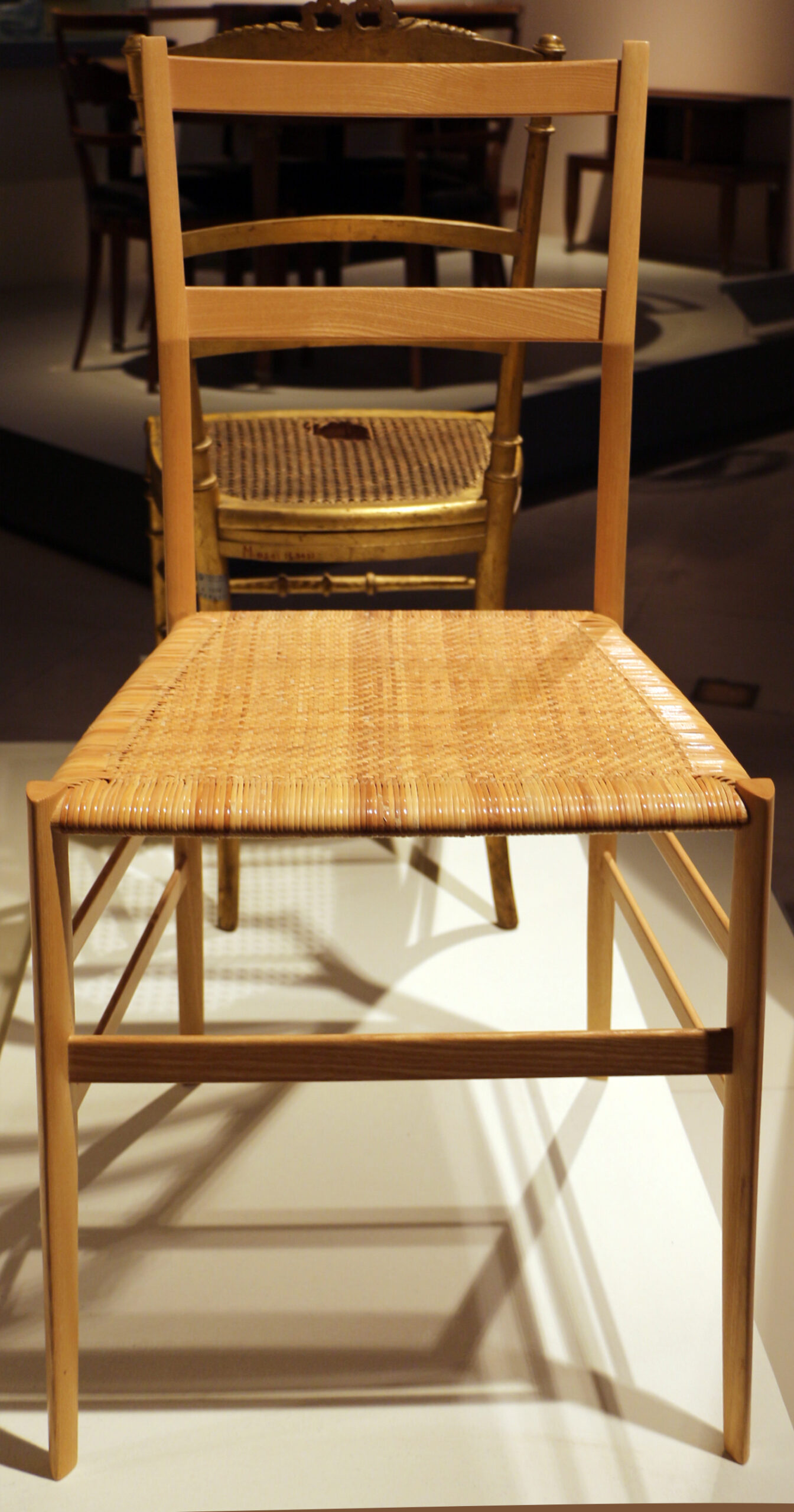
The outcome, launched in 1957, was the 699 Superleggera. Crafted from solid ash with triangular-section legs measuring only eighteen millimetres across and an Indian cane seat, the chair weighed a mere 1.7 kilograms. In a famous demonstration of structural integrity, Ponti threw the chair from the second-floor window of the factory onto the paved courtyard below: the chair bounced on its elastic joints without cracking a single tenon. It became the ultimate emblem of Italian design—modern, weightless, and structurally indestructible.
The masters and the Brianza capital
Under Cesare Cassina’s leadership, the Meda workshops became a collaborative sanctuary for mid-century modernism. Cassina developed the I Maestri collection, securing exclusive rights to re-issue the historic furniture designs of Le Corbusier, Pierre Jeanneret, Charlotte Perriand, and Gerrit Rietveld, while developing contemporary icons with Afra and Tobia Scarpa, Mario Bellini, and Vico Magistretti.
What remains today
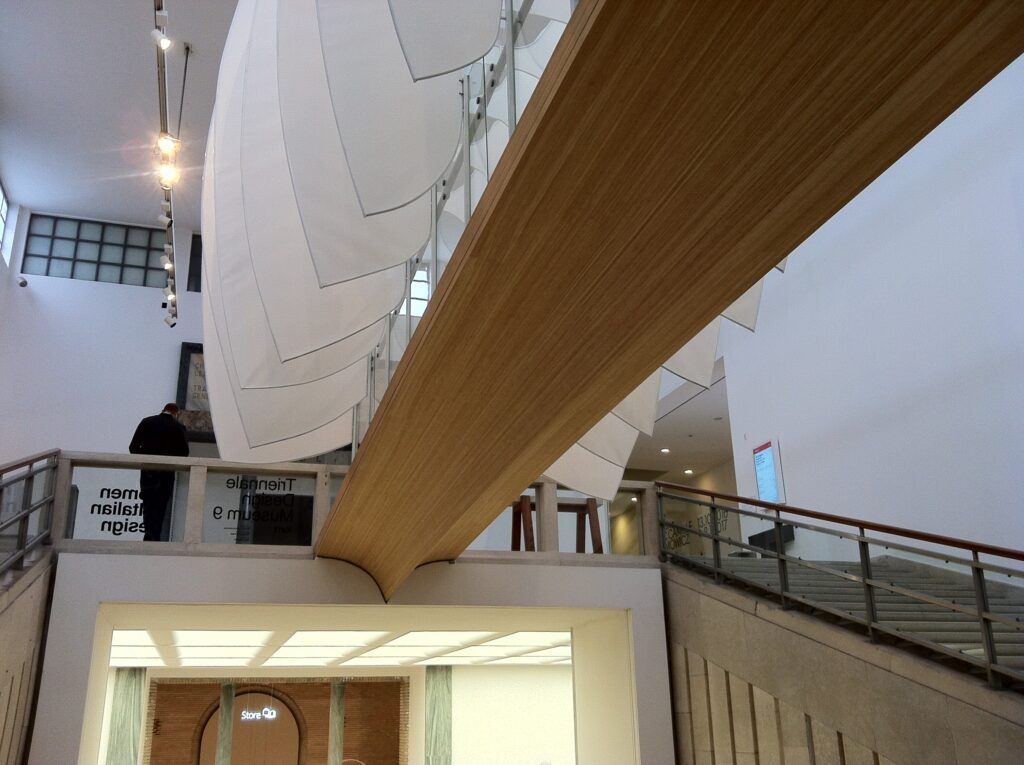
Meda remains the spiritual and operational centre of high-end Italian furniture manufacturing. Cassina’s headquarters on Via Busnelli houses the Archivio Storico Cassina, preserving thousands of original architectural drawings, prototypes, and material samples that chart the birth of industrial design. Key pieces crafted in Meda are permanently exhibited in the Museo del Design Italiano at the Triennale di Milano and the MoMA in New York, proving that twentieth-century modernism was not born solely on drafting boards, but was cut, planed, and glued into reality by Brianza woodworkers.
Historic Views & Archives
From the Archives: Historical Newsreels
L’inaugurazione della mostra dell’arredamento e mobili d’autore (1933)
Historic newsreel documenting the emergence of modern functional furniture and applied wooden arts in Lombardy, charting the evolution from hand-carved classical furniture to serial architectural design.
Visiting the Site: Street View & Modern Geography
Meda is situated in the artisanal cabinetmaking heart of Brianza. Cassina’s historic manufacturing and design headquarters on Via Busnelli preserve the company’s extensive prototyping workshops and design archives, where Gio Ponti’s Superleggera and the I Maestri collection were born.
Historic Address: Via Busnelli 1, 20821 Meda (MB), Italy
Sources
- Triennale Milano, Collezione Permanente del Design Italiano, Milan, Electa, 2019
- Dizionario Biografico degli Italiani (Treccani), entry on Cesare Cassina (Vol. 21)
- Giampiero Bosoni, Made in Cassina, Milan, Skira, 2008
- Associazione per il Disegno Industriale (ADI), Premio Compasso d’Oro: Storico e Vincitori