Founded on 4 July 1926 in central Bologna, Ducati was not born on a racetrack. It began as a laboratory for precision electrical condensers, inspired by the wireless fever of Guglielmo Marconi.
To visit Bologna today is to encounter a capital of high-performance mechanical engineering: the red roar of MotoGP, desmodromic valves, and the motorcycle assembly lines of Borgo Panigale. Yet when the name Ducati was registered on 4 July 1926, it had nothing to do with engines, motorcycles, or gasoline. It was a venture born of invisible ether, vacuum tubes, and the worldwide radio craze sparked by native Bolognese inventor Guglielmo Marconi.
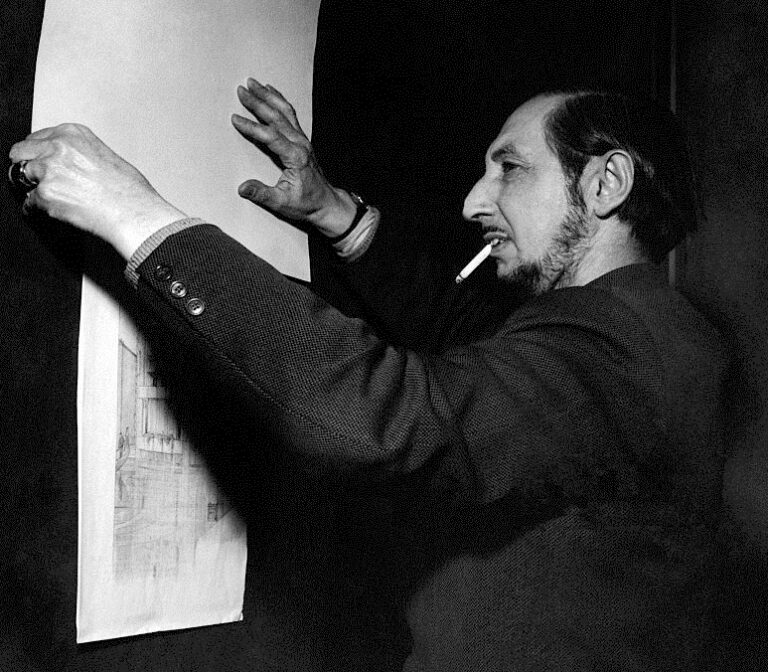
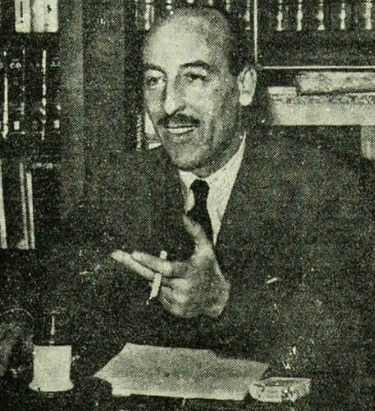
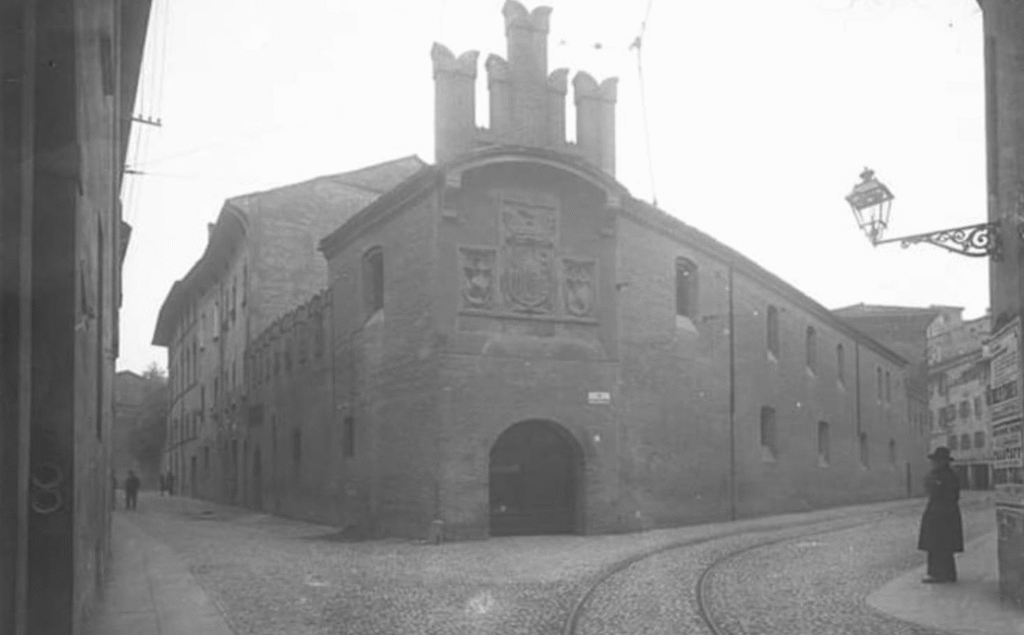
That summer, in a modest workshop at Via Collegio di Spagna 9 in the historic centre of Bologna, industrial engineer Antonio Cavalieri Ducati (1853–1927) gathered his three young sons: Adriano (1901–1991), Bruno (1904–2001), and Marcello (1906–1998). Adriano was a brilliant physics student who, operating an amateur radio station from his bedroom at age twenty-three, had successfully made the first short-wave contact between Italy and the United States. Recognizing the commercial future of broadcasting, the family incorporated the Società Scientifica Radio Brevetti Ducati.
The miracle of the Manens condenser
Their foundation product was an electrical component called the Manens capacitor. In 1926, most radio condensers were large, erratic, and vulnerable to humidity. Adriano and Bruno engineered a mica-dielectric variable capacitor so compact, stable, and finely calibrated that radio builders across Europe and the Americas rushed to order it. Within two years, the two-room workshop in Via Collegio di Spagna was overwhelmed.
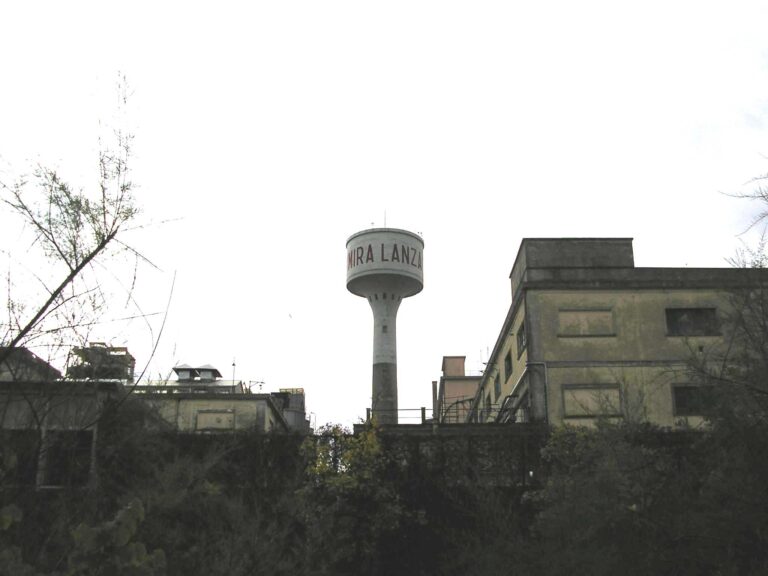
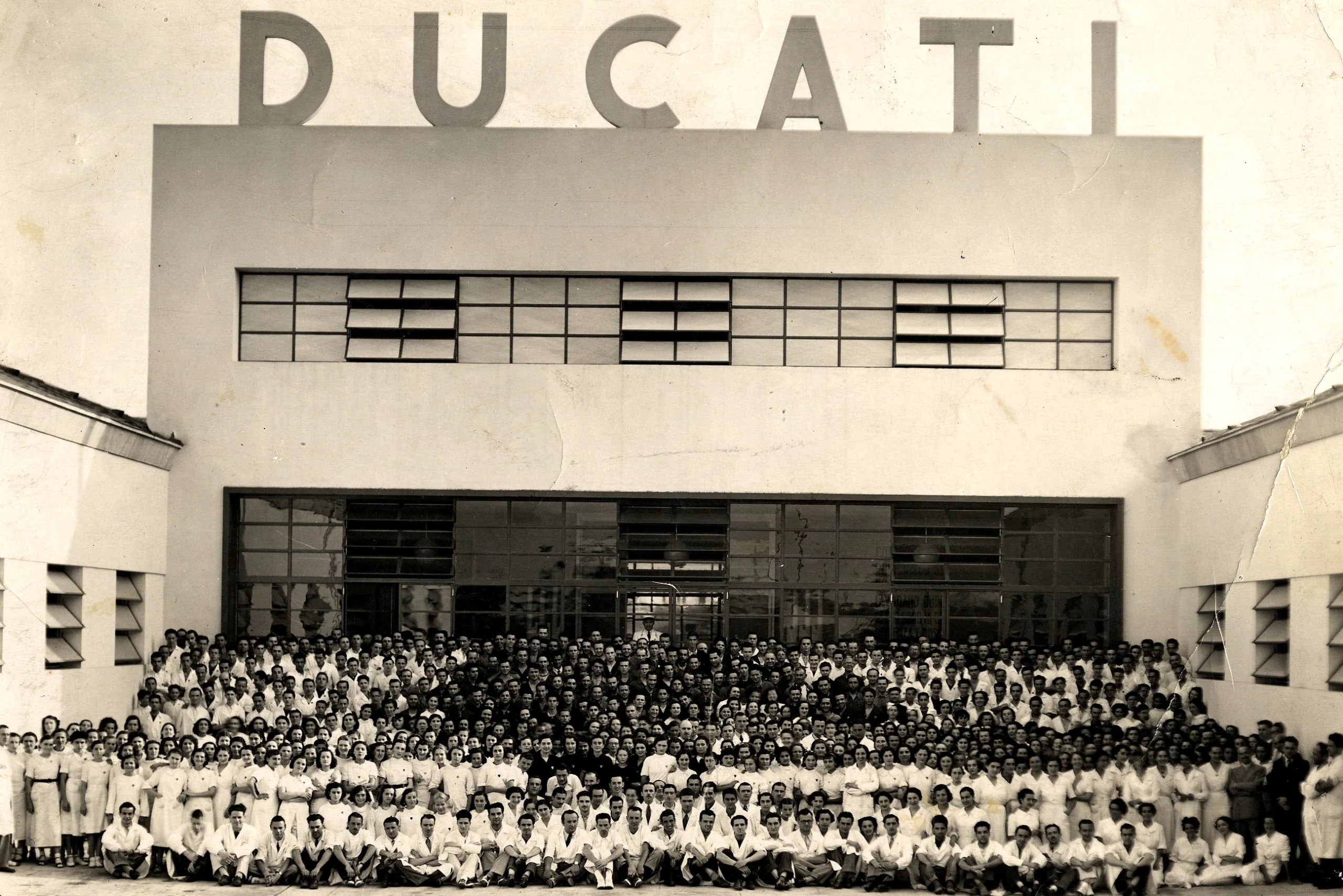
Production moved first to Via Guidotti and then expanded exponentially. By the early 1930s, Ducati was employing over three thousand technicians and producing an entire spectrum of scientific equipment: precision radio receivers, cameras (*the Ducati Sogno*), optical calculators, and marine communication systems. On 1 June 1935, the family laid the foundation stone for an extraordinary industrial project: a monumental, twenty-five-hectare rationalist factory complex at Borgo Panigale on the western outskirts of Bologna. Designed with wide avenues, tree-lined courtyards, worker cafeterias, and specialized research laboratories, Borgo Panigale was conceived not just as a plant, but as a modern industrial citadel.
The wartime ruin and the auxiliary spark
The company’s optical and electronics excellence made it a primary target during the Second World War. On 12 October 1944, Allied heavy bombers destroyed broad sections of the Borgo Panigale complex. When the dust cleared, the machinery was wrecked, the workforce scattered, and the family faced total bankruptcy.
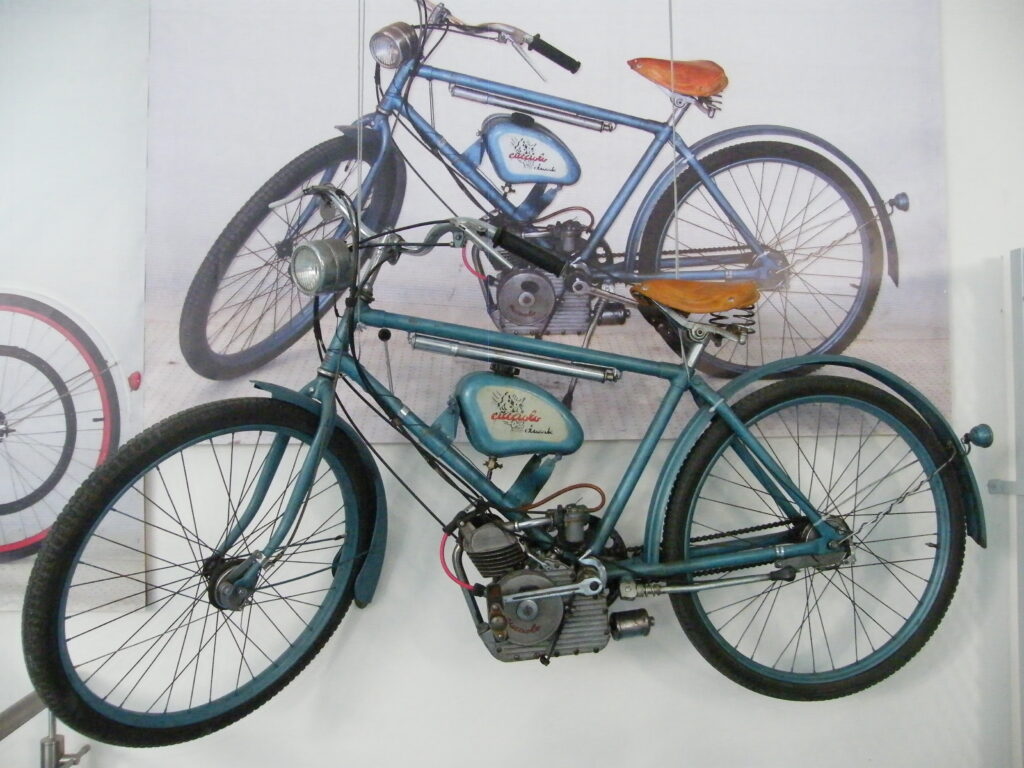
In the spring of 1946, looking for any civilian manufacture to restart the factory and rehire its workers, the management purchased the production licence for a tiny 48cc four-stroke auxiliary engine invented by Aldo Farinelli in Turin: the Cucciolo (“Little Puppy”). Designed to be clamped with clips onto a conventional bicycle frame, the motor offered war-torn Italians sixty kilometres on a single litre of fuel. The response was overwhelming. The precision electronics technicians of Borgo Panigale adapted their microscopic tool-making tolerances to cylinder heads and crankshafts. The radio laboratory had become an engine maker.
What remains today
The rationalist red-brick administrative block erected in 1935 still dominates the streetfront along Via Cavalieri Ducati in Borgo Panigale. Inside, the Museo Storico Ducati dedicates its opening galleries to the company’s forgotten first two decades: on display are the original 1926 *Manens* condensers, brass laboratory micrometers, and prototype radio transceivers, alongside the first *Cucciolo* bicycles. In central Bologna, the Renaissance porticoes of Via Collegio di Spagna still shelter the doorway where three brothers once set out to capture the airwaves, reminding travellers that the fastest motorcycles in modern Italy trace their lineage to the silent hum of an electrical capacitor.
Historic Views & Archives
From the Archives: Historical Newsreels
Guglielmo Marconi a Bologna: celebrazioni e memorie della radio
Historic newsreel documenting Guglielmo Marconi returning to his native Bologna, showing the short-wave apparatus and electrical research that inspired the Ducati family to patent precision condensers in 1926.
Visiting the Site: Street View & Modern Geography
Ducati was founded in 1926 in central Bologna before establishing its monumental Rationalist factory complex in Borgo Panigale in 1935. Today, the Borgo Panigale plant remains the world headquarters and houses the Museo Storico Ducati, displaying the early condensers and radios alongside the racing engines.
Historic Address: Via Antonio Cavalieri Ducati 3, 40132 Borgo Panigale (BO), Italy
Sources
- Museo Storico Ducati, Archivio Storico Ducati: Dalla Radio alle Corse, Borgo Panigale, 2021
- Dizionario Biografico degli Italiani (Treccani), entry on Adriano Cavalieri Ducati (Vol. 41)
- Marco Masetti, Ducati: Una storia italiana, Bologna, Edizioni Pendragon, 2005
- Archivio Storico della Camera di Commercio di Bologna, Registro delle Imprese: Società Scientifica Radio Brevetti Ducati (1926)