Formed on 9 May 1924 through the union of Venetian stearin candles and Piedmontese soap, Mira Lanza shaped the domestic landscape of 20th-century Italy—and left behind monumental industrial archaeology from the Brenta to Rome’s Ostiense.
On 9 May 1924, a notary in Venice recorded the merger of two nineteenth-century industrial pioneers: the Fabbrica di Candele di Mira, founded on the banks of the Brenta canal in 1831 by the Austrian entrepreneur Tommaso Sorvillo, and the Fabbrica di Saponi Fratelli Lanza, established in Turin in 1832 by Giovanni Lanza. The resulting joint-stock giant, Mira Lanza S.A., was built to dominate the emerging Italian consumer market for stearin, industrial fats, and household washing soaps.
The timing was not accidental. In the post-World War I decade, Italy’s chemical sector was shedding its regional handicraft origins. Urban populations were expanding, municipal hygiene regulations were tightening, and electric lighting was rapidly supplanting tallow tapers. To survive, candle makers had to pivot to modern chemical detergents, fatty-acid cracking, and high-volume soap boiling. By joining forces, the Venetian and Piedmontese dynasties created an integrated industrial empire with direct water access on the Adriatic and deep distribution networks into the industrialized North.
The geography of tallow and steam
The company operated across two monumental landscapes. At Mira, on the Venetian mainland, the factory sat directly on the Naviglio del Brenta. Wooden barges brought raw animal fats, soda ash, and English coal straight to the factory wharves, where steam boilers processed raw stearin beneath tall brick smokestacks facing eighteenth-century aristocratic villas.
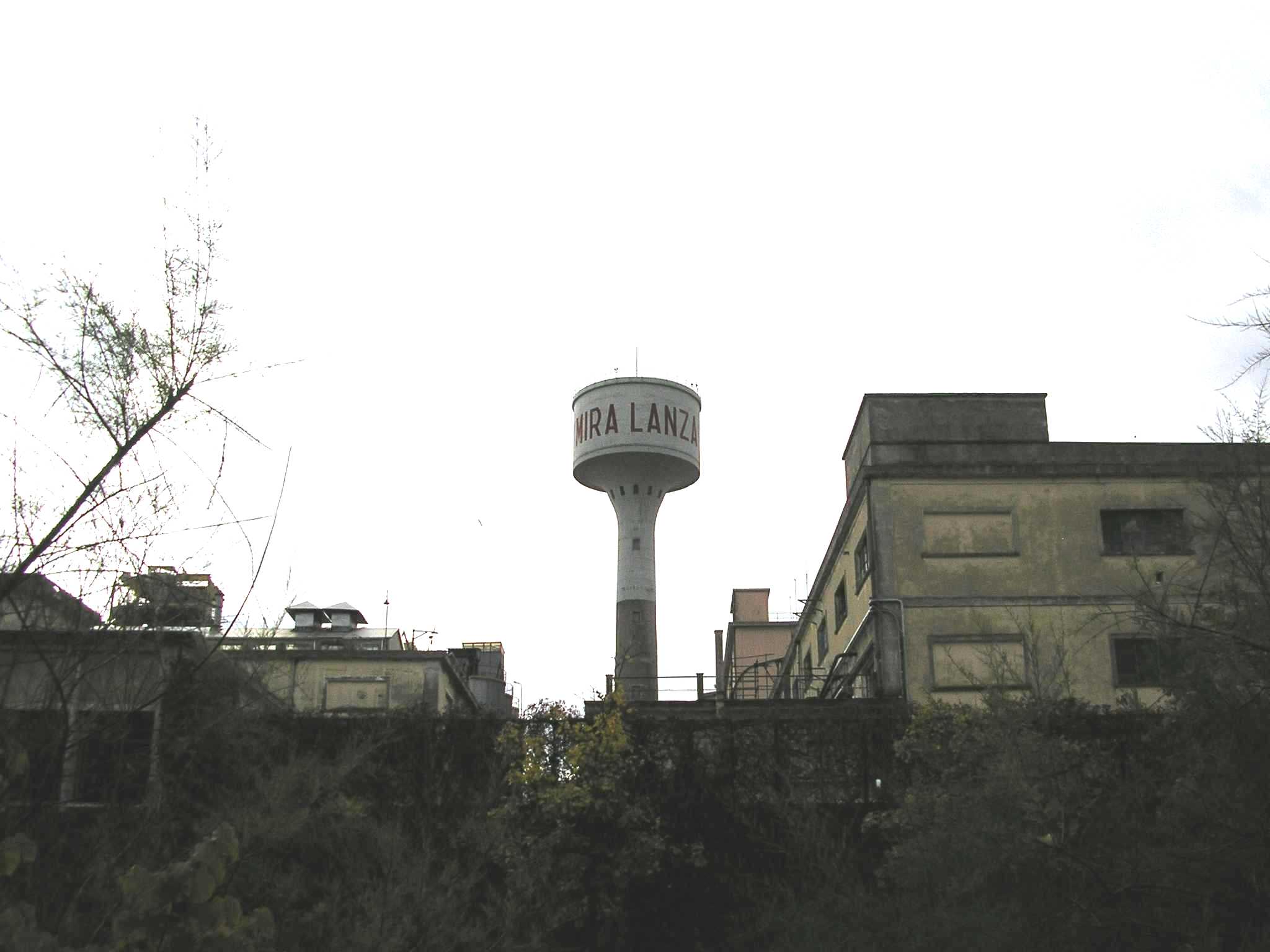
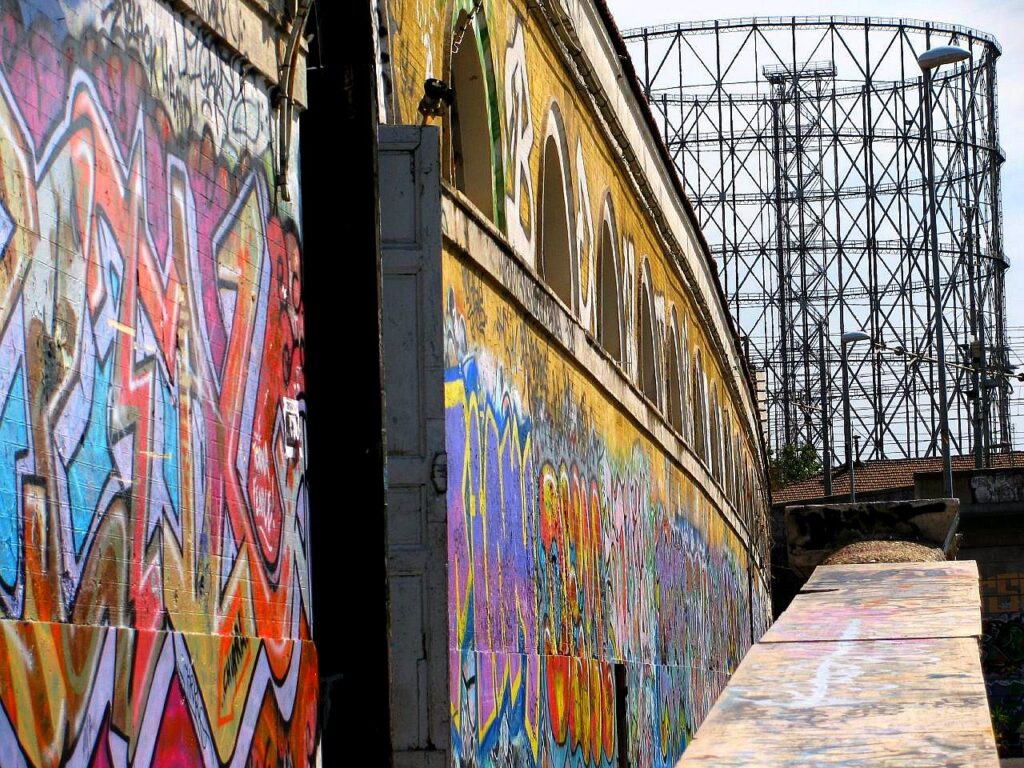
Simultaneously, Mira Lanza looked south to capture the growing capital. In Rome, the company constructed a vast industrial citadel on the right bank of the Tiber in the Ostiense district (Riva Pian Due Torri). Placed directly opposite the monumental metal gasometers and adjacent to the municipal river port, the Roman works became a central organ of the city’s interwar industrial spine. Train cars rolled into the central courtyard on private sidings, unloading tallow and loading crates of laundry soap that supplied the hospitals, barracks, and tenements of the expanding metropolis.
The cultural icon and the corporate sunset
For half a century, Mira Lanza was embedded in the everyday rituals of Italian domestic life. In the 1960s, its television commercials featuring the white chick Calimero and promotional loyalty coupons (*I punti Mira Lanza*) became nationwide cultural touchstones. Yet beneath the consumer fame, changing petrochemical formulas and corporate buyouts eroded the firm’s independence. In 1989 the multinational group Benckiser acquired the brand and shuttered the historic manufacturing facilities, bringing an end to sixty-five years of unified operations.
What remains today
The architectural remnants of Mira Lanza form two of the most significant industrial archaeology sites in central and northern Italy. At Mira, the nineteenth-century canal-side brick sheds and wrought-iron sluice gates remain a protected landmark of the Riviera del Brenta’s industrial heritage. In Rome, the vast Ostiense complex underwent visionary urban reclamation: in 1999, the municipality transformed the cavernous soap-curing halls and brick workshops into the Teatro India, the contemporary performing arts venue of the Teatro di Roma. Walking through the complex today, the soaring iron trusses, rough-hewn brick arches, and towering boiler chimney still testify to the heavy manufacturing engine that powered Rome’s riverfront a century ago.
Historic Views & Archives
From the Archives: Historical Newsreels
La piena del Tevere e il bacino industriale di Roma (1928)
Rare 1928 newsreel footage capturing the commercial Tiber river traffic, industrial docks, and riverside embankments of Rome during the heavy expansion of the Ostiense industrial district.
Visiting the Site: Street View & Modern Geography
The Roman industrial complex of Mira Lanza lies along the right bank of the Tiber opposite the gasometers. Restored in 1999, the former soap boiler rooms and warehouses now house the Teatro India, while the surrounding brick chimney and factory sheds stand as protected industrial monuments.
Historic Address: Lungotevere Vittorio Gassman 1 (formerly Riva Pian Due Torri), 00146 Roma, Italy
Sources
- Archivio Centrale dello Stato, Fondo Ministero dell’Industria, del Commercio e del Lavoro (1920–1935)
- Soprintendenza Archeologia, Belle Arti e Paesaggio di Roma, Schede di censimento del patrimonio industriale: Complesso ex Mira Lanza a Riva Pian Due Torri
- Sistema Informativo Unificato per le Soprintendenze Archivistiche (SIUSA), Fondo Fabbrica di Candele di Mira
- Giorgio Ciucci, Roma moderna: Il quartiere Ostiense e l’architettura del lavoro nel Novecento, Rome, 1996