
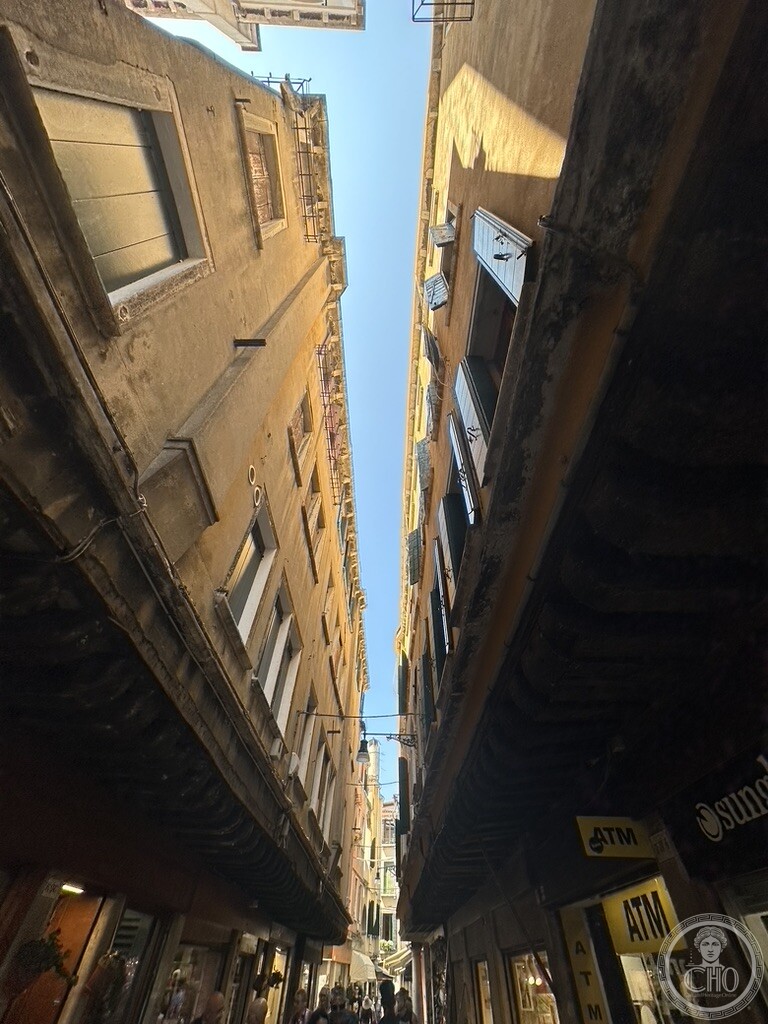
Connecting the bustling Rialto market with Campo San Polo, Ruga Vecchia San Giovanni is one of Venice’s ancient commercial arteries, where medieval cantilevered wooden beams thrust upper floors over the street to extract precious living space from the dense lagoon city.
At a glance
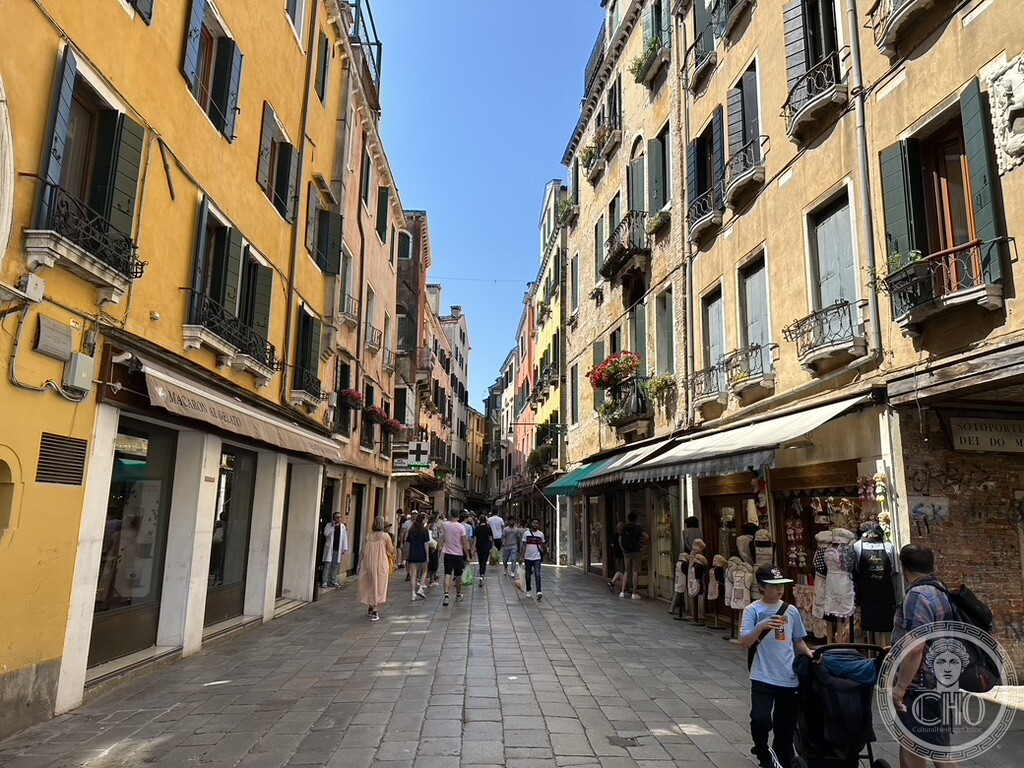
In Venetian topography, the word ruga (derived from the French rue) designates a street flanked continuously on both sides by shops, craft workshops, and merchant dwellings, setting it apart from a residential calle. Ruga Vecchia San Giovanni was laid out in the 12th century as the primary pedestrian artery leading westward out of the Rialto commercial basin towards Campo San Polo and the Frari. Walking along it today offers one of the most vivid surviving impressions of medieval Venetian urban ingenuity, defined by overhanging upper facades and dense commercial activity.
Key facts
- Name origin: From ruga (commercial street lined with shops) and the nearby 10th-century church of San Giovanni Elemosinario
- Urban function: Primary land route connecting the Rialto market with San Polo, Santa Croce, and Dorsoduro
- Key architectural feature: Medieval barbacani—heavy cantilevered timber or stone beams projecting from facades to support enlarged upper floors
- Municipal regulation: The Republic of Venice established strict limits on beam projection to protect street daylight, installing the famous official barbacane campione stone measure in nearby Calle della Madonna
- Daily life today: A vibrant, living Venetian thoroughfare lined with bakeries, wine bars (bàcari), green grocers, and specialty shops
- GPS: 45.43841, 12.33394 · Open in Google Maps
History
Following the catastrophic fire of 1105 that razed much of central Venice, the Republic methodically rebuilt the Rialto district, reorganizing its pedestrian paths to funnel trade smoothly between the Grand Canal wharves and the residential parishes. Ruga Vecchia San Giovanni took shape alongside the church of San Giovanni Elemosinario (rebuilt by Scarpagnino after another great fire in 1514).
Because dry land on the Venetian archipelago was strictly limited by water, patrician landlords and merchant families could not expand their building footprints outward on the ground. Instead, they invented an ingenious form of vertical expansion: by embedding sturdy cantilevered beams into the masonry between the ground floor and the first piano nobile, they projected the upper residential storeys outward over the public passageway. This corbelled overhang gave families extra rooms and wider living quarters without taking a single inch away from street traffic.
What you see
Looking up from the center of the street, the sky narrows into a slender ribbon of blue. The facades on either side lean gently inward as each successive floor projects slightly beyond the one below, supported by weathered beams of seasoned larch and oak. These overhangs, known locally as barbacani, cast deep, cooling shadows along the street in the summer heat and shield pedestrians from lagoon rain.
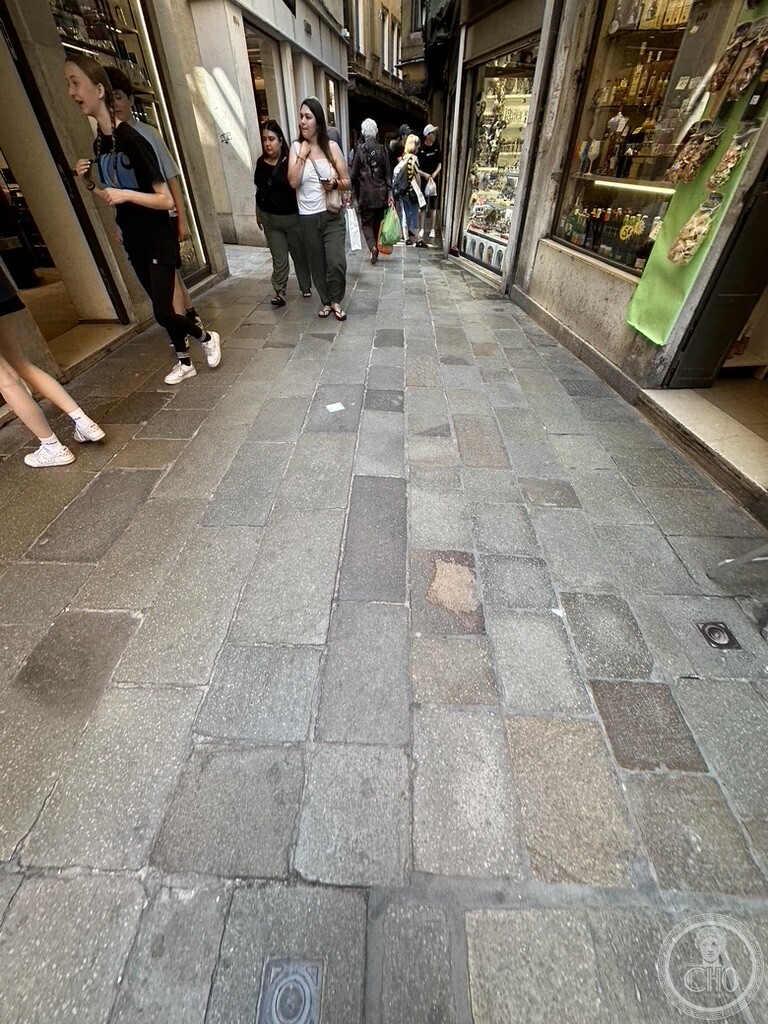
At street level, the paving consists of polished grey trachyte flagstones (masegni) worn smooth by eight centuries of footsteps. Ground-floor shopfronts display regional specialties, Venetian spices, dried pasta, and fresh produce, maintaining the unbroken merchant identity that has characterized this corridor since the Middle Ages.
Practical information
- Access: Public thoroughfare, open at all times free of charge
- Atmosphere: Busiest during morning market hours (08:30 to 13:00) when locals do their daily shopping
- Architectural hunting: Keep an eye on the building facades just above eye level to inspect the carved ends and decorative corbels of the antique wooden beams
- Recommended duration: 15 minutes to stroll and admire the medieval facades; longer if stopping for a glass of wine and cicchetto at a local bàcaro
Getting there
Ruga Vecchia San Giovanni begins at Campo San Giacomo di Rialto (near the foot of the Rialto Bridge) and extends west towards Campo Sant’Aponal and Campo San Polo. The nearest waterbus stop is Rialto Mercato or Rialto (Lines 1 and 2).
Nearby
- Sotoportego dei Oresi — three minutes east at the foot of the Rialto Bridge
- San Giacomo di Rialto — three minutes northeast on Campo San Giacomo
- Campo San Polo — four minutes west
Sources
- Tassini, Giuseppe. Curiosità Veneziane. Historical notes on Ruga Vecchia San Giovanni and the barbacani regulations.
- Howard, Deborah. The Architectural History of Venice. Detailed studies on medieval cantilever construction and urban zoning.
- Geographical coordinates: 45.43841, 12.33394.
Gallery
Find it on the map
See this place and what’s around it →Record researched and written by Carla Szathvary for Cultural Heritage Online, 2026.
📷 Become a Cultural Heritage Online photographer
Share your photos of places: they stay published under your name as the author. The more they're seen, the more you get noticed — and soon a contest will reward the most appreciated photos.
Log in or sign up free to add a photo