
Housed in the unfinished 18th-century Palazzo Venier dei Leoni on the Grand Canal, the Peggy Guggenheim Collection is one of Europe’s premier museums of 20th-century modern art. The former home of visionary American patron Peggy Guggenheim preserves her personal collection of Cubist, Surrealist, and Abstract Expressionist masterpieces in the intimate domestic setting of her Venetian residence and sculpture garden.
At a glance
- Type
- Modern art museum and historic residence
- Building
- Palazzo Venier dei Leoni (commenced c. 1748–1750 by Lorenzo Boschetti)
- Collection
- 20th-century avant-garde (Cubism, Surrealism, Abstract Expressionism, Futurism)
- Founder
- Peggy Guggenheim (1898–1979; purchased palazzo 1949, opened to public 1951)
- Location
- Dorsoduro 701, Calle San Cristoforo, 30123 Venice, Italy
- Coordinates
- 45.43044° N, 12.33173° E
- Admission
- Regular €17, seniors (65+) €15, students (under 26) €10, children under 10 free
Overview
Perched directly on the southern bank of the Grand Canal between Santa Maria della Salute and the Gallerie dell’Accademia, the Peggy Guggenheim Collection occupies Palazzo Venier dei Leoni. Known colloquially among Venetians as il palazzo non finito (“the unfinished palace”), the structure was conceived as a monumental five-storey classical residence but was halted at the ground-floor piano nobile. Behind its rusticated Istrian stone canal facade lies a secluded urban enclave: an expansive verdant garden, a collection of mid-century outdoor sculpture, and Peggy Guggenheim’s private quarters, which she opened to the public during her lifetime.
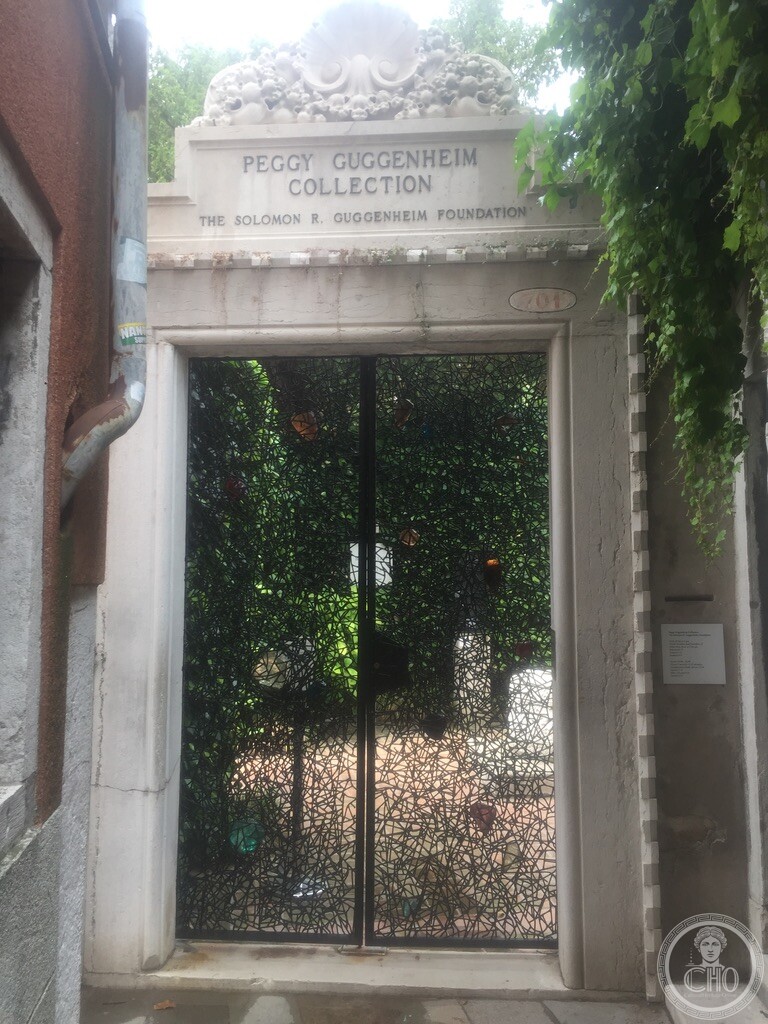
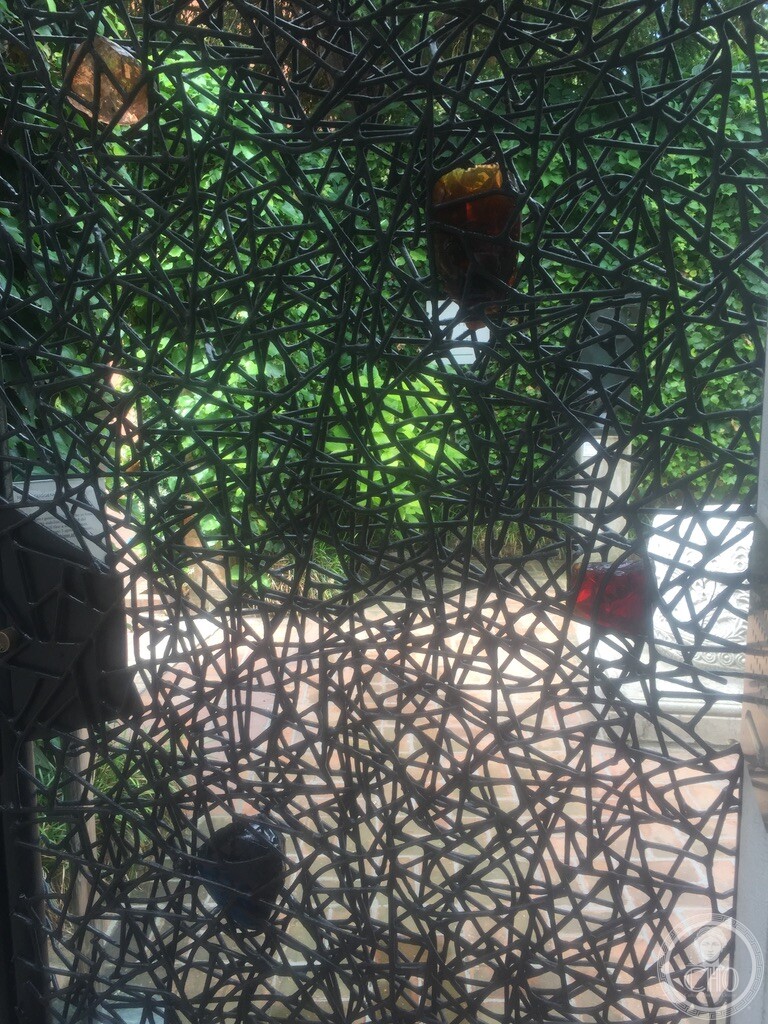
Pedestrian entrance to the complex is through Calle San Cristoforo at civico 701, marked by a neoclassical pedimented portal enclosing Claire Falkenstein’s famous 1961 welded iron gate studded with glowing chunks of coloured Murano glass.
History & The Palazzo Non Finito
Palazzo Venier was commissioned around 1748–1750 by the patrician Venier family from architect Lorenzo Boschetti. Architectural models and contemporary engravings show that Boschetti envisioned an imposing classical palace rivaling the Ca’ Rezzonico and Ca’ Pesaro across the canal. However, financial difficulties, combined with fierce objections from the powerful Corner family across the Grand Canal at Palazzo Corner della Ca’ Granda—who allegedly refused to be eclipsed by a taller rival—halted construction after the ground floor was finished.
The name dei Leoni stems from traditions claiming that the Veniers kept lions in their garden, or from the stone lion heads carved along the water-level plinth. Before Peggy Guggenheim, the unfinished palace sheltered notable eccentric residents, including the Marchesa Luisa Casati (who strolled the grounds with cheetahs on leashes) and Viscountess Castlerosse.
In 1949, Peggy Guggenheim acquired the property, establishing her permanent European base following the closure of her legendary New York gallery *Art of This Century*. In 1951, she began opening her home and private collection to the public three afternoons a week. Upon her death in 1979, her collection and the palazzo passed to the Solomon R. Guggenheim Foundation.
The Collection & Garden
The museum presents landmark works charting the trajectory of 20th-century modernism: Pablo Picasso, Georges Braque, Marcel Duchamp, Fernand Léger, Piet Mondrian, Wassily Kandinsky, Joan Miró, Paul Klee, René Magritte, Salvador Dalí, and Max Ernst (to whom Peggy was married during the Second World War). The collection is particularly celebrated for its holdings of Jackson Pollock, whom Peggy championed and gave his first solo show in 1943.
The Nasher Sculpture Garden displays works by Alberto Giacometti, Constantin Brâncuși, Henry Moore, Alexander Calder, and Marino Marini. In a quiet corner beneath ivy-clad walls lies Peggy Guggenheim’s tombstone, where she is buried alongside her fourteen beloved Lhasa Apso companion dogs.
What you see
Entering from Calle San Cristoforo, visitors pass through Claire Falkenstein’s intricate open web of sculpted metal and Murano glass. The path leads across the sculpture garden into the low-slung, light-filled rooms of the palazzo. From the grand waterfront terrace facing the Grand Canal, Marini’s provocative bronze equestrian sculpture *The Angel of the City* (1948) commands a panoramic view of passing vaporetti, gondolas, and opposing Renaissance facades.
Practical information
- Opening Hours
- Open daily 10:00–18:00. Closed Tuesdays and December 25.
- Ticketing
- Timed online reservation is strongly recommended, especially during peak seasons and Biennale months.
- Accessibility
- Fully accessible to visitors with reduced mobility via garden ramps and dedicated elevator.
Getting there
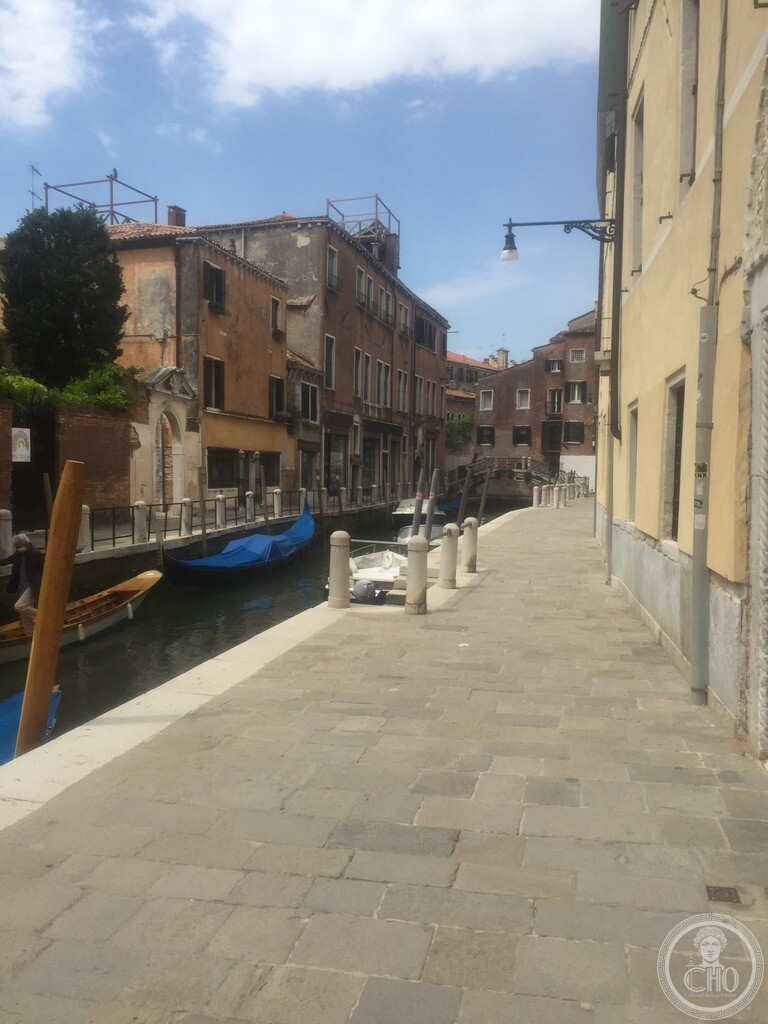
Take vaporetto line 1 or 2 to the Accademia stop, then walk east through Campo della Carità, Calle Nuova Sant’Agnese, and Calle San Cristoforo (approx. 5 minutes). Alternatively, take vaporetto line 1 to Salute and walk west past the Basilica della Salute along Fondamenta Venier dei Leoni (approx. 5 minutes).
Nearby
- Bel-Air Fine Art — Dorsoduro — Contemporary gallery, 60 m west on Calle della Chiesa
- Basilica di Santa Maria della Salute — 350 m east
- Punta della Dogana — 500 m east at the lagoon entrance
Sources & resources
- Peggy Guggenheim Collection — Official Website
- Peggy Guggenheim Collection — Wikipedia
- Cultural Heritage Online — Venice Modern Art Guide
Photo gallery
Photographs contributed by a Cultural Heritage Online member.
Find it on the map
See this place and what’s around it →Record researched and written by Carla Szathvary for Cultural Heritage Online, 2026.
📷 Become a Cultural Heritage Online photographer
Share your photos of places: they stay published under your name as the author. The more they're seen, the more you get noticed — and soon a contest will reward the most appreciated photos.
Log in or sign up free to add a photo