
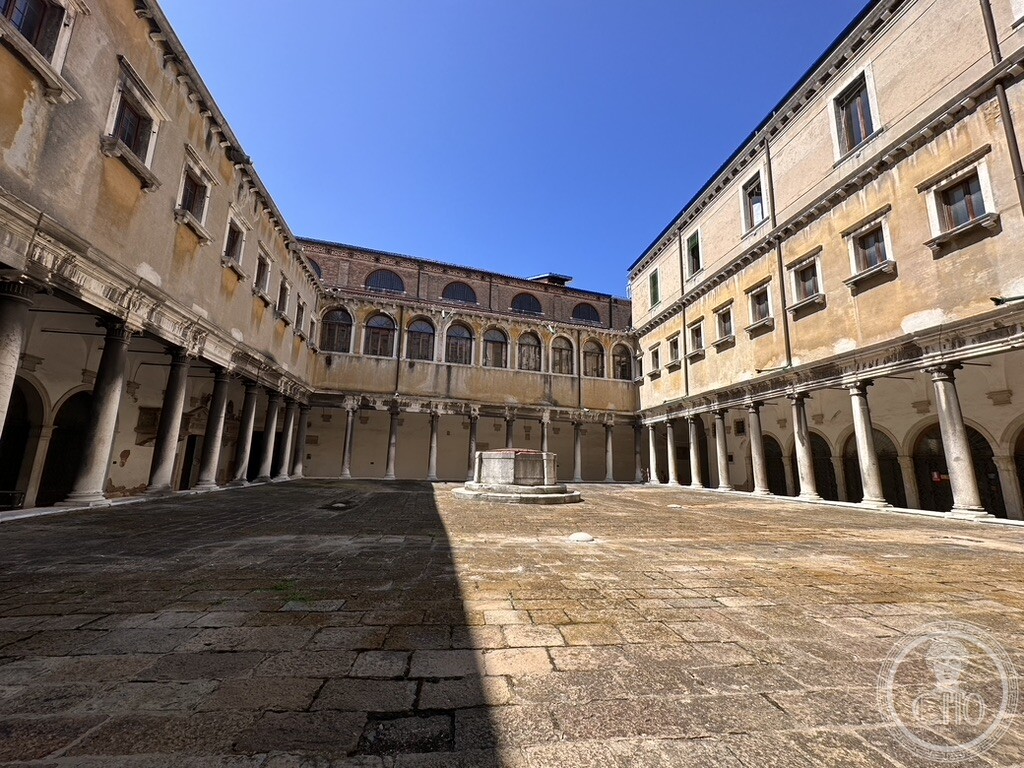
A stone-arcaded courtyard built for Franciscan friars, still walled with the funerary monuments of the Venetians once buried here — and now the working home of the Republic’s own written memory, the Archivio di Stato.
At a glance
Beside the Basilica dei Frari stands the former convent of the friars who built it, its buildings arranged around two adjoining cloisters — a larger one known as the Trinità or “dei morti”, and a smaller inner one, di Sant’Antonio. Both go back to the convent’s medieval origins, rebuilt and enlarged over the centuries. Napoleon’s suppression of religious orders brought the friars’ tenancy to an end in 1810; in 1817 the Austrian government installed the Archivio Generale Veneto here, the ancestor of today’s Archivio di Stato di Venezia, one of Italy’s largest archives.
Key facts
- Origins: convent of the Franciscan friars (Frari) attached to the Basilica di Santa Maria Gloriosa dei Frari, 13th century, rebuilt and enlarged repeatedly
- Two cloisters: the larger, known as the Trinità or “dei morti” (of the dead); the smaller inner one, di Sant’Antonio
- Suppressed: 1810, under Napoleonic decrees dissolving religious houses
- Archive since: 1817, seat of the Archivio Generale Veneto, today the Archivio di Stato di Venezia
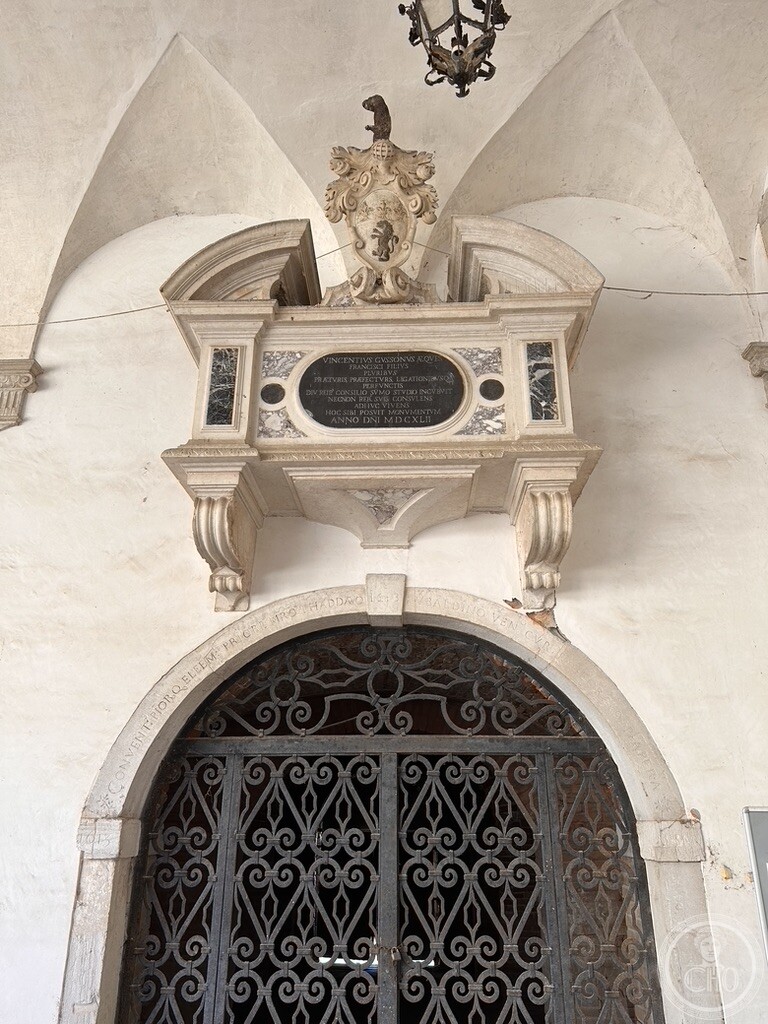
- On the walls: funerary and commemorative monuments from the convent’s centuries as a burial place, including one dated 1642 seen here above a wrought-iron gate
- Location: Campo dei Frari, San Polo, Venice
- GPS: 45.43390, 12.33125 · Open in Google Maps
From burial ground to state archive
Venetian burial customs once left more than names in the ground: important citizens of the parish and benefactors of the convent were buried within its cloisters, and their memory carved into the walls above. One such monument, dated “ANNO DNI MDCXLII” — 1642 — still stands above a wrought-iron gate in the cloister, its coat of arms and Latin inscription honouring a Venetian office-holder whose identity the worn stone no longer gives up easily; a 14th-century monument to Guido da Bagnolo is recorded elsewhere along the same walls. In 1754 the city ordered such burials sealed for reasons of public health, but the memorials themselves were left in place.
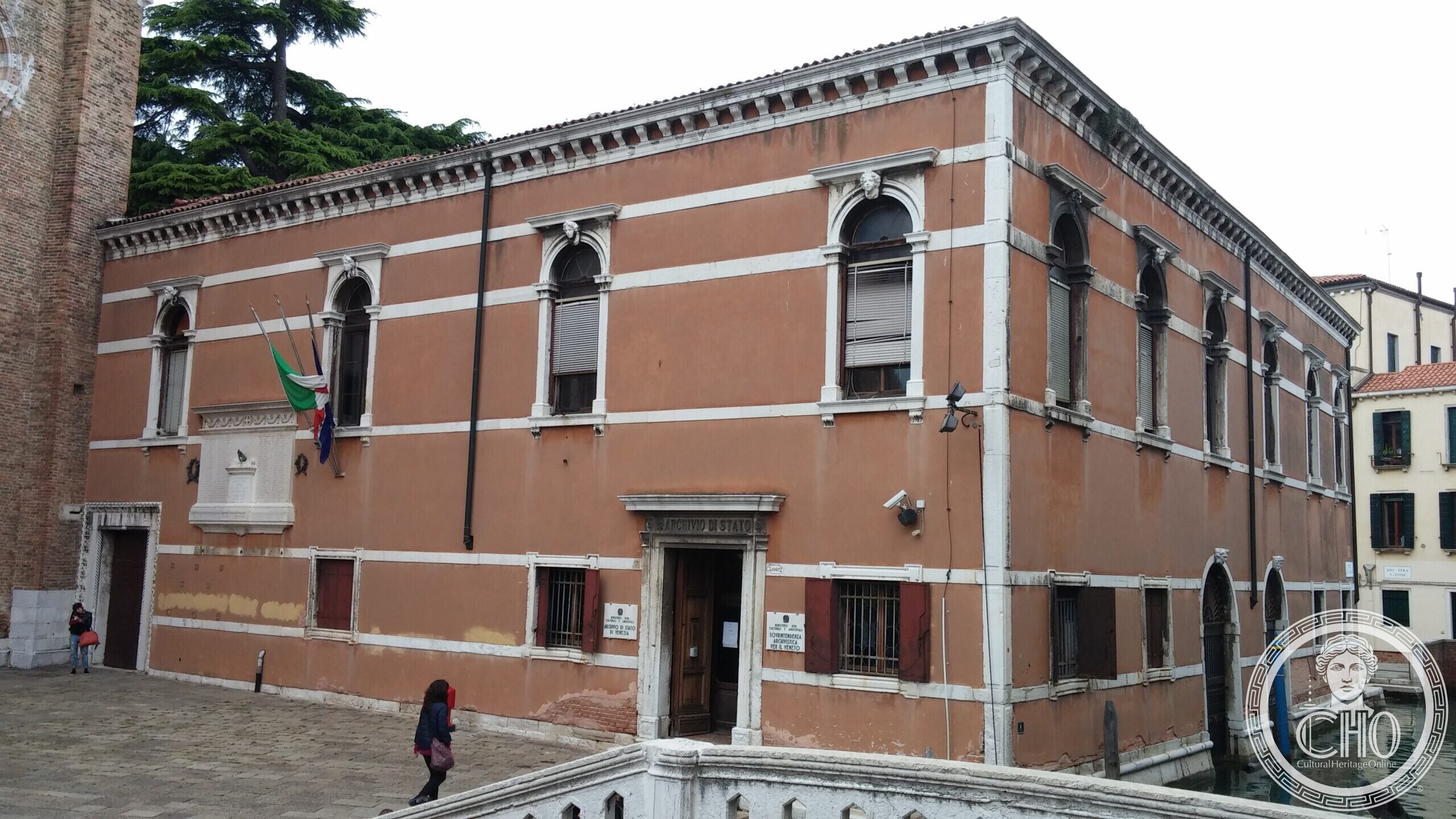
The friars’ tenancy ended with Napoleon’s suppression of Venice’s religious houses in 1810. Within a few years the Austrian administration found a new use for the vacated buildings: in 1817 it installed the Archivio Generale Veneto in the former convent, gathering the Republic’s dispersed administrative records under one roof. That institution is the direct ancestor of today’s Archivio di Stato di Venezia, still housed in the Frari’s cloisters and refectory, its reading rooms and storage now the setting for a cloister that was built for a very different kind of quiet.
Getting there
The Archivio di Stato occupies the former convent buildings beside the Basilica dei Frari, in Campo dei Frari, San Polo. The San Tomà vaporetto stop is the closest.
Sources
- Archivio di Stato di Venezia, La sede dei Frari and Il convento e il chiostro della Trinità — archiviodistatovenezia.it: the convent’s medieval origins, the two cloisters, the 1810 suppression and the 1817 founding of the Archivio Generale Veneto
- Search results citing the convent’s cloister walls and their surviving funerary monuments, including the 14th-century monument to Guido da Bagnolo, as evidence of the site’s use as a burial ground before 1754
- On-site inscription, verified from the contributed photograph: the date “ANNO DNI MDCXLII” (1642) on the wall monument above the cloister gate; the name of the person it honours is not legible with confidence from the photograph and is not asserted here
- Coordinates cross-checked against OpenStreetMap Nominatim for Campo dei Frari
Photo gallery
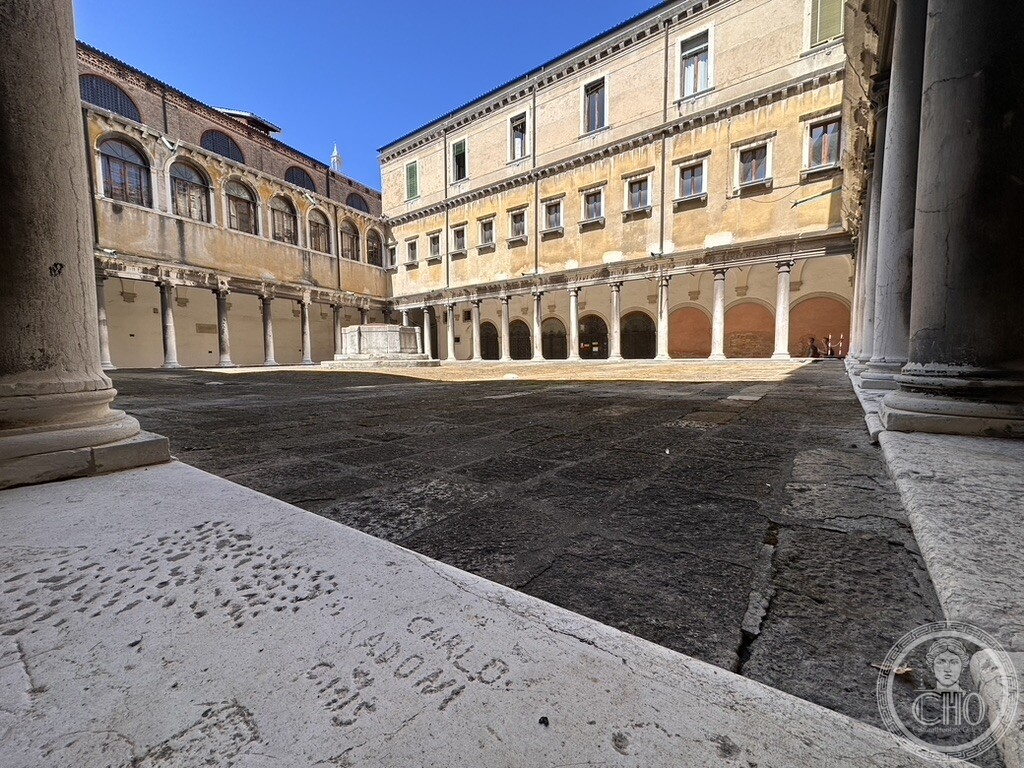
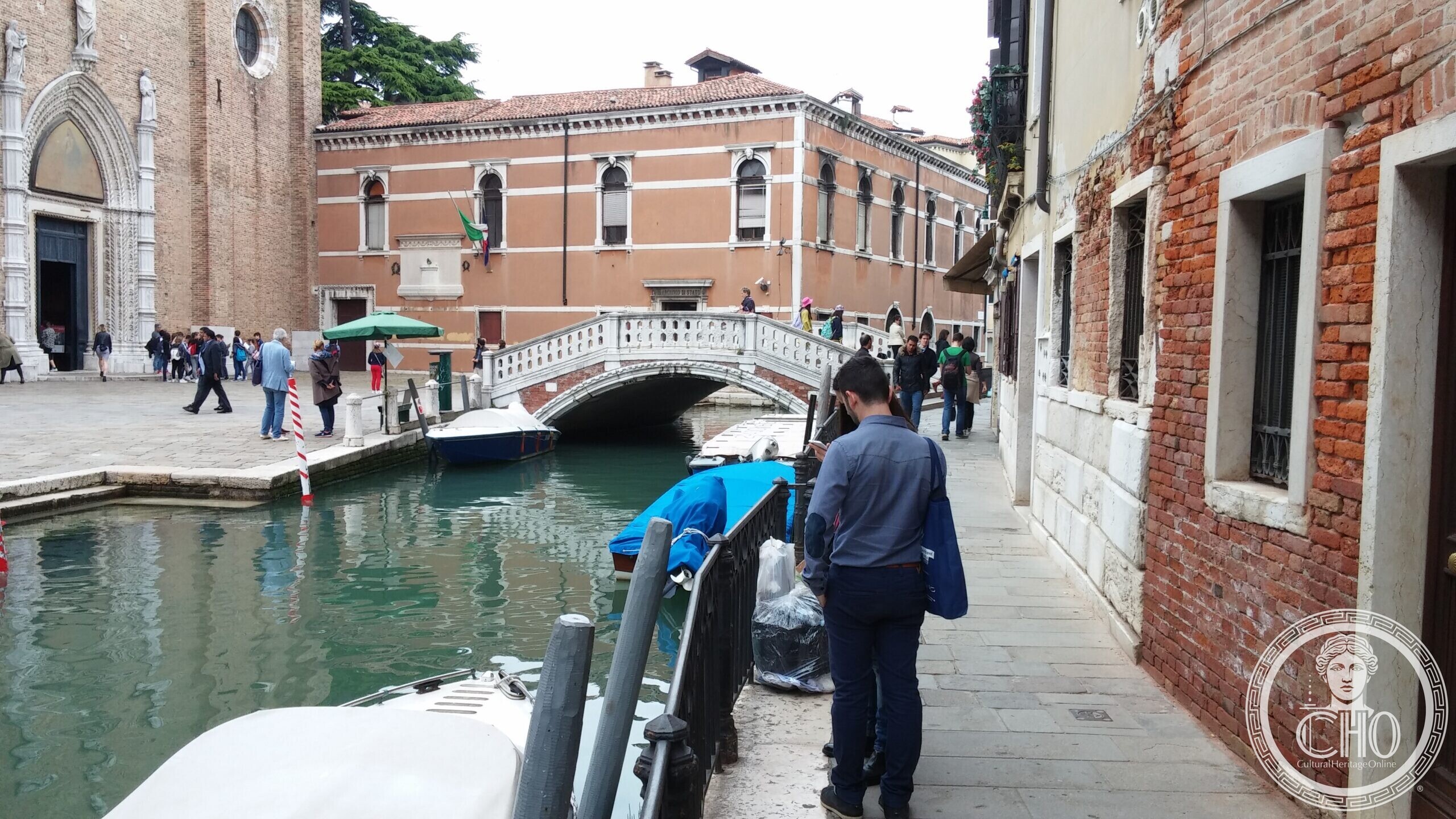
Photographs contributed by a Cultural Heritage Online member.
Find it on the map
See this place and what’s around it →Record researched and written by Carla Szathvary for Cultural Heritage Online, 2026.
📷 Become a Cultural Heritage Online photographer
Share your photos of places: they stay published under your name as the author. The more they're seen, the more you get noticed — and soon a contest will reward the most appreciated photos.
Log in or sign up free to add a photoIs this page about you?
This page is read by travellers and heritage enthusiasts who find it on Google. Tell us how you are connected to this place and we will take it from there.