
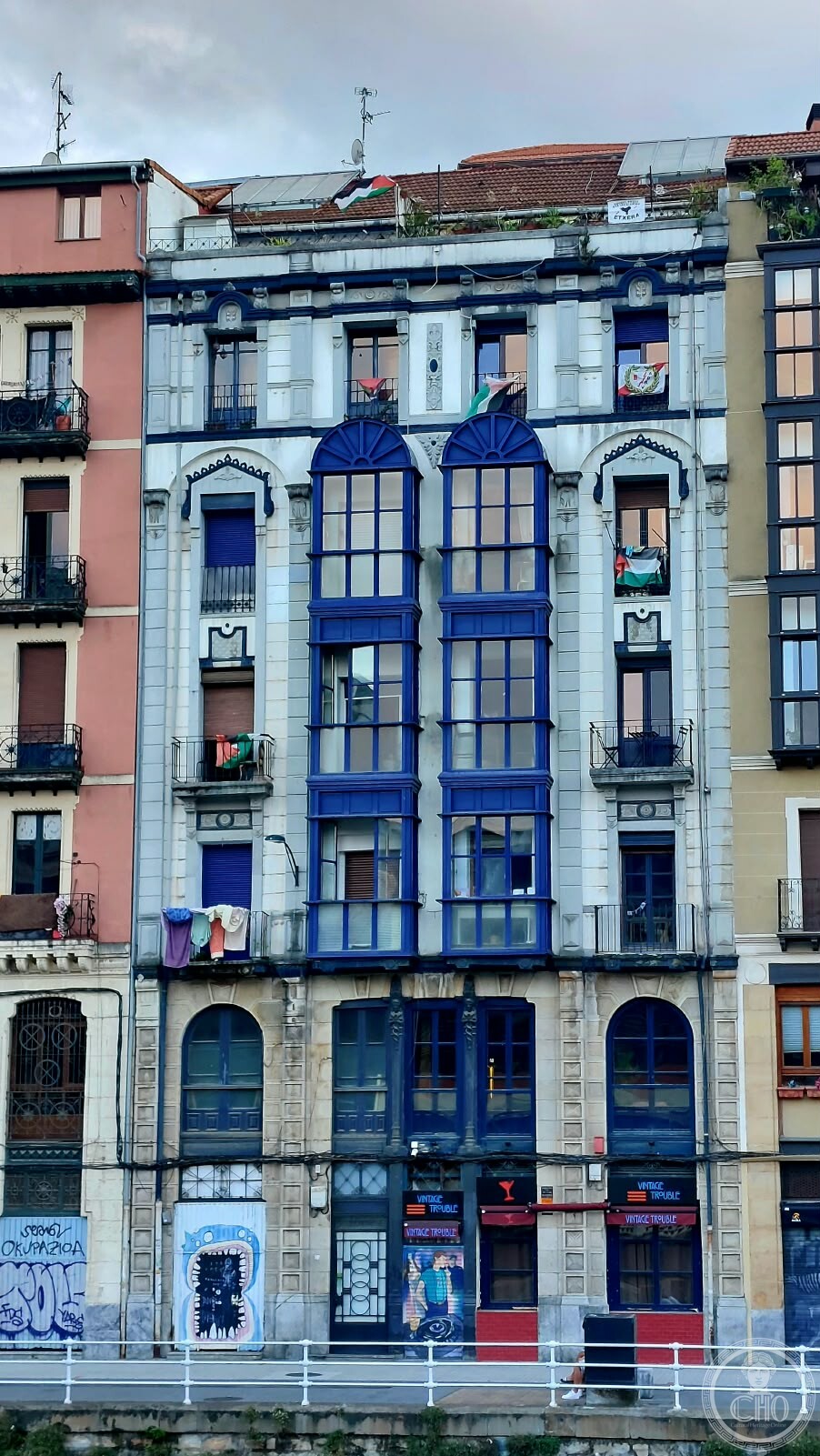
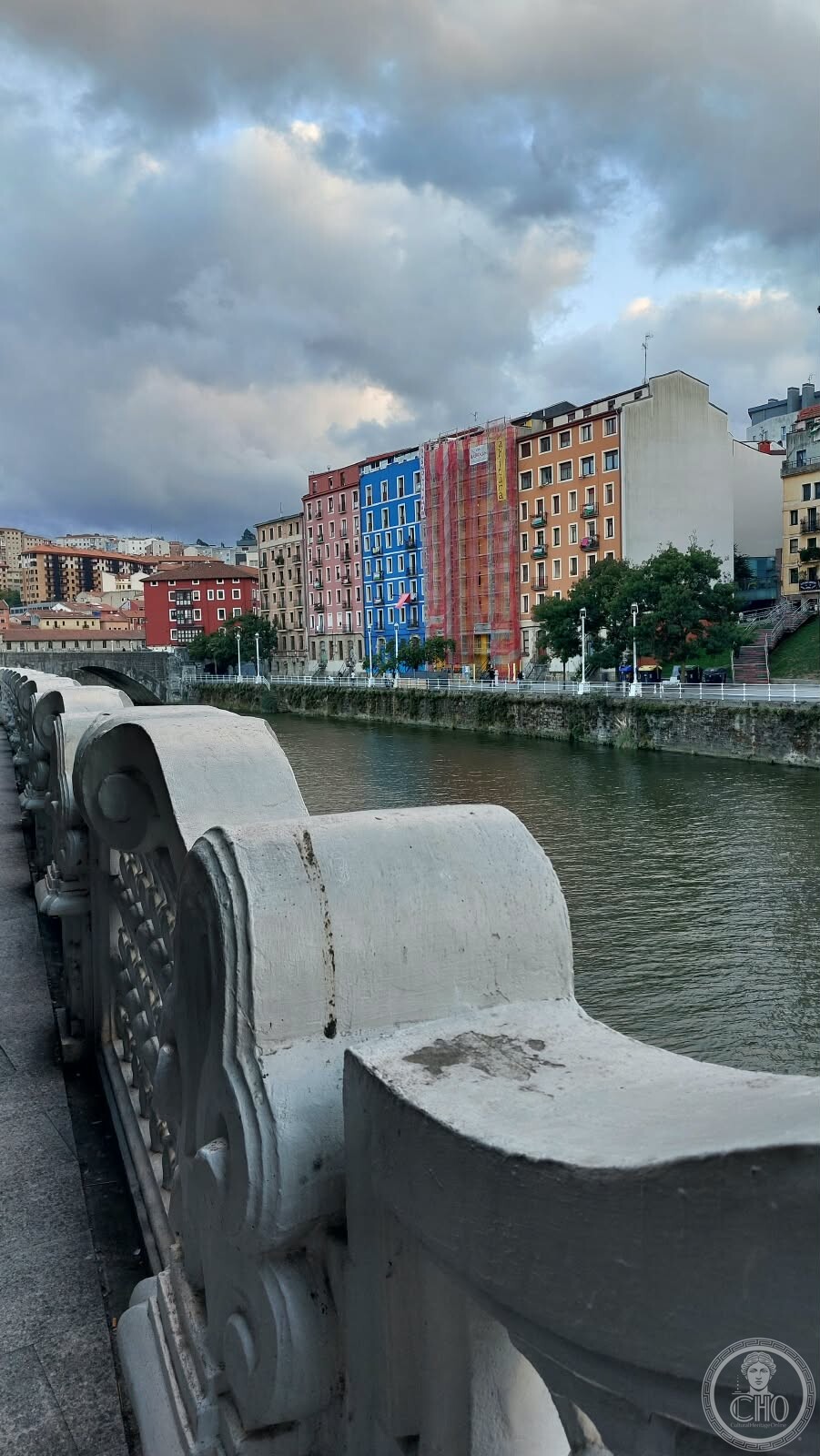
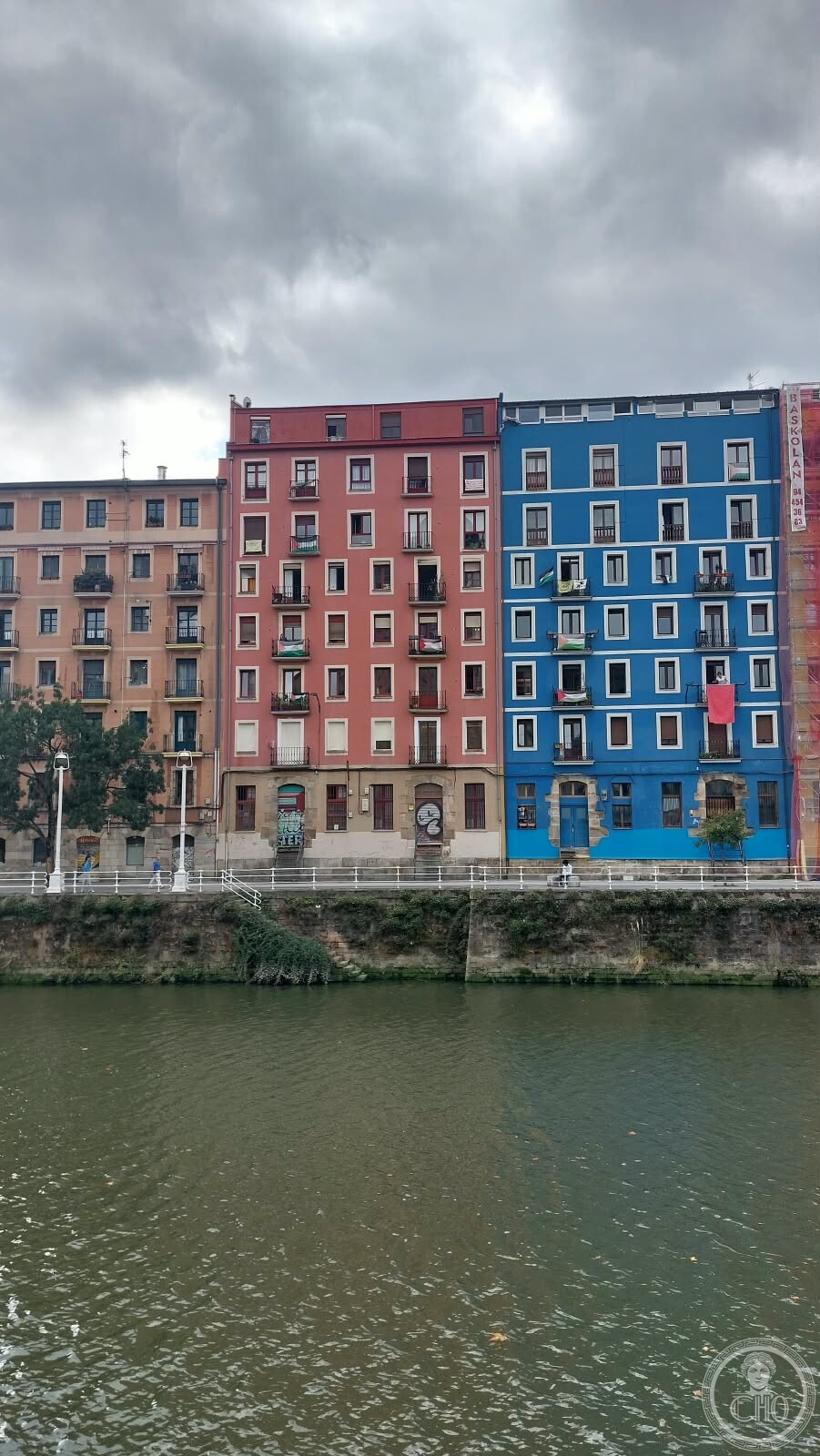
A short stretch of quay on the left bank of the Nervión, lined with balconies painted pink, blue and orange and hung with glass galleries. It looks straight across the river at Bilbao’s old town, and a few minutes’ walk brings you to the largest covered food market in Europe.
At a glance
The Muelle de Bilbao la Vieja is a walkway along the river Nervión, in the neighbourhood of the same name — a district that is in fact older than the medieval Casco Viejo it faces across the water. Its apartment buildings are painted in bright, unmatched colours, several with ornate glazed balconies (miradores) typical of northern Spanish river cities, and the quay is often described as an unexpected viewpoint onto the old town. A short walk away, on the opposite bank, stands the Mercado de la Ribera, recognised by Guinness World Records in 1990 as the largest covered market in the world, and a natural stop for the local pintxos that the area is known for.
Key facts
- Where: the left bank of the river Nervión, in the Bilbao la Vieja quarter
- Faces: the Casco Viejo (Bilbao’s old town), across the river
- Nearby: the Mercado de la Ribera, the largest covered food market in the world (Guinness World Records, 1990)
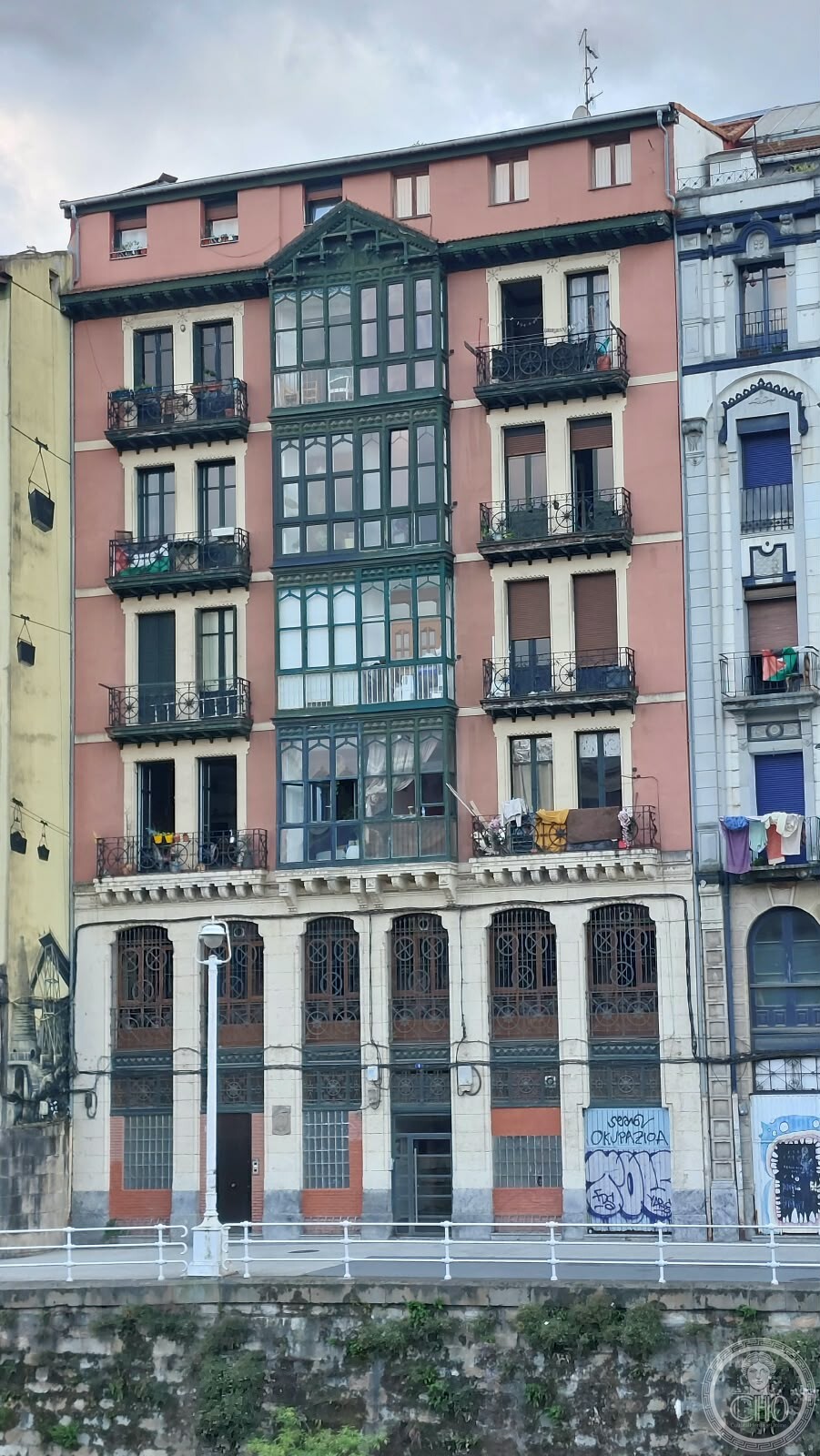
- What you see: apartment facades in mismatched colours, several with glazed mirador balconies
- The neighbourhood: Bilbao la Vieja, older than the Casco Viejo itself, historically tied to the mining district of Miribilla and today one of the city’s most multicultural quarters
Older than the old town
Bilbao la Vieja — “old Bilbao,” Bilbo Zaharra in Basque — takes its name seriously: the district predates the Casco Viejo that was founded in 1300 and is usually called Bilbao’s historic centre. For much of its history it was a working quarter, home to miners from the nearby hill of Miribilla. Today it is one of the city’s most multicultural neighbourhoods, and it has been going through a deliberate wave of urban renewal, with the municipality encouraging new shops and young businesses into streets that were, for decades, among the poorest in the city. The quay itself sits between the bridge of La Merced and the wharf of La Naja, and it is often singled out as one of the views with the greatest social and cultural mix in Bilbao.
What you see
The row of facades along the quay is deliberately mismatched: pink beside blue beside terracotta, some plain, some carrying the enclosed, richly glazed balconies called miradores that are common on the Cantabrian coast, built to catch the light while keeping out the wind and rain. Laundry lines, small flags and the occasional piece of street art complete a scene that is lived-in rather than restored for effect. Across the river, the pale stone frontages of the Casco Viejo make a deliberate contrast.
Getting there
The quay is a short walk from the Casco Viejo, on the opposite bank of the Nervión, and close to the Mercado de la Ribera.
Sources
- Wikipedia, “Bilbao la Vieja” — on the district’s age relative to the Casco Viejo, its mining-era history, and its ongoing urban renewal.
- I Love Bilbao and Bilbaopedia — on the Muelle de Bilbao la Vieja as a viewpoint onto the Casco Viejo, between the bridge of La Merced and the wharf of La Naja.
- Guggenheim Bilbao Museum and Barceló Hotels, city guides — on the Mercado de la Ribera and its Guinness World Records recognition (1990) as the world’s largest covered market.
- Barbara De Marchi, who photographed the quay and described its setting.
Gallery
Photographs by Barbara De Marchi.
Find it on the map
See this place and what’s around it →Record researched and written by Barbara De Marchi for Cultural Heritage Online, 2026.
📷 Become a Cultural Heritage Online photographer
Share your photos of places: they stay published under your name as the author. The more they're seen, the more you get noticed — and soon a contest will reward the most appreciated photos.
Log in or sign up free to add a photo