
Venice, Veneto · built in 1907 · a twentieth-century building that pretends to be Gothic, over a market eight centuries old
At a glance
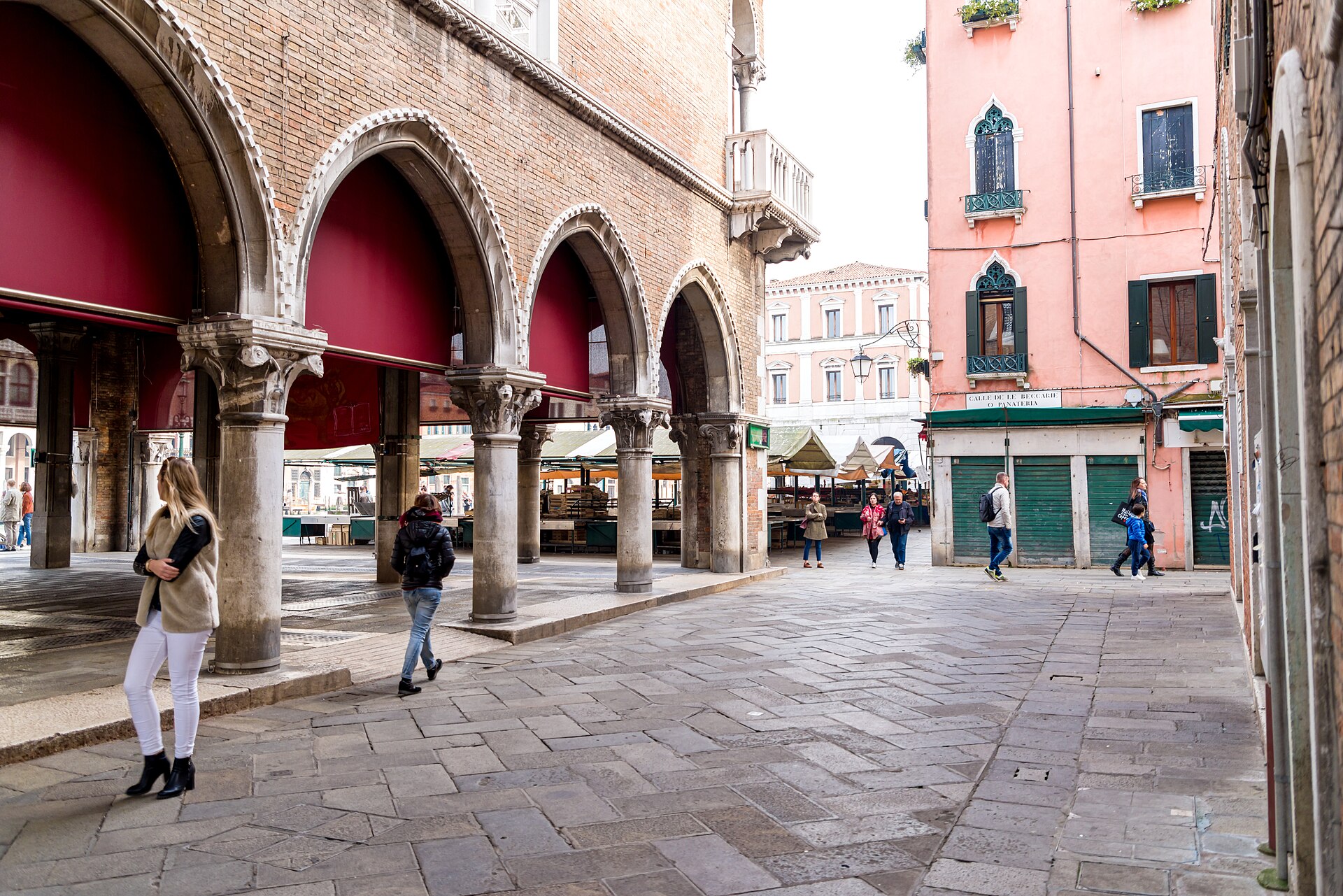
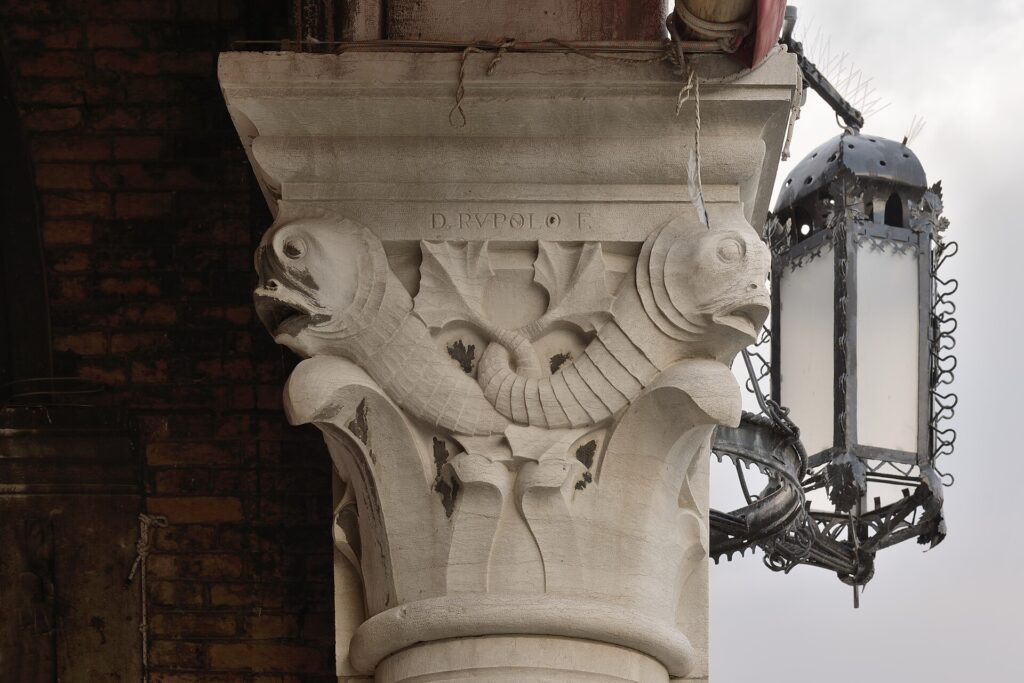
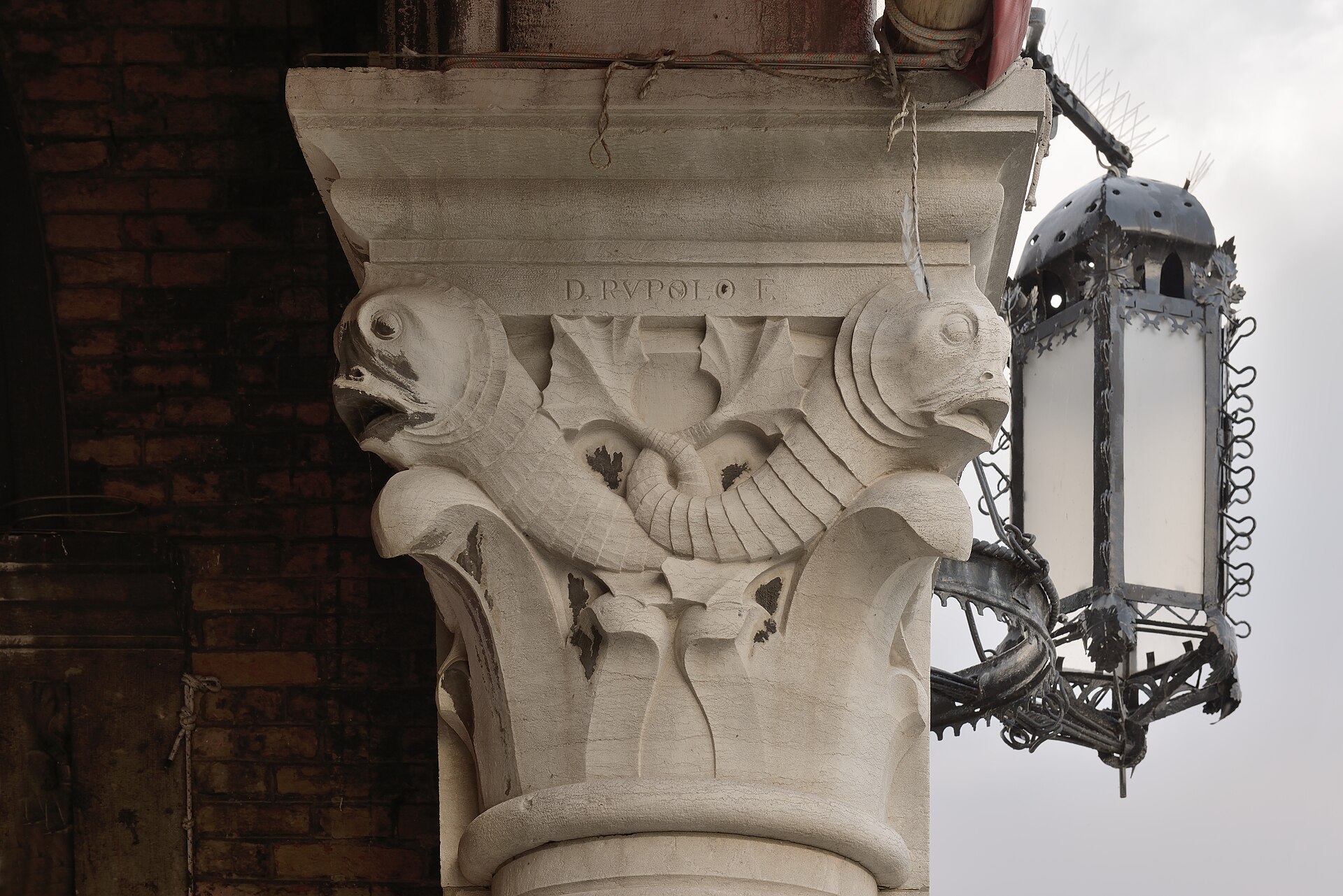
The Pescaria looks like the oldest thing at Rialto and is among the newest. The loggia with its pointed arches and carved capitals went up in 1907, to replace the iron canopies that had sheltered the fish stalls through the nineteenth century. The painter Cesare Laurenti and the architect Domenico Rupolo designed a building in deliberate Venetian Gothic, so that a market hall of the age of reinforced concrete would look as though it had always stood on the Grand Canal. Then they did something no medieval mason would have done: they carved the capitals with the catch. Crabs, scallops, lobsters, seaweed, seahorses, and the wicker baskets called vieri in which live fish were kept in the water.
Key facts
- Built in 1907, in neo-Gothic style, on the site of the nineteenth-century metal canopies
- Architect: Domenico Rupolo (Caneva, 1861–1945); with the painter Cesare Laurenti (1854–1936)
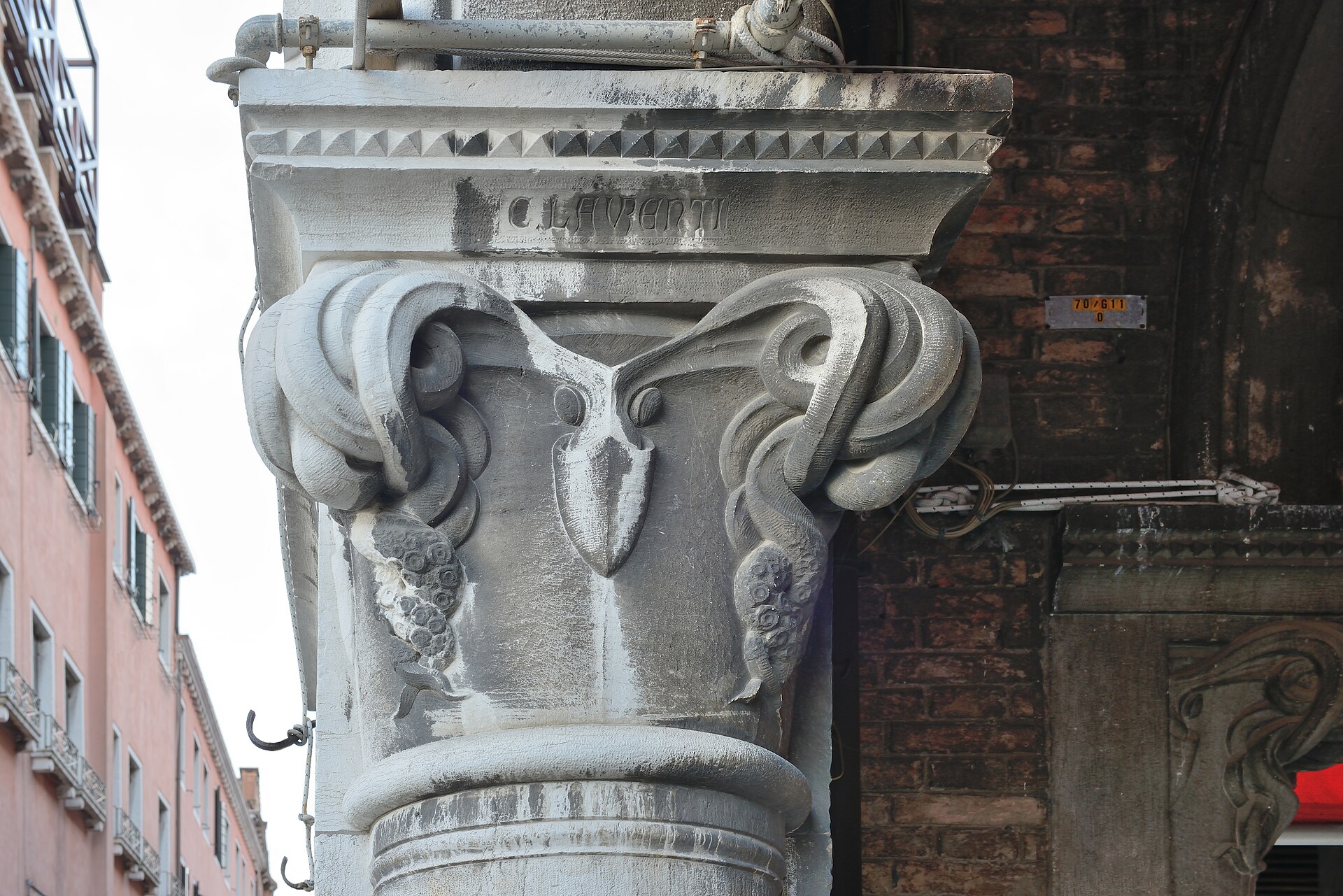
- Each capital carries a different creature of the lagoon, carved by Rupolo to Laurenti’s drawings
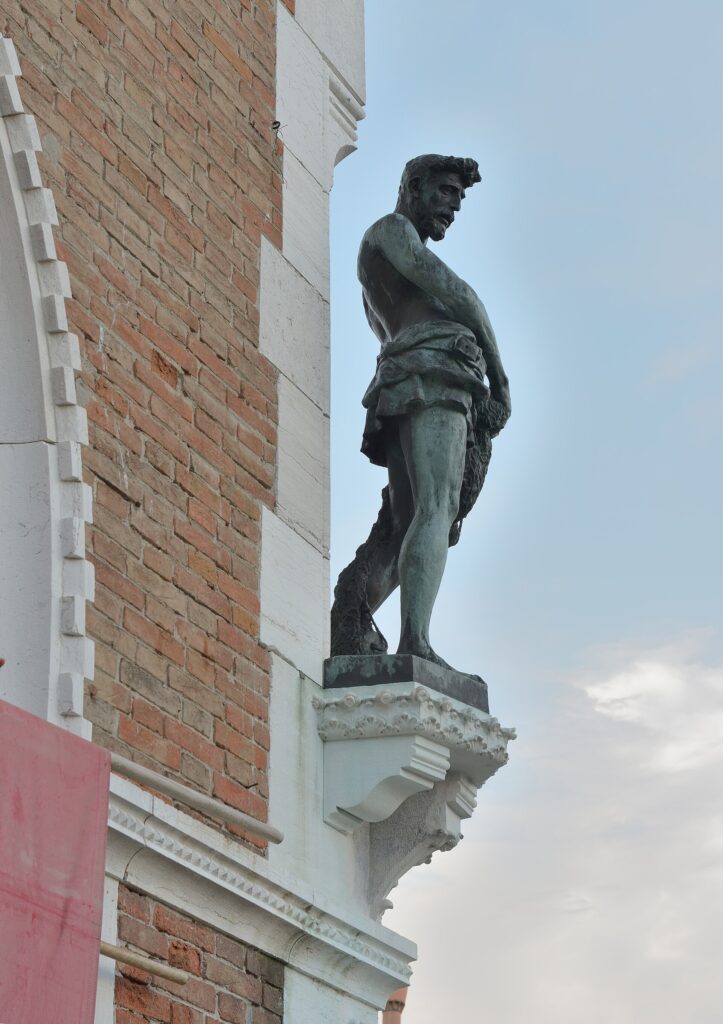
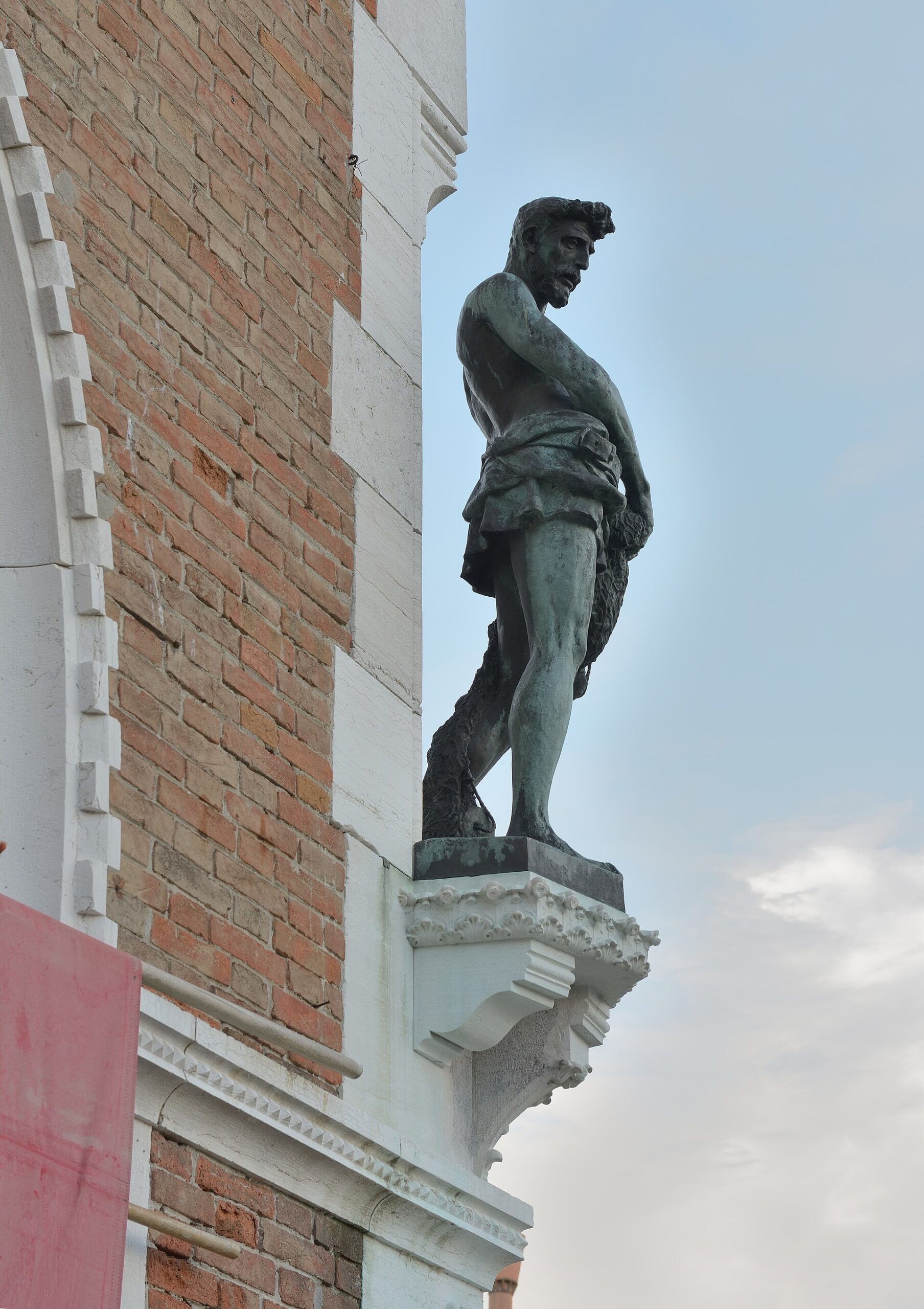
- A bronze Fisherman by Laurenti, representing Saint Peter, stands about four metres above the ground at the corner facing the Grand Canal
- Fish has been sold on this spot since the Middle Ages: the Arte dei pescatori, the fishermen’s guild, dates from 1227
- Marble tables record the minimum legal size of fish that may be sold — a rule still displayed to buyers
- Officially the Loggia della Pescaria, on Campo della Pescaria, sestiere of San Polo
History
Under the Republic, fish reached Venetians through two places and almost nowhere else: the great markets of Rialto and San Marco. The trade was organised early and tightly. The fishermen’s guild is documented from 1227 and was split into two trades, the pescatori who caught and the compravendipesce who bought and resold. The rules were physical as well as written. Marble tables, still in place, give the smallest size at which each species may legally be sold, so that a buyer could measure a doubtful fish against the stone in front of the stall.
By the nineteenth century the market worked under metal canopies, and the city decided they were not good enough for the Grand Canal. The plan for a permanent building was approved by the city council in 1900, and the new hall opened in 1907. Its authors were an unusual pair. Rupolo built in medieval styles — neo-Gothic, neo-Byzantine, neo-Romanesque — often mixed with the new Liberty manner, and in 1902 he had been put in charge of restoring Sansovino’s Loggetta after the campanile of San Marco collapsed on it. Laurenti was a Symbolist painter, winner of the Prince Umberto prize at Brera in 1891, given his own room at the Venice Biennale of 1907, and in that same year a member of the appeal commission on how the fallen campanile should be rebuilt. Two men, in other words, who had spent the decade arguing about what a rebuilt Venice should look like, and who then built one.
What you see
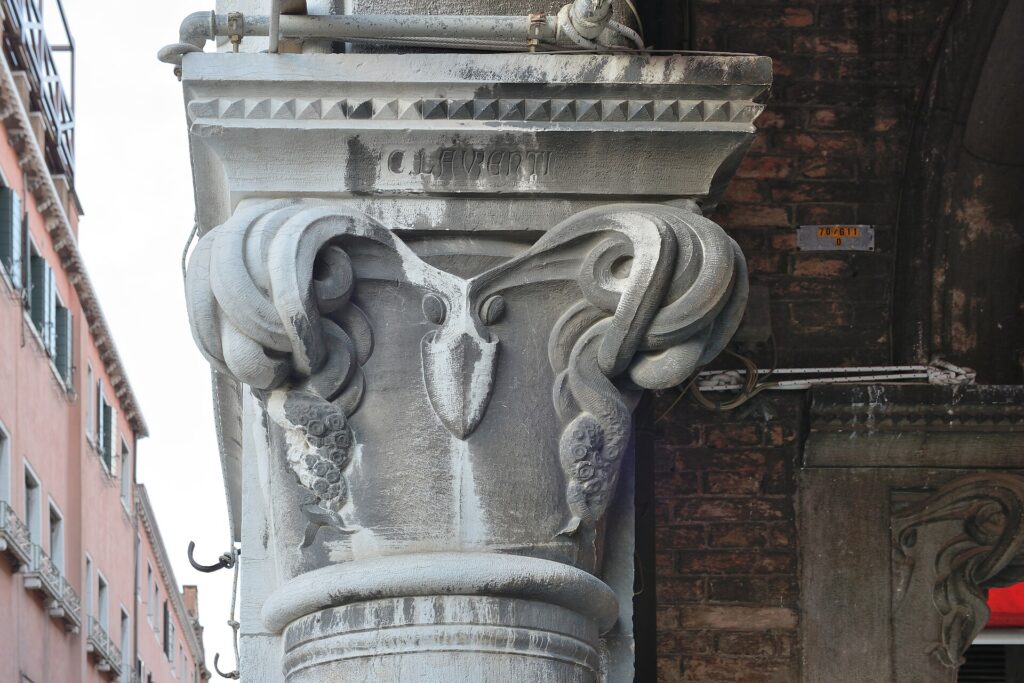
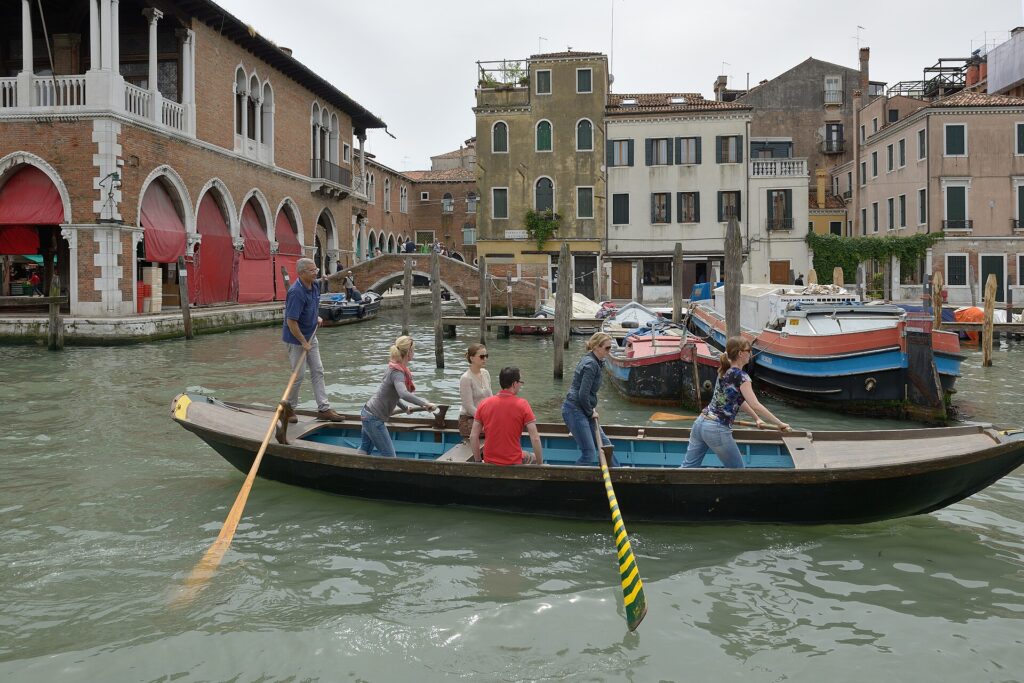
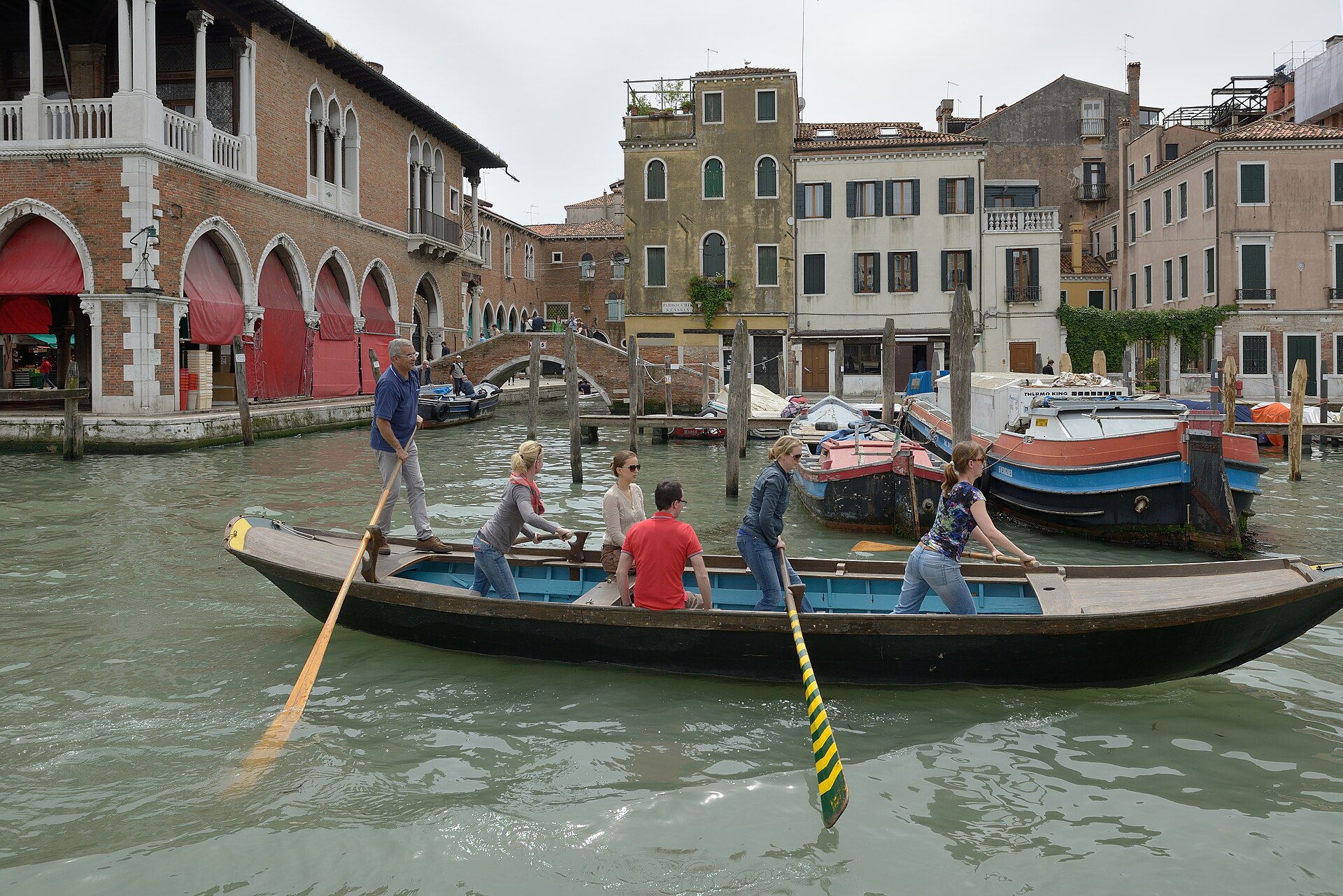
From the campo the building is a two-storey loggia in brick and Istrian stone, open on the ground floor where the stalls stand, with pointed arches carried on stout columns and red awnings between them. Go to the columns. Every capital is different, and every one is a still life of the lagoon: a cluster of fish, a knot of tentacles with the suckers picked out one by one, scallop shells, a crab. On the abacus above one of them the sculptor cut a name — C. LAVRENTI — so the painter who drew these creatures signed the stone like a canvas.
The other thing to find is the bronze. At the corner of the loggia over the Grand Canal, about four metres up, a fisherman hauls at his net. He is Saint Peter, and Laurenti modelled him in the first years of the twentieth century: a working man on a market building, put where a saint in a niche would normally be. Below him the water traffic never stops, and the light from the canal comes in under the arches sideways, which is why the market is loudest and most beautiful at seven in the morning.
Photographs
Practical information
- This is a working fish market, not a monument: it trades in the morning and closes around midday, and it does not open on Sundays and Mondays
- Early morning is when there is something to see; by the afternoon the stalls are hosed down and empty
- The loggia and its capitals can be walked through at any hour — the architecture does not close
- The neighbouring Erberia, the fruit and vegetable market, works the same hours along the canal
Getting there
The Pescaria stands on the San Polo bank of the Grand Canal, just north of the Rialto Bridge. Cross the bridge from the San Marco side and turn right through the market streets, or take the vaporetto to Rialto Mercato, which lands at the steps beside the loggia. The Ca’ d’Oro traghetto crosses the canal a short walk north.
Nearby
- Ponte di Rialto — two minutes south
- The Erberia and the Fabbriche Nuove, along the same bank
- San Giacomo di Rialto, the small church at the foot of the bridge
Sources
- Comune di Venezia, Pescheria e Mercato di Rialto (live.comune.venezia.it): the Palazzo della Pescheria as a modern neo-Gothic building erected in 1907 to replace the metal canopies of the nineteenth-century stalls; the bronze fisherman by Cesare Laurenti, about four metres above the ground, representing Saint Peter; fish sold under the Republic almost exclusively at the two great markets of Rialto and San Marco; the Arte dei pescatori of 1227 and its division into pescatori and compravendipesce; the marble tables of minimum sizes.
- Wikipedia, Domenico Rupolo (Italian): dates of birth and death, his medieval revival styles combined with Liberty, the 1902 restoration of the Loggetta Sansovino, and the Pescheria di Rialto designed with Cesare Laurenti.
- Wikipedia, Cesare Laurenti (pittore) (Italian): the Prince Umberto prize of 1891, the turn to Symbolism and to Liberty decoration, the one-man room at the 1907 Biennale, his place on the 1907 appeal commission for the rebuilding of the campanile of San Marco, and the Pescheria di Rialto as the culmination of his return to the Venetian tradition.
- Visititaly.eu, «Pescaria»: the ancient fish market of Rialto: the 1900 council approval of the project; the subjects carved on the capitals — fish, scallops, crabs, lobsters, seaweed, seahorses and the boats with the baskets called vieri.
- The signature C. LAVRENTI cut into the abacus of one capital is legible in Wolfgang Moroder’s photograph of that capital on Wikimedia Commons, reproduced in the gallery above.
Gallery
Find it on the map
See this place and what’s around it →📷 Become a Cultural Heritage Online photographer
Share your photos of places: they stay published under your name as the author. The more they're seen, the more you get noticed — and soon a contest will reward the most appreciated photos.
Log in or sign up free to add a photoIs this page about you?
This page is read by travellers and heritage enthusiasts who find it on Google. Tell us how you are connected to this place and we will take it from there.