
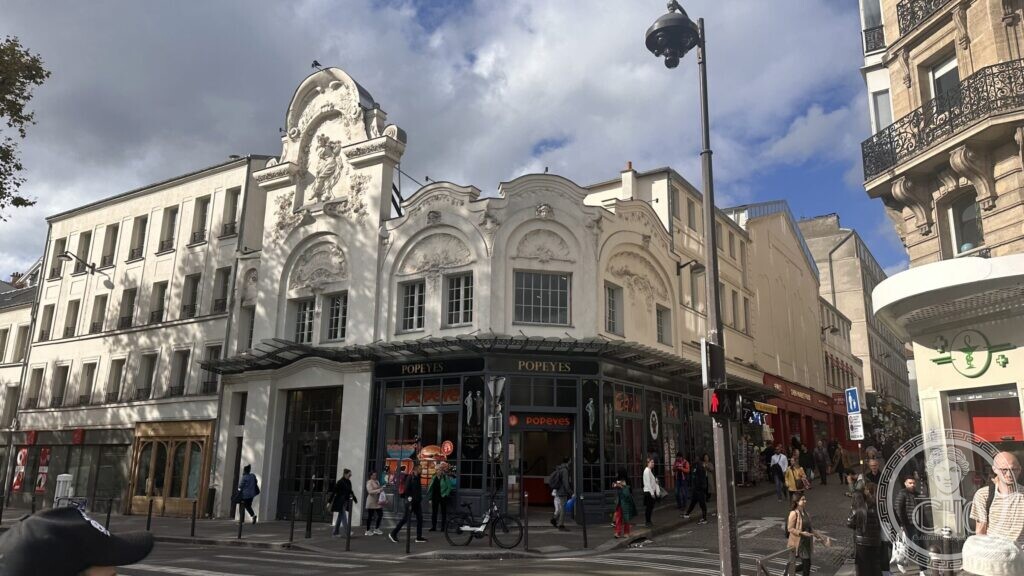
Paris, France · 1897–1908 · Concert hall
At a glance
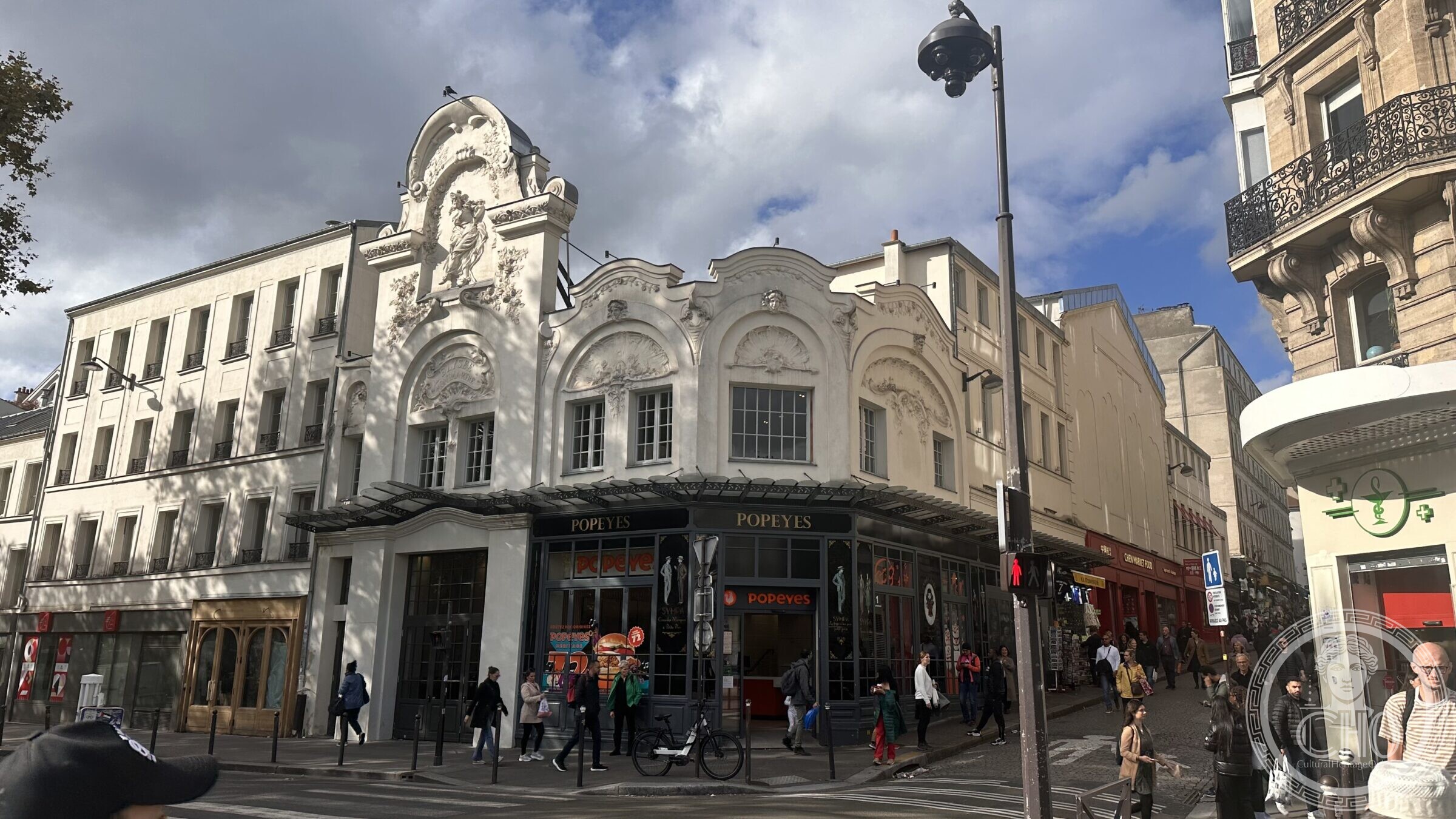
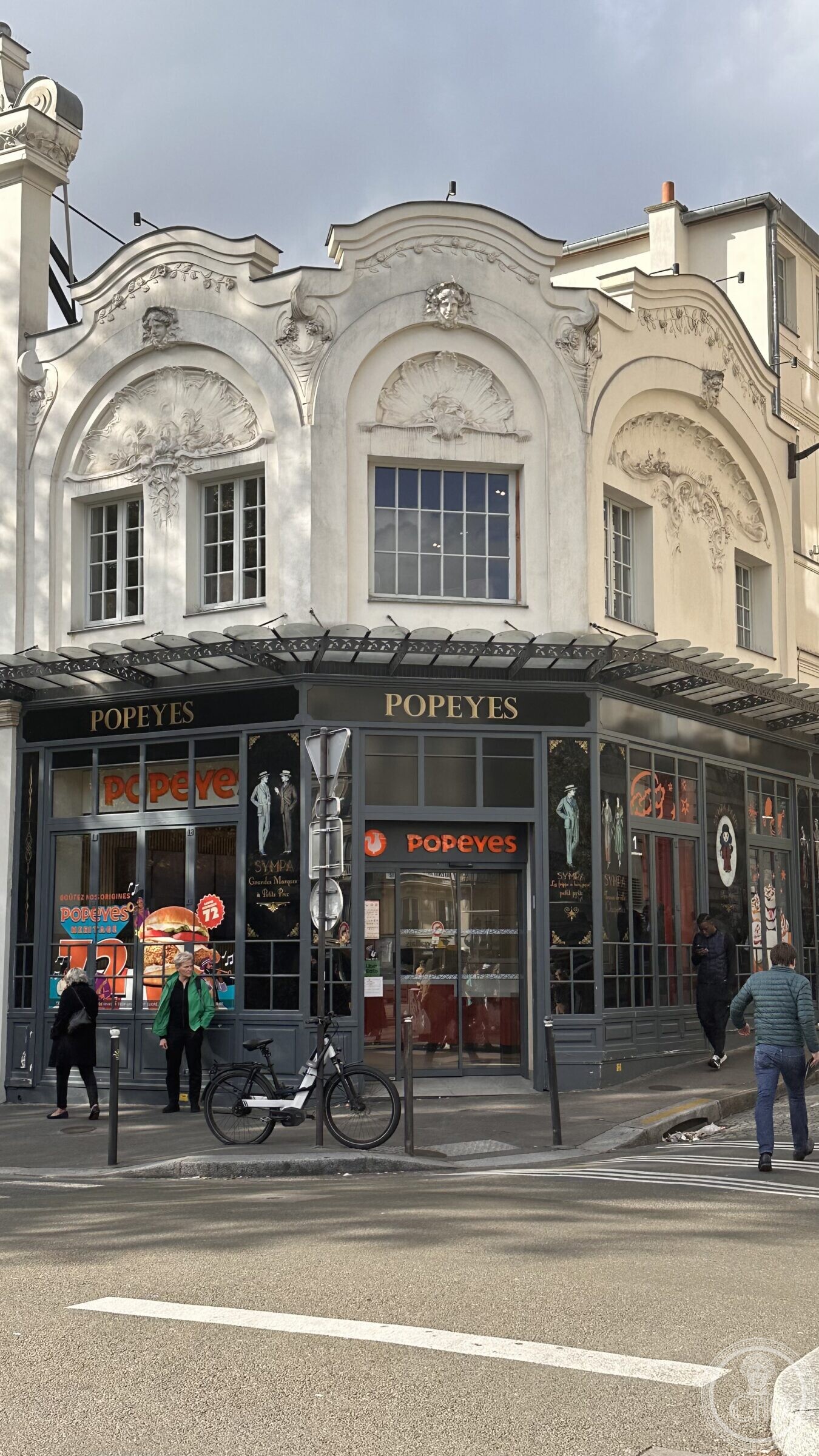
A white front at the foot of Montmartre: four bays of scallop shells and mascarons under a curved pediment, with a woman modelled in staff stepping out of a garland of roses. Behind it is a hall that has been in the entertainment business since 1807, and where the French cancan was danced. The façade dates from 1908; the metal frame behind it from 1897. Both came through two fires, a century apart. The ground floor is now a fast-food counter, behind glass painted with figures in the fashion of the 1920s.
Key facts
- Address: 72, 74, 76 boulevard de Rochechouart and 1, 3 rue de Steinkerque, Paris 18e
- Opened: 1807, as a dance hall
- Metal framework: 1897. Façade: 1908, with a female figure in staff on the pediment
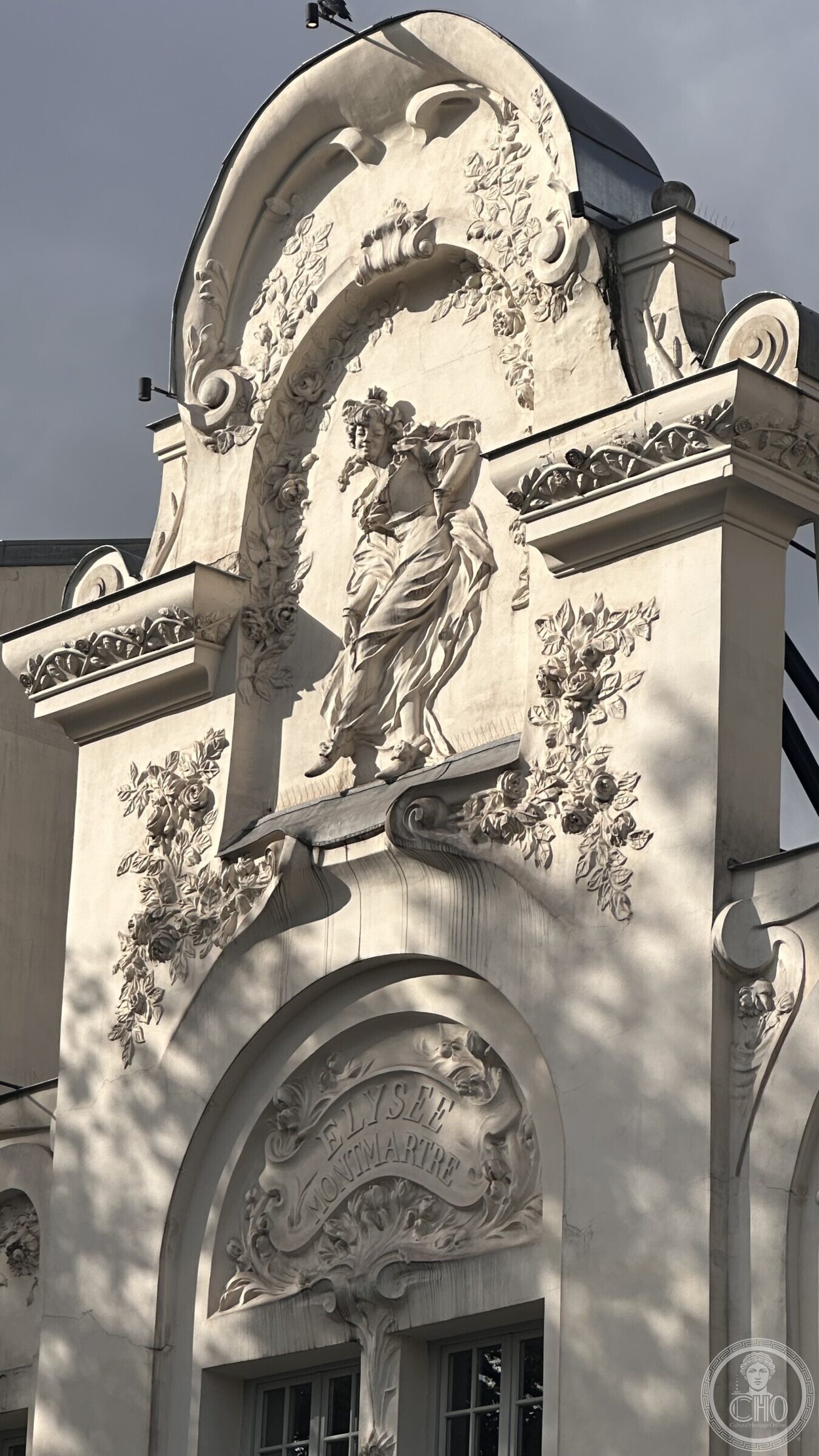
- The bas-relief over the entrance — a woman surrounded by garlands of roses — comes from the Bal Mabille, the pleasure garden of the faubourg Saint-Honoré
- Listed: inscribed as a monument historique on 4 March 1988 — the façade on boulevard de Rochechouart with its return on rue de Steinkerque, and the decors of the former dancing hall (Mérimée PA00086757)
- Attributed: the rebuilding of 1897 to the architect Édouard-Jean Niermans, re-using the metal structure of the French pavilion built by Gustave Eiffel for the 1889 Exposition Universelle — reported by the city tourist office and the French encyclopaedia, not by the listing notice, which names no architect
- Fires in 1900, after which the interior was redone in a rococo manner, and again in 2011
- Restored and reopened in October 2016; it works today as a concert hall
- Coordinates: 48.883115, 2.343420
What you see
The pediment is the piece worth crossing the boulevard for. A woman in a long dress steps forward off a ledge, carved roses climbing the arch around her, the whole thing white and matt because it is staff — plaster on fibre, the cheap material of exhibition architecture, used here as if it were stone. Below her, a cartouche holds the two words ELYSEE MONTMARTRE in relief, bordered by more roses and a grinning mask. The bays to the right repeat a scallop shell in each arch, each one with a different face looking out of the keystone above.
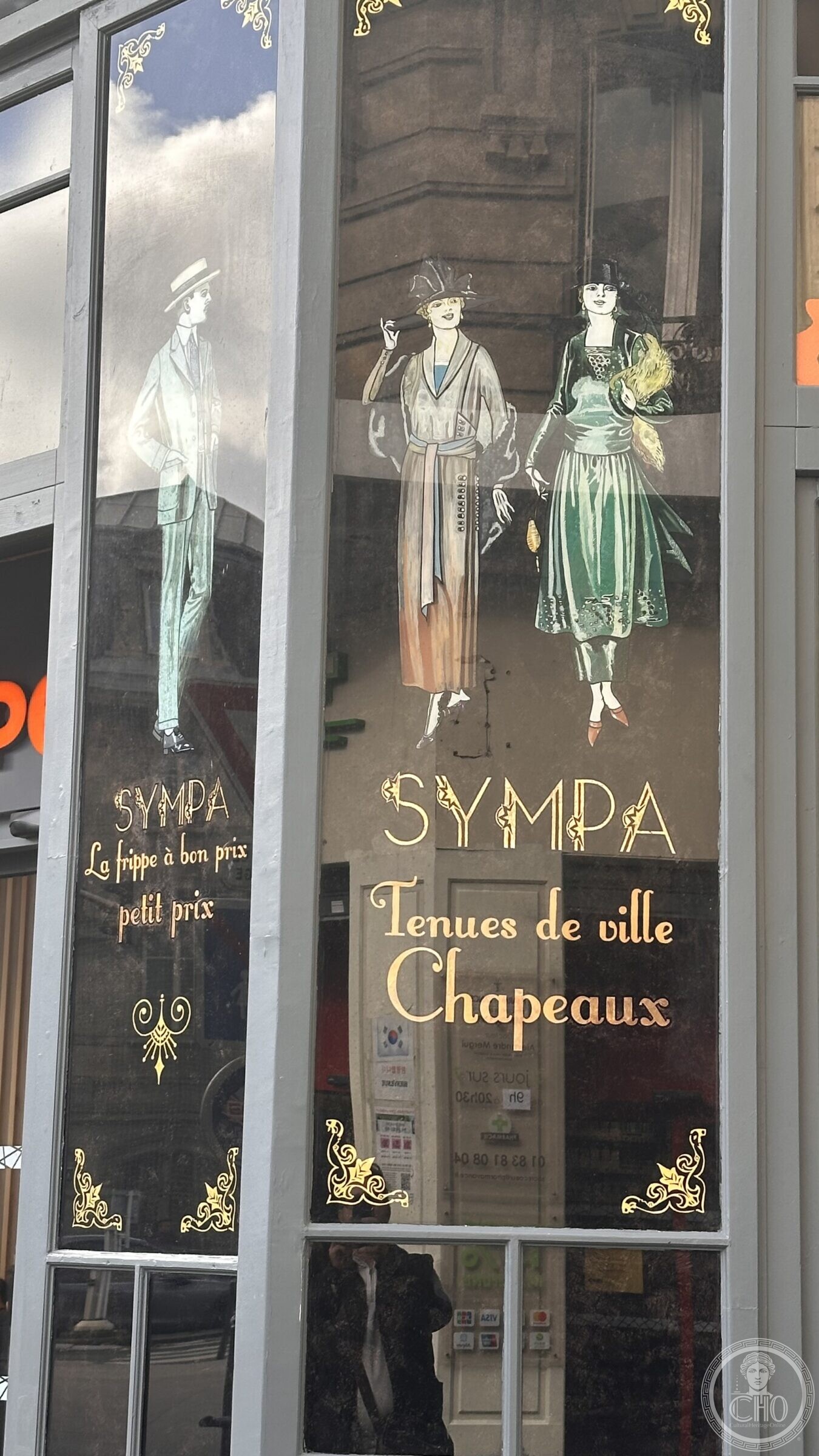
Under the canopy, the shopfront has been left as it was found. Tall panes carry painted figures — a man in a boater, two women in cloche hats and low-waisted dresses — with gold lettering that reads SYMPA, Tenues de ville, Chapeaux, and, on the narrow pane, La frippe à bon prix, petit prix: the second-hand clothes shop that was an institution of the Anvers quarter, with several doors along this boulevard. In October 2024 the painted glass was still there, and the counter behind it belonged to a fast-food chain. It is an odd arrangement, and it is also why the glass survived.
Practical information
- A working concert hall: the inside is open to ticket-holders, the façade to anyone walking up rue de Steinkerque towards Sacré-Cœur. Check the programme before travelling.
- Métro Anvers, on the same boulevard.
Sources
- Plateforme ouverte du patrimoine, Mérimée notice PA00086757 (Théâtre de l’Elysée-Montmartre, ancien dancing): the address; the protection of 4 March 1988 covering the façade on boulevard de Rochechouart with its return on rue de Steinkerque and the decors of the hall of the former dancing; the building campaigns of 1897 (metal framework) and 1908 (façade with the female figure in staff). The notice names no architect.
- Paris Promeneurs: the opening in 1807 and the dance hall under the Serres family until 1867; the french cancan; the fire of 1900 and the rococo redecoration that followed; the bas-relief of the pediment coming from the Bal Mabille in the faubourg Saint-Honoré, a woman surrounded by garlands of roses; the Trianon-Concert built next door in 1894; the fire of 2011 and the reopening in October 2016.
- The attribution of the 1897 rebuilding to Édouard-Jean Niermans, and the re-use of Gustave Eiffel’s French pavilion from the 1889 Exposition Universelle, are reported by the Paris tourist office and by the French Wikipedia entry. They are given here as attributions because the listing notice does not confirm them.
- OpenStreetMap: coordinates.
- The state of the shopfront in October 2024: the photographs on this page.
Record researched and written by Luigi De Marchi for Cultural Heritage Online, 2026.
Find it on the map
See this place and what’s around it →📷 Become a Cultural Heritage Online photographer
Share your photos of places: they stay published under your name as the author. The more they're seen, the more you get noticed — and soon a contest will reward the most appreciated photos.
Log in or sign up free to add a photoIs this page about you?
This page is read by travellers and heritage enthusiasts who find it on Google. Tell us how you are connected to this place and we will take it from there.