
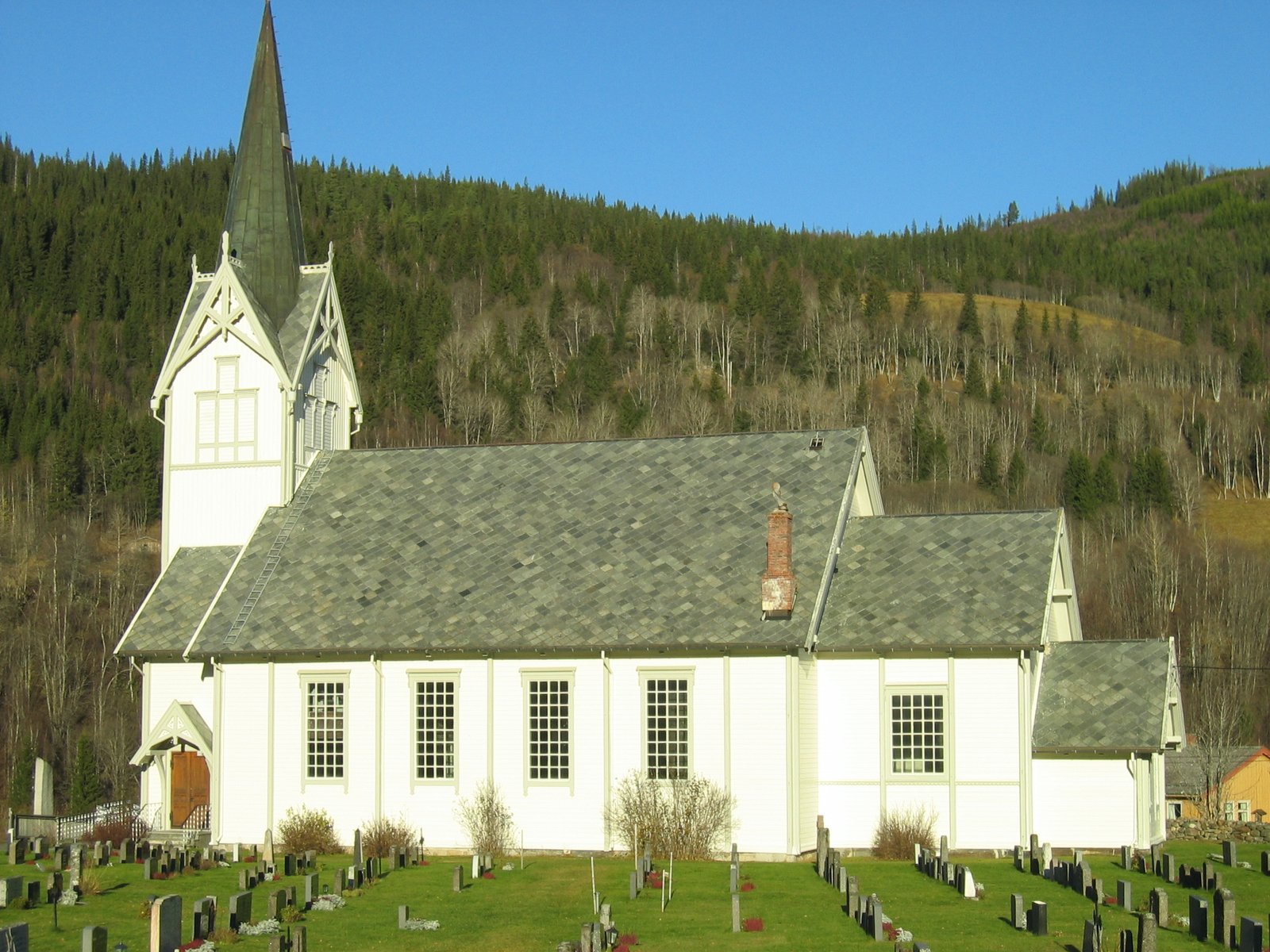
A white wooden church in the Norwegian countryside, designed in the neo-Gothic style and completed in 1884 for the parish of Singsås in Trøndelag.
At a glance
Singsås Church serves the village of Singsås in Midtre Gauldal Municipality. The parish belongs to the Gauldal deanery within the Diocese of Nidaros. Its capacity is approximately 450 worshippers.
History
The church was built in 1884 according to plans drawn up by architect Johan Digre. It was constructed as a parish church for the local community, serving the spiritual needs of Singsås and surrounding areas in Trøndelag.
What you see
The building is a wooden structure painted white, designed in the neo-Gothic long church style. This architectural choice was popular for Norwegian parish churches of the period, combining traditional Scandinavian construction with contemporary Gothic Revival aesthetics.
Cultural significance
As a nineteenth-century parish church, Singsås represents the religious and architectural heritage of rural Norway. The neo-Gothic style reflects broader European architectural movements of the era, adapted to Norwegian building traditions and the local landscape.
Key facts
- Country: Norway
- Location: Midtre Gauldal Municipality, Trøndelag
- Completed: 1884
- Architect: Johan Digre
- Style: Neo-Gothic long church
- Material: Wood, painted white
- Capacity: Approximately 450 people
- Coordinates: 62.94183038, 10.65046728
Practical information & getting there
The church is located in the village of Singsås within Midtre Gauldal Municipality. For visiting hours, current information on services, or access details, contact the Gauldal deanery or the Diocese of Nidaros.
Sources & resources
Find it on the map
See this place and what’s around it →📷 Become a Cultural Heritage Online photographer
Share your photos of places: they stay published under your name as the author. The more they're seen, the more you get noticed — and soon a contest will reward the most appreciated photos.
Log in or sign up free to add a photoIs this page about you?
This page is read by travellers and heritage enthusiasts who find it on Google. Tell us how you are connected to this place and we will take it from there.