
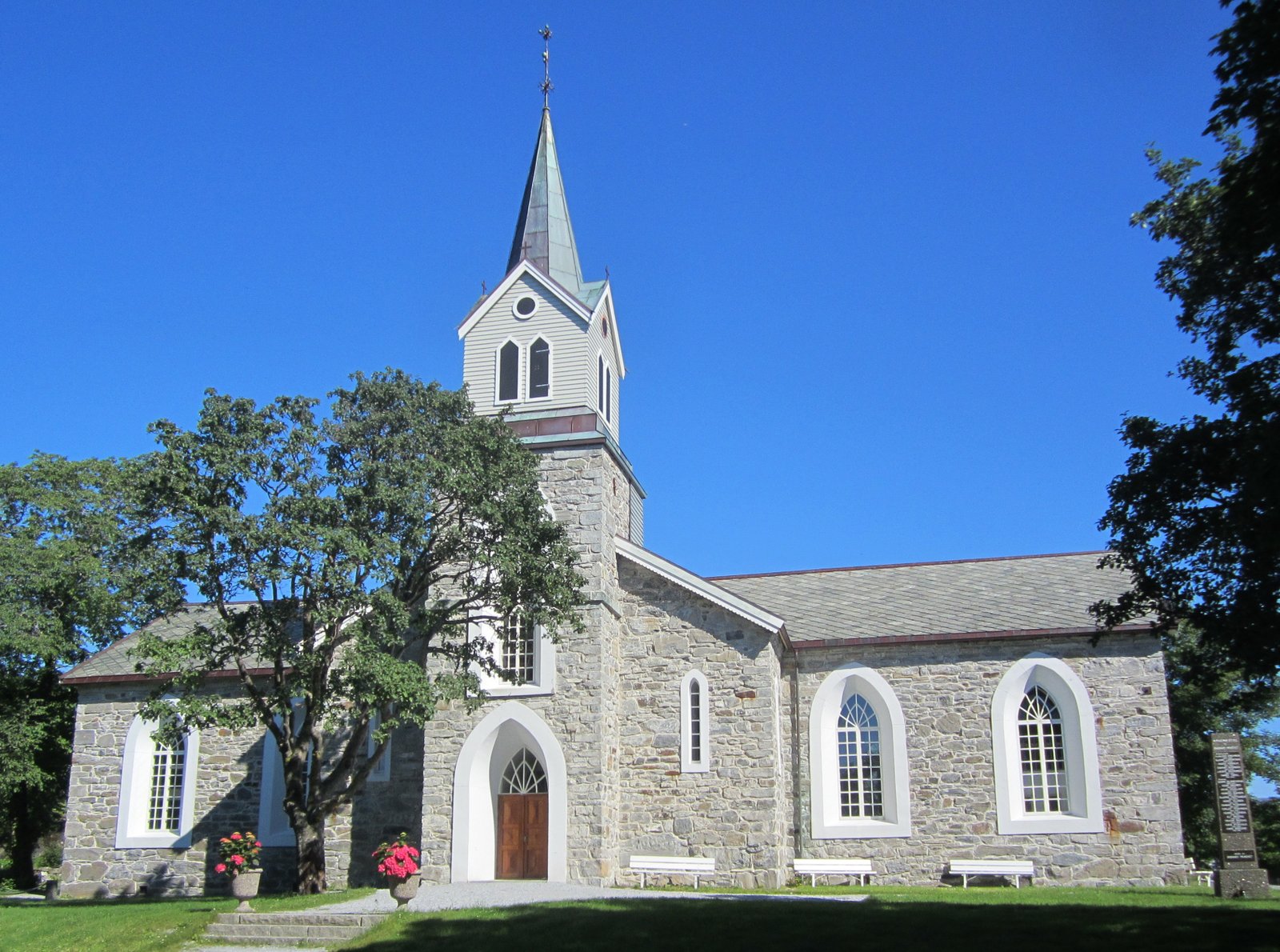
A Neo-Gothic stone parish church built in the 19th century to serve the Brønnøy parish in Nordland county.
At a glance
Brønnøy Church is a brown cruciform stone structure completed in 1870, seating approximately 450 worshippers. It stands as the principal church of Brønnøy parish in the Diocese of Sør-Hålogaland and remains active within the Church of Norway today.
History
The church was constructed in 1870 to serve the growing parish community. Architect Haakon Mosling designed the building in the Neo-Gothic idiom that dominated ecclesiastical architecture across Scandinavia during this period.
What you see
The church presents a cruciform plan executed in brown stone. Its Neo-Gothic vocabulary—typical of the era—emphasizes vertical proportions and pointed arch details. The robust, honest construction reflects the building traditions of rural Nordland.
Cultural significance
Brønnøy Church embodies the 19th-century expansion of ecclesiastical infrastructure in northern Norway. As the deanery church for Sør-Helgeland, it has served as a spiritual and social center for the Brønnøy community for over 150 years.
Key facts
- Country: Norway
- Municipality: Brønnøy
- Town: Brønnøysund
- Built: 1870
- Architect: Haakon Mosling
- Style: Neo-Gothic
- Material: Stone
- Seating capacity: approximately 450
- Coordinates: 65.4688792, 12.20638722
Practical information & getting there
Brønnøy Church is located in Brønnøysund, the administrative center of Brønnøy Municipality. The church remains in active use and visitors should contact the parish office in advance to confirm visiting hours.
Sources & resources
Find it on the map
See this place and what’s around it →📷 Become a Cultural Heritage Online photographer
Share your photos of places: they stay published under your name as the author. The more they're seen, the more you get noticed — and soon a contest will reward the most appreciated photos.
Log in or sign up free to add a photoIs this page about you?
This page is read by travellers and heritage enthusiasts who find it on Google. Tell us how you are connected to this place and we will take it from there.