
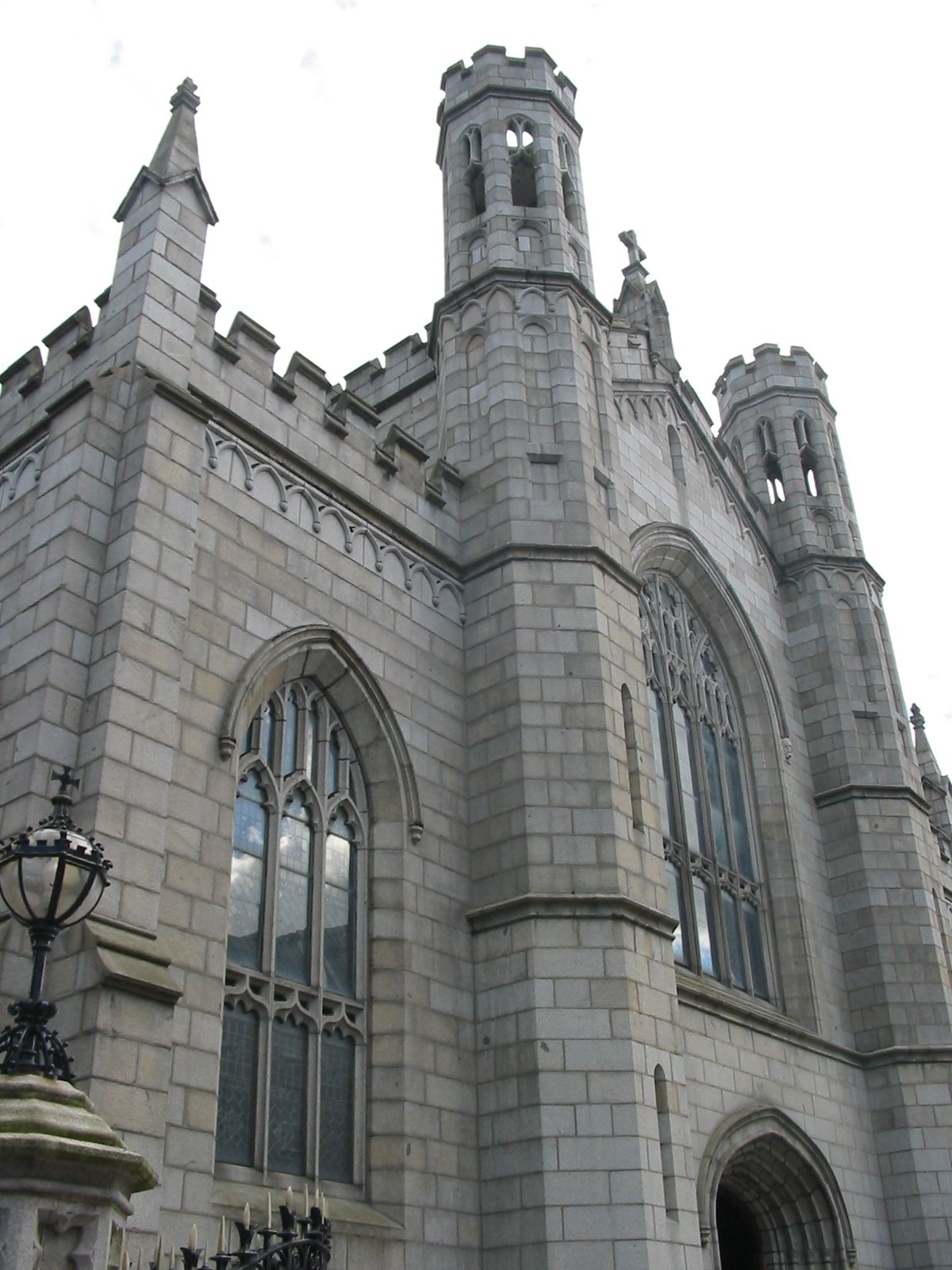
A granite cathedral dedicated to Saint Patrick and Saint Colman, Newry Cathedral stands as Ireland’s first Catholic cathedral to open after Catholic Emancipation, designed by local architect Thomas Duff.
At a glance
This Grade A listed building occupies Newry’s Main Street as the seat of the Bishop of Dromore and mother church of the Roman Catholic Diocese of Dromore. Before the COVID-19 pandemic, it welcomed over 200,000 visitors annually.
History
The cathedral replaced St Mary’s Church, a chapel built in 1789 by Bishop Lennan that served as both parish church and quasi-cathedral for forty years, with two bishops receiving episcopal consecration within its walls. Newry Cathedral was designed by Thomas Duff, Newry’s greatest native architect. Construction began in 1825, and the basic structure was completed by 1829.
Expansion continued into the twentieth century. The tower and transept were added in 1888, and the nave was extended in 1904 under the supervision of Bishop Henry O’Neill.
What you see
Built from local granite, the cathedral’s architecture reflects its nineteenth-century design and successive enlargements. The tower and transepts, added in the late 1880s, distinguish its external composition, while the extended nave demonstrates the ongoing refinement of its interior spaces throughout the early 1900s.
Cultural significance
Newry Cathedral holds exceptional importance in Irish Catholic history as the first cathedral of the faith to be completed and opened after Catholic Emancipation in 1829. It represents both architectural achievement and religious freedom—a tangible marker of changing civil rights in Ireland.
Key facts
- Location: Newry, Northern Ireland, United Kingdom
- Coordinates: 54.174744, −6.337652
- Designed by: Thomas Duff
- Construction began: 1825
- Basic structure completed: 1829
- Tower and transept added: 1888
- Nave extended: 1904
- Listed status: Grade A
- Pre-pandemic annual visitors: over 200,000
Practical information & getting there
The cathedral is centrally located on Newry’s Main Street, making it easily accessible on foot from the town centre. Detailed opening hours and visitor information should be confirmed directly with the cathedral or the Diocese of Dromore.
Sources & resources
Find it on the map
See this place and what’s around it →📷 Become a Cultural Heritage Online photographer
Share your photos of places: they stay published under your name as the author. The more they're seen, the more you get noticed — and soon a contest will reward the most appreciated photos.
Log in or sign up free to add a photoIs this page about you?
This page is read by travellers and heritage enthusiasts who find it on Google. Tell us how you are connected to this place and we will take it from there.