
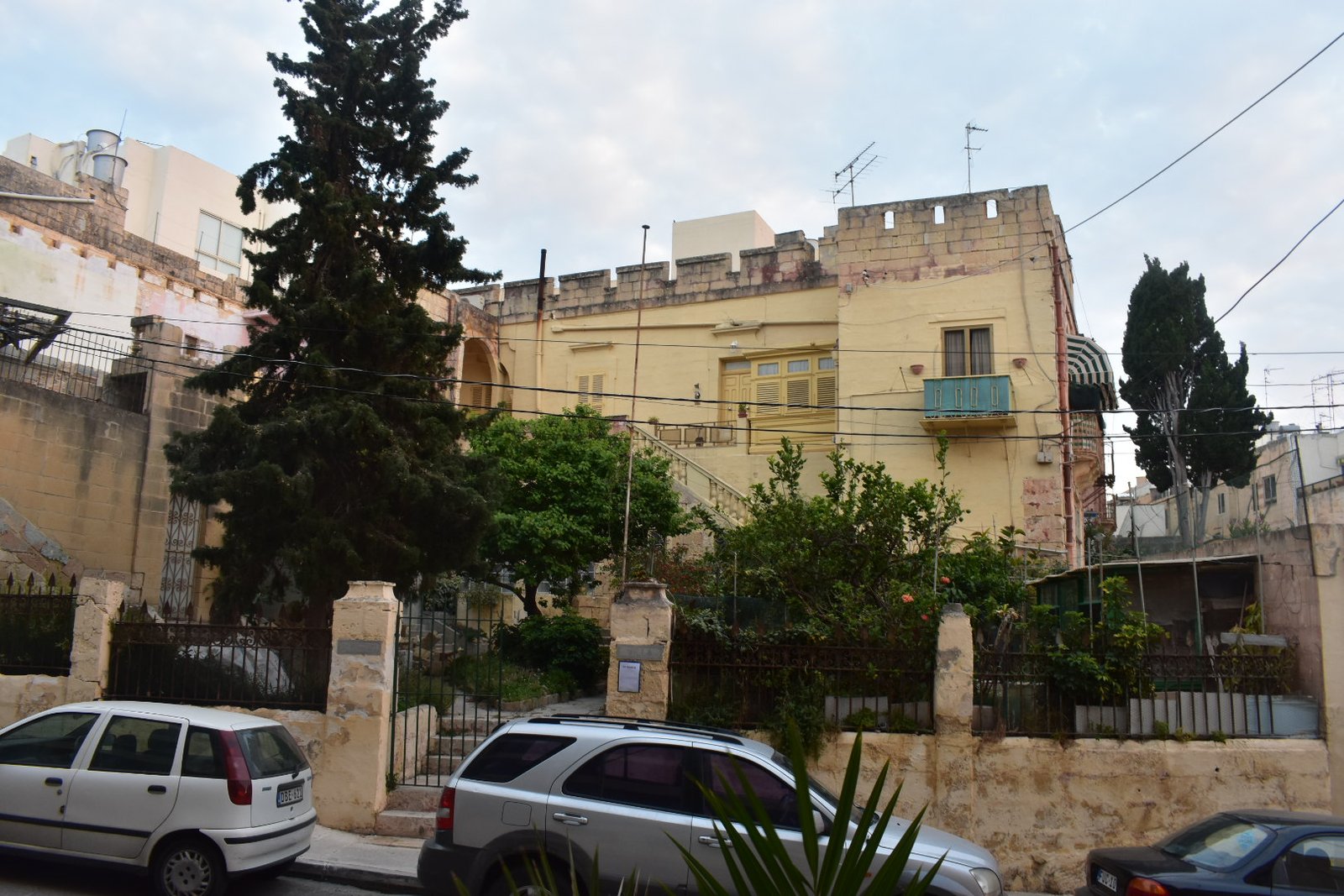
A pioneering Gothic Revival villa in the Balluta area, now threatened by urban development and demolition.
At a glance
Villa St Ignatius stands as a potentially the earliest example of Gothic Revival architecture in Malta. Built in the early 19th century for English merchant John Watson, the villa has undergone significant transformations—from private residence to Protestant college to Jesuit institution to military hospital—before its subdivision into tenements.
History
John Watson, an English merchant, commissioned the villa’s construction in the early 19th century. In 1846, the property was converted into a Protestant college. The building later housed a Jesuit college, which remained in operation until 1907. During World War I, it served as a military hospital before being subdivided into residential tenements.
The 20th century saw the villa’s grounds progressively developed, with modern apartments and buildings erected around the original structure. This urban encroachment fundamentally altered the villa’s setting and character.
What you see
The villa represents an important architectural experiment—potentially Malta’s earliest manifestation of the Gothic Revival style. Though its original grandeur has been compromised by surrounding development and internal subdivision, the building’s core Gothic elements remain identifiable.
Cultural significance
Villa St Ignatius carries dual importance: as a potential pioneer of Gothic Revival architecture in the Mediterranean island nation, and as a symbol of Malta’s complex relationship with its built heritage. The structure documents the cultural presence of 19th-century English merchants and the institutional life of colonial-era Malta.
Key facts
- Location: Balluta area, St Julian’s, Malta (35.9137°N, 14.4955°E)
- Built: Early 19th century for merchant John Watson
- Converted to Protestant college: 1846
- Later use: Jesuit college (closed 1907), World War I military hospital
- Architectural significance: Possibly earliest Gothic Revival example in Malta
Practical information & getting there
The villa remains in private hands and is not open to the public. Its future is uncertain following partial demolition in December 2017 and subsequent demolition proposals in 2018. Heritage organizations have documented the site; contact local Maltese cultural authorities or NGOs for current conservation status.
Sources & resources
Find it on the map
See this place and what’s around it →📷 Become a Cultural Heritage Online photographer
Share your photos of places: they stay published under your name as the author. The more they're seen, the more you get noticed — and soon a contest will reward the most appreciated photos.
Log in or sign up free to add a photoIs this page about you?
This page is read by travellers and heritage enthusiasts who find it on Google. Tell us how you are connected to this place and we will take it from there.