
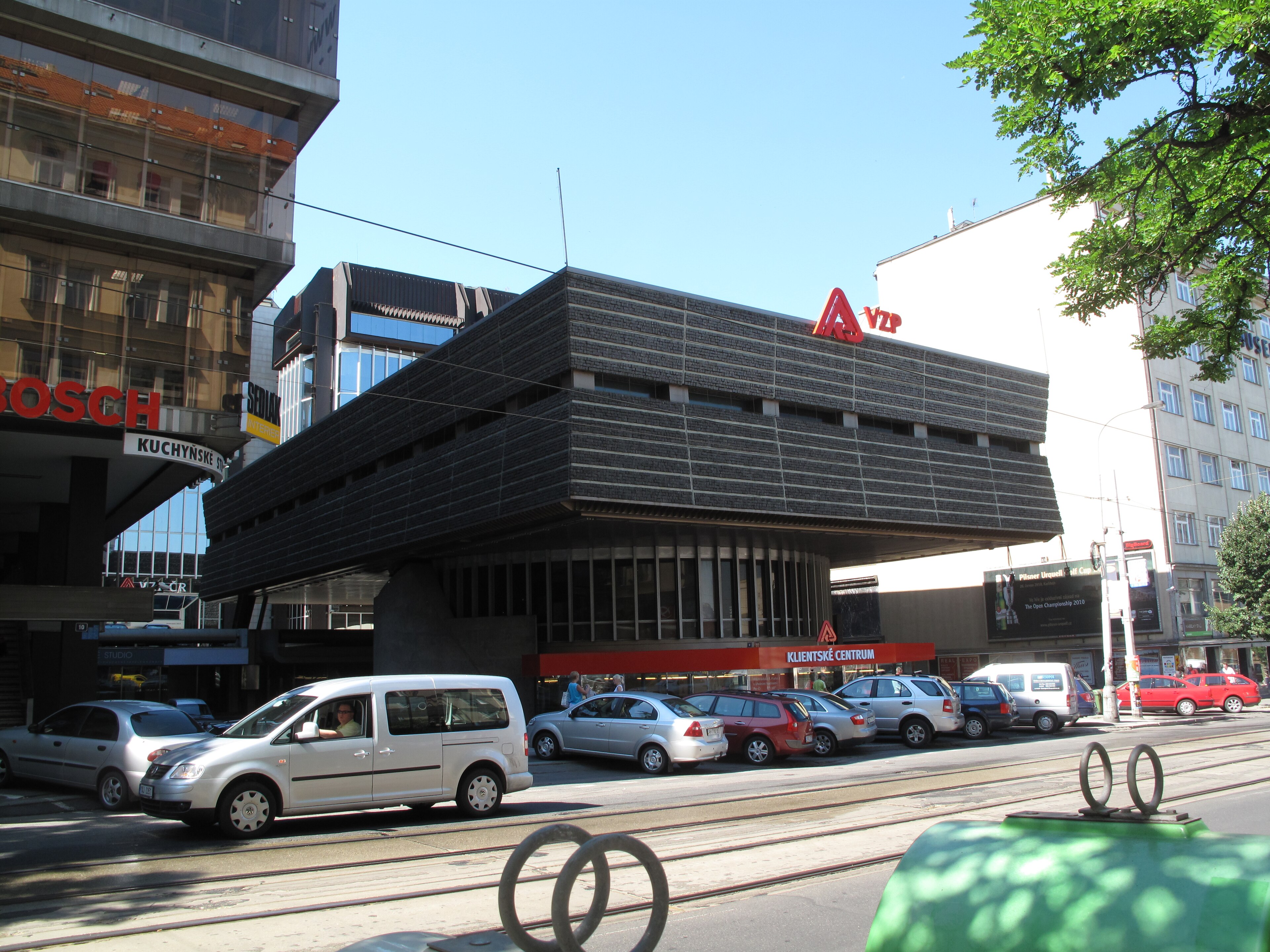
A landmark brutalist structure in central Prague, Transgas merged industrial aesthetics with modernist design before its demolition in 2019.
At a glance
Transgas was a high-tech building in Prague 2 that combined brutalist design principles with functional industrial elements. Built in 1978, it stood as a distinctive presence in the city center for over four decades until its removal.
History
The building was completed in 1978 as a modern structure for the Czech capital. It remained a fixture of Prague’s architectural landscape until demolition in 2019, marking the end of its functional and cultural life in the city.
What you see
The complex comprised three distinct components. A cubic volume dominated the composition, finished in dark grey with a facade of small cobblestones. Two additional towers rose prominently alongside, characterized by their height, extensive glazing with long windows, and dark steel construction. Surrounding decoration incorporated symbolic ornamental elements fashioned from gas pipeline tubes, reinforcing the building’s industrial character and purpose.
Cultural significance
Transgas represented a distinctly technological approach to late-socialist modernism, merging brutalist severity with functional industrial design. Its distinctive visual vocabulary—combining geometric forms, raw materials, and pipeline-derived ornamentation—made it a recognizable landmark in Prague’s evolving twentieth-century architecture.
Key facts
- Country: Czech Republic
- City: Prague 2
- Completed: 1978
- Demolished: 2019
- Coordinates: 50.07833333, 14.43305556
Practical information & getting there
Transgas no longer stands. Visitors interested in brutalist and high-tech architecture of this period in Prague may explore other preserved examples of 1970s–1980s modernism throughout the city.
Sources & resources
Find it on the map
See this place and what’s around it →📷 Become a Cultural Heritage Online photographer
Share your photos of places: they stay published under your name as the author. The more they're seen, the more you get noticed — and soon a contest will reward the most appreciated photos.
Log in or sign up free to add a photoIs this page about you?
This page is read by travellers and heritage enthusiasts who find it on Google. Tell us how you are connected to this place and we will take it from there.