
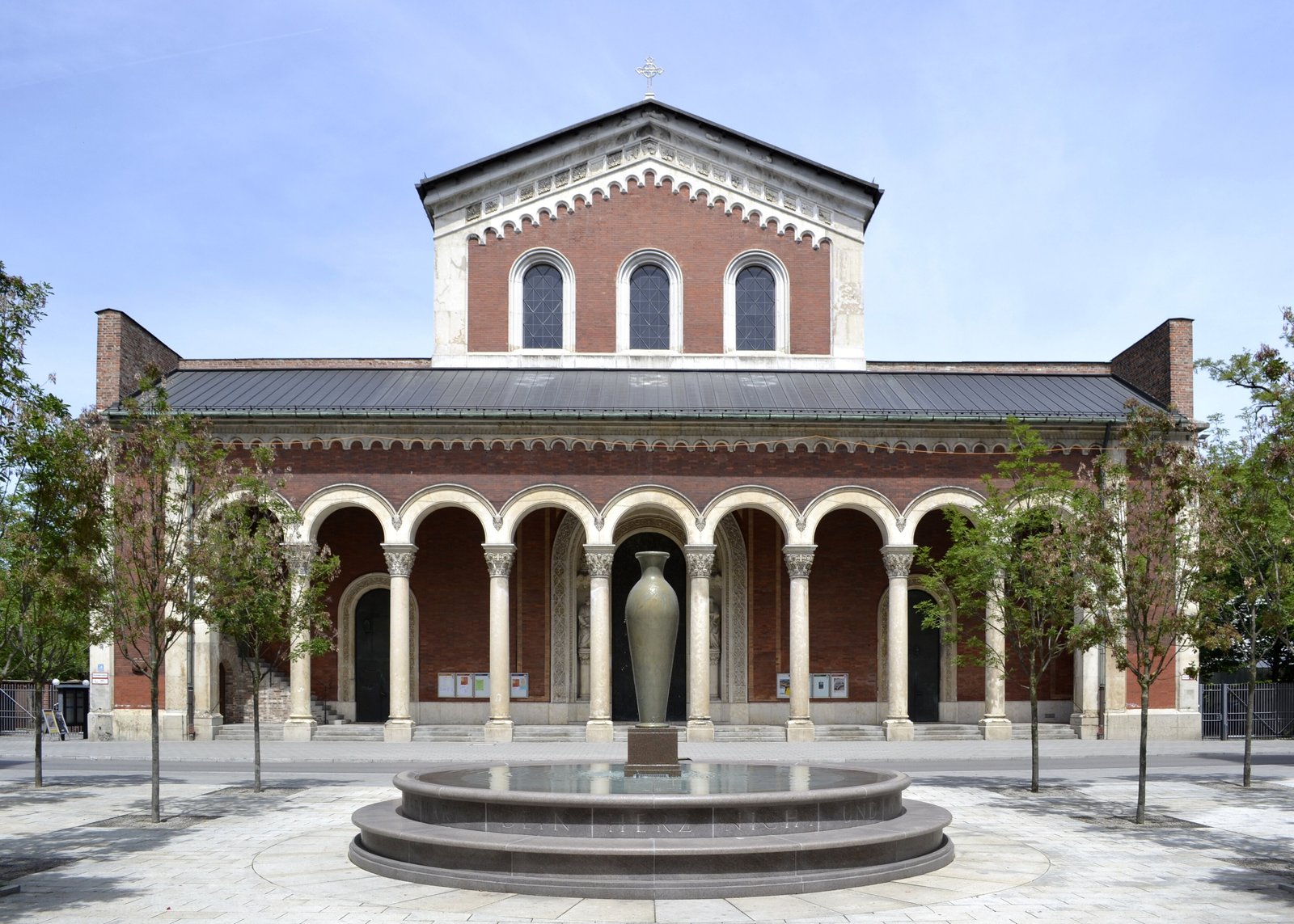
A Byzantine monastery founded by King Ludwig I in 1835 to restore Bavaria’s spiritual life after the Napoleonic secularisations, now home to a community of monks engaged in pastoral work, scholarship, and service to the homeless.
At a glance
St. Boniface’s Abbey stands in Munich’s Maxvorstadt district, an unusual urban location for a Benedictine community. King Ludwig I established it as part of his broader effort to revive the country’s monastic traditions. The monastery was formally dedicated in 1850 and serves both the local parish and the scholarly community.
History
Founded in 1835 by King Ludwig I, the abbey emerged from the monarch’s determination to undo the spiritual damage of early-19th-century secularisation, when monasteries across Bavaria were dissolved. To sustain the monks materially, Ludwig purchased the secularised Andechs Abbey—closed in 1803—along with its farmlands, establishing it as a priory of St. Boniface’s. The mother monastery was formally dedicated in 1850. World War II inflicted severe damage; the structure was only partly restored afterwards. The church preserves the tombs of King Ludwig I and his queen, Therese of Saxe-Hildburghausen.
What you see
The abbey was constructed in Byzantine style, reflecting the 19th-century Romantic interest in historical architectural forms. The church itself contains royal monuments—the tombs of Ludwig I and his consort—making it a site of both spiritual and dynastic significance.
Cultural significance
St. Boniface’s represents a pivotal moment in Bavarian religious history: the conscious restoration of monasticism after decades of enforced dissolution. As a member of the Bavarian Congregation within the Benedictine Confederation, the abbey embodies the renewal of contemplative and monastic life in Bavaria. Its urban placement distinguishes it from traditional rural monasteries and reflects Ludwig I’s vision of integrating spiritual renewal into modern city life.
Key facts
- Founded: 1835 by King Ludwig I of Bavaria
- Dedicated: 1850
- Architectural style: Byzantine
- Location: Maxvorstadt, Munich, Germany
- Coordinates: 48.14388889, 11.56416667
- Denomination: Benedictine monastery
- Royal burials: King Ludwig I and Queen Therese of Saxe-Hildburghausen
Practical information & getting there
St. Boniface’s Abbey is located in Munich’s Maxvorstadt district. The monastery remains an active Benedictine community; visitors should respect its status as a working religious house. Current monastic activities include pastoral care, education, scholarship, and social outreach. For visiting hours and details on accessing the church and tombs, contact the abbey directly or consult local Munich tourism resources.
Sources & resources
Find it on the map
See this place and what’s around it →📷 Become a Cultural Heritage Online photographer
Share your photos of places: they stay published under your name as the author. The more they're seen, the more you get noticed — and soon a contest will reward the most appreciated photos.
Log in or sign up free to add a photoIs this page about you?
This page is read by travellers and heritage enthusiasts who find it on Google. Tell us how you are connected to this place and we will take it from there.