
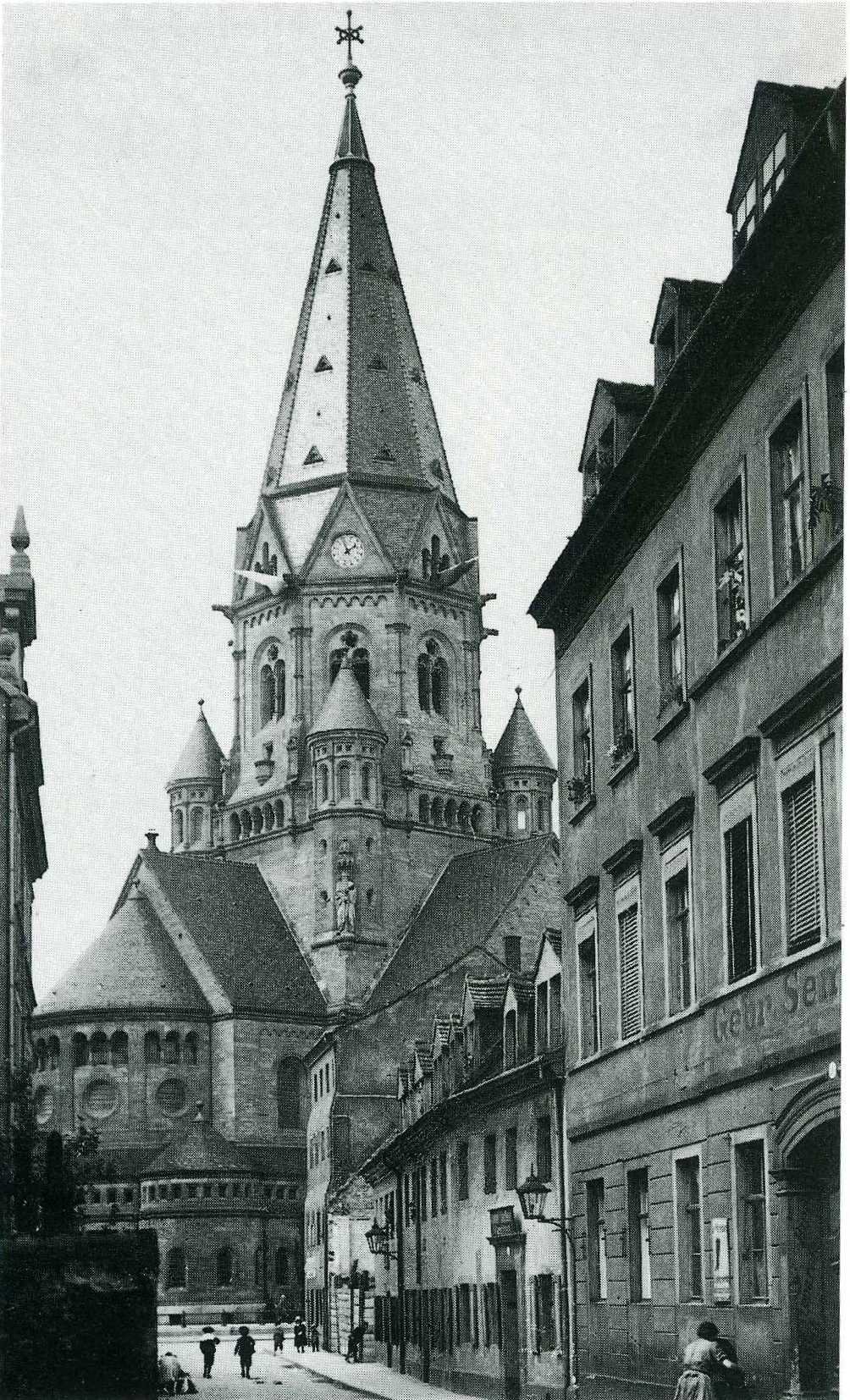
A High Rhenish Neo-Romanesque church that once graced Dresden before its destruction in the Second World War and subsequent demolition in 1953.
At a glance
The Jakobikirche was a Neo-Romanesque parish church completed in early 20th-century Dresden. Designed by architect Jürgen Kröger, it represented the architectural tastes of the Wilhelmine era and served the city’s religious and cultural community before wartime devastation ended its standing.
History
Construction of the Jakobikirche took place between 1898 and 1901 according to Jürgen Kröger’s designs. The church operated for four decades until the Second World War brought destruction to Dresden’s built heritage. Bombing campaigns razed the structure, and its remaining ruins were demolished in 1953, erasing the physical presence of this early-modern ecclesiastical landmark.
What you see
The Jakobikirche exemplified High Rhenish Neo-Romanesque style, an architectural language popular in German-speaking regions during the late 19th century. This approach revived medieval Romanesque forms through a contemporary lens—rounded arches, sturdy proportions, and decorative stonework characteristic of the period’s ecclesiastical design.
Cultural significance
The church represented Dresden’s thriving religious architecture at the turn of the 20th century. Its loss reflects the city’s broader experience of wartime destruction and post-war reconstruction priorities, when many damaged historic structures were removed rather than restored.
Key facts
- Country: Germany
- City: Dresden
- Coordinates: 51.05°N, 13.72°E
- Completed: 1901
- Architect: Jürgen Kröger
- Destroyed: Second World War
- Demolished: 1953
Practical information & getting there
The Jakobikirche no longer stands; its location in Dresden can be visited, though nothing remains of the original structure. The site serves as a historical marker of the city’s wartime losses.
Sources & resources
Find it on the map
See this place and what’s around it →📷 Become a Cultural Heritage Online photographer
Share your photos of places: they stay published under your name as the author. The more they're seen, the more you get noticed — and soon a contest will reward the most appreciated photos.
Log in or sign up free to add a photoIs this page about you?
This page is read by travellers and heritage enthusiasts who find it on Google. Tell us how you are connected to this place and we will take it from there.