
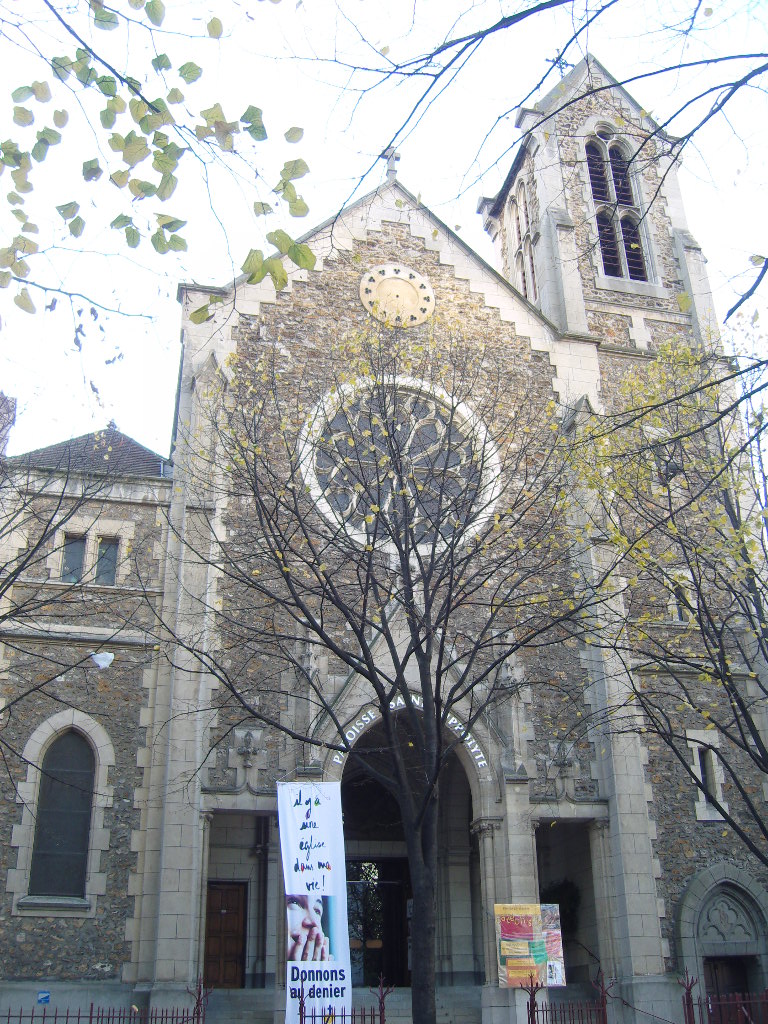
A Neo-Gothic church in Paris’s 13th arrondissement, distinguished by its vibrant stained glass and ornamental interiors completed in the early twentieth century.
At a glance
Église Saint-Hippolyte stands on Avenue de Choisy as a striking example of early twentieth-century religious architecture in Paris. Built between 1909 and 1924, the church embodies the Neo-Gothic revival style that flourished across Europe during this period.
History
The church was constructed over fifteen years under the direction of architect Jules-Godefroy Astruc. This extended building period reflects both the scale of the project and the meticulous craftsmanship demanded by the Neo-Gothic aesthetic.
What you see
The church’s most striking features are its colourful decorative schemes and exceptional stained glass windows, both characteristic of the period in which it was completed. The Neo-Gothic style is evident throughout the building’s design and structural details. The interplay of light through the stained glass creates a dramatic interior atmosphere.
Cultural significance
Saint-Hippolyte represents an important phase in Parisian ecclesiastical architecture, when Neo-Gothic revivalism remained a vital force in church design. Its ornamental richness reflects the values and aesthetic ambitions of early twentieth-century Paris.
Key facts
- Country: France
- Location: 13th arrondissement of Paris
- Architect: Jules-Godefroy Astruc
- Built: 1909–1924
- Style: Neo-Gothic
- Coordinates: 48.82142, 2.36308
Practical information & getting there
The church is located on Avenue de Choisy in the 13th arrondissement. For current opening hours, services, and visitor information, consult the parish office or local tourism resources.
Sources & resources
Find it on the map
See this place and what’s around it →📷 Become a Cultural Heritage Online photographer
Share your photos of places: they stay published under your name as the author. The more they're seen, the more you get noticed — and soon a contest will reward the most appreciated photos.
Log in or sign up free to add a photoIs this page about you?
This page is read by travellers and heritage enthusiasts who find it on Google. Tell us how you are connected to this place and we will take it from there.