
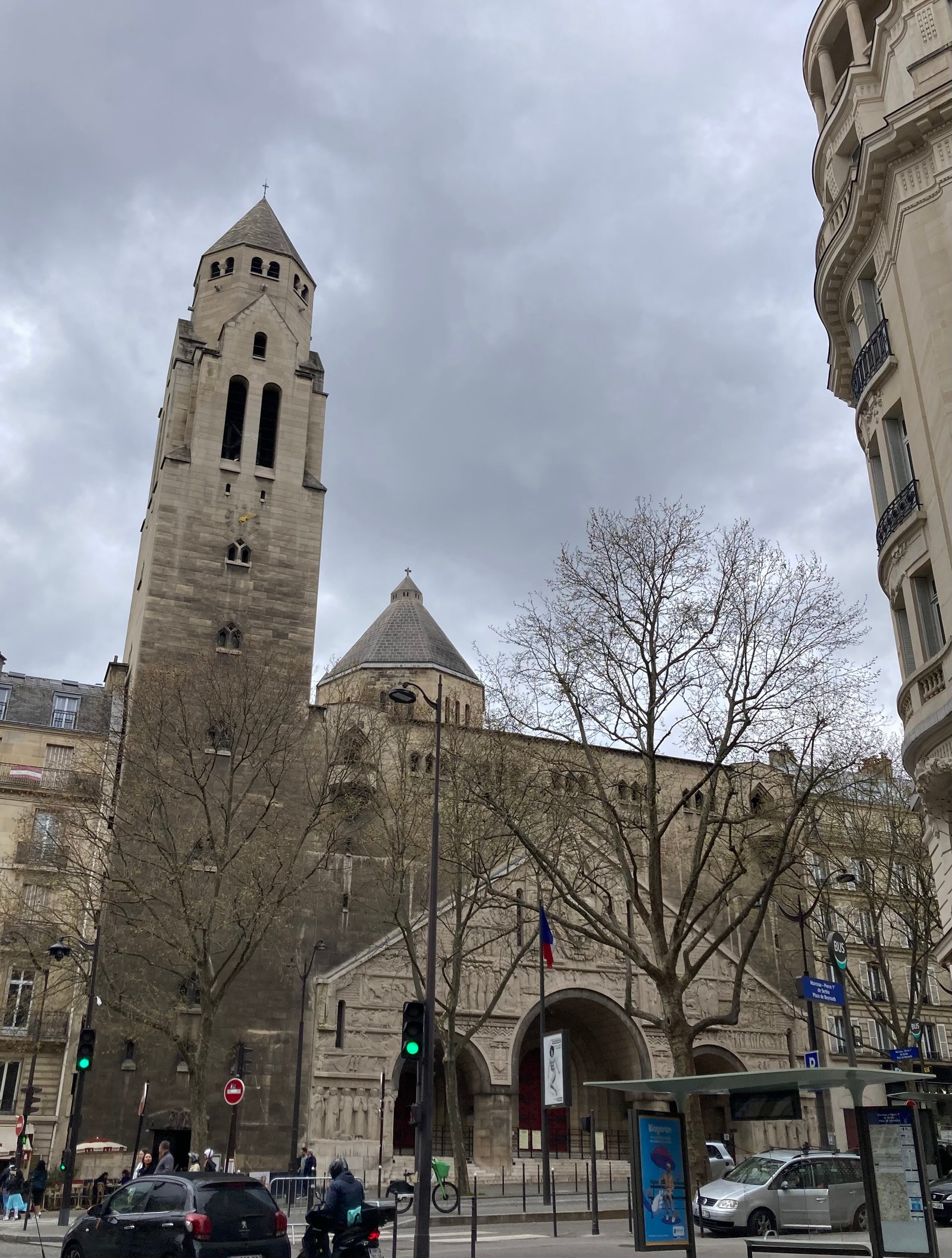
A Romano-Byzantine parish church in the 16th arrondissement, Saint-Pierre-de-Chaillot commands the Chaillot neighborhood with its distinctive architectural style.
At a glance
This Roman Catholic parish church occupies 31, avenue Marceau in one of Paris’s most affluent districts. Its Romano-Byzantine design sets it apart from the city’s predominantly Gothic ecclesiastical tradition, making it a striking architectural statement in the neighborhood.
History
Saint-Pierre-de-Chaillot serves the Catholic community of the 16th arrondissement as a functioning parish church. The specific date of construction is not documented in available sources.
What you see
The church adopts the Romano-Byzantine style, a choice that reflects early twentieth-century ecclesiastical design in Paris. This approach blends Romanesque solidity with Byzantine ornamental richness, creating visual interest distinct from the pointed arches and rose windows typical of medieval Gothic churches in the city.
Cultural significance
The church represents an important alternative to Paris’s dominant Gothic religious architecture. Its presence in the prosperous 16th arrondissement reflects the neighborhood’s development and the pastoral needs of its residents.
Key facts
- Location: 31, avenue Marceau, 16th arrondissement, Paris
- Country: France
- Architectural style: Romano-Byzantine
- Function: Roman Catholic parish church
- Coordinates: 48.8677°N, 2.2985°E
Practical information & getting there
The church is located on avenue Marceau in central Paris, accessible by public transport. For current visiting hours and Mass times, check the parish website or contact the church directly.
Sources & resources
Find it on the map
See this place and what’s around it →📷 Become a Cultural Heritage Online photographer
Share your photos of places: they stay published under your name as the author. The more they're seen, the more you get noticed — and soon a contest will reward the most appreciated photos.
Log in or sign up free to add a photoIs this page about you?
This page is read by travellers and heritage enthusiasts who find it on Google. Tell us how you are connected to this place and we will take it from there.