
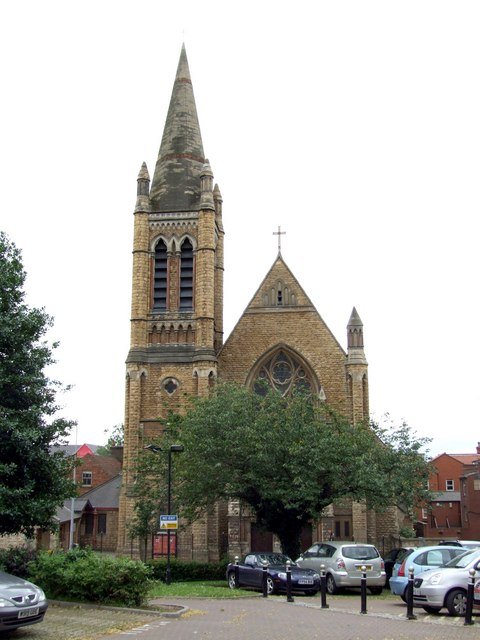
A Victorian Roman Catholic parish church built at the heart of Lincoln, designed by architect Albert Vicars as a striking addition to the city’s religious landscape.
At a glance
St Hugh’s Church stands on the corner of Monks Road and Friars Lane in Lincoln’s city centre. Built over 1892–1893, it serves the Roman Catholic parish and remains a Grade II listed building, reflecting the architectural ambitions of late Victorian ecclesiastical design.
History
The church was constructed between 1892 and 1893, a period of expanding Catholic infrastructure across England. Its creation reflects the growing Catholic community in Lincoln during the Victorian era and the Church’s commitment to establishing prominent places of worship in city centres.
What you see
Architect Albert Vicars designed the building to command attention at a prominent street corner. Its Victorian Gothic character would have been typical of Catholic ecclesiastical architecture of the period, though details of its specific architectural features and interior arrangement remain to be explored on site.
Cultural significance
St Hugh’s Church represents an important chapter in Lincoln’s religious pluralism and Victorian architectural heritage. The church’s Grade II listing recognises its value as a historic structure worthy of protection and conservation for future generations.
Key facts
- Country: United Kingdom
- City: Lincoln
- Completed: 1893
- Architect: Albert Vicars
- Coordinates: 53.2305, −0.5357
- Status: Grade II listed building
Practical information & getting there
St Hugh’s Church is located at the corner of Monks Road and Friars Lane in Lincoln city centre, making it easily accessible by foot from the historic core. As an active parish church, opening hours and visiting arrangements are subject to services and special events.
Sources & resources
Find it on the map
See this place and what’s around it →📷 Become a Cultural Heritage Online photographer
Share your photos of places: they stay published under your name as the author. The more they're seen, the more you get noticed — and soon a contest will reward the most appreciated photos.
Log in or sign up free to add a photoIs this page about you?
This page is read by travellers and heritage enthusiasts who find it on Google. Tell us how you are connected to this place and we will take it from there.