

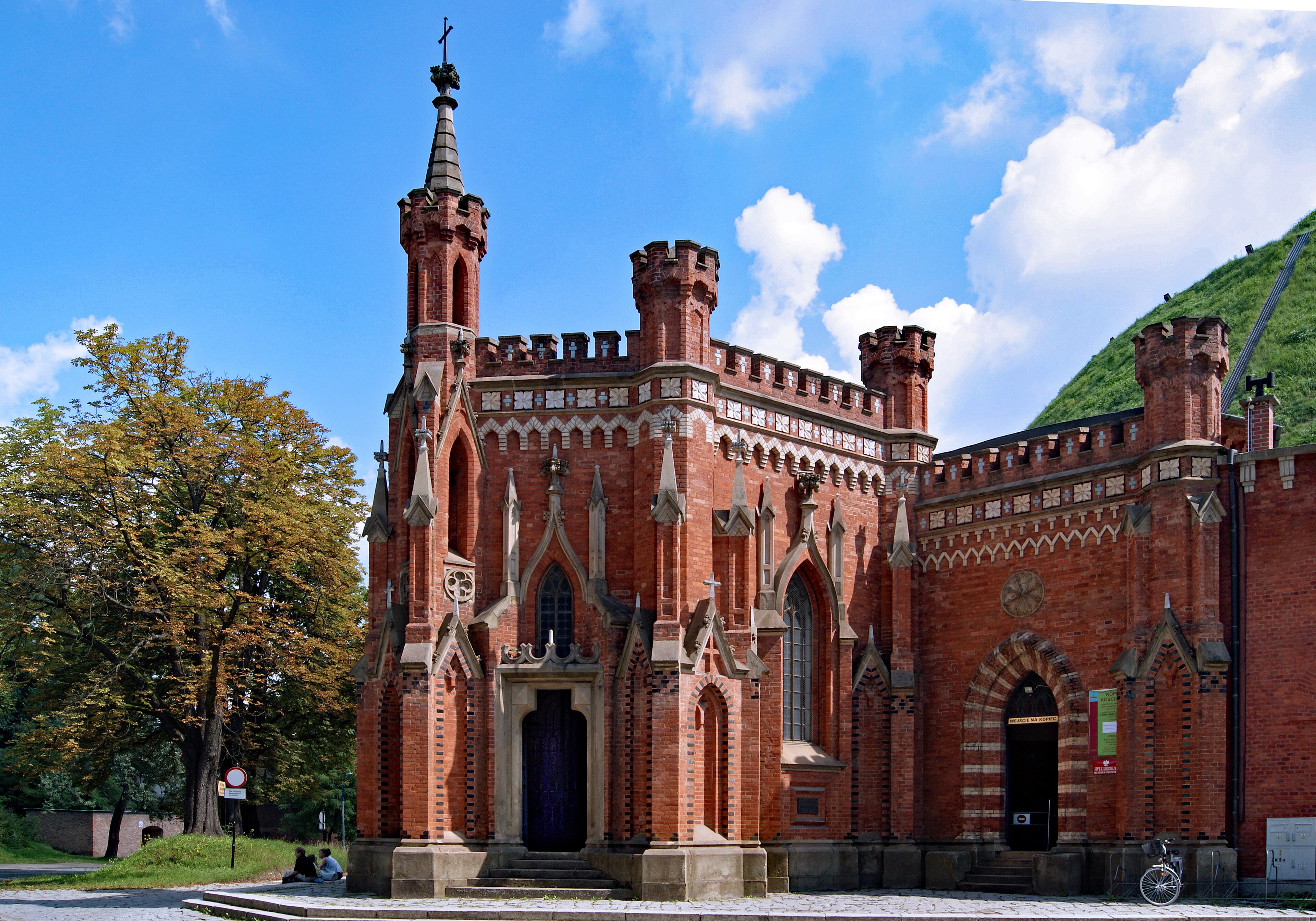
A neo-Gothic chapel built within a Habsburg military fortress, commemorating Poland’s defiance during foreign occupation and replacing a demolished 18th-century church.
At a glance
Erected between 1856 and 1861, this Roman Catholic chapel stands inside the Kościuszko Citadel in Kraków’s Zwierzyniec district. Designed by architect Feliks Księżarski, it represents Polish resilience during the Austrian Partition—built to replace a church the Habsburgs destroyed four years earlier.
History
During the Austrian Partition of Poland, the Habsburg monarchy began constructing a military stronghold around the sacred Kościuszko Mound, an ancient burial mound and national monument. In 1854, the Austrians demolished the original 18th-century church that stood on the site. Polish patriots and the Committee for the Construction of the Tadeusz Kościuszko Monument pressed relentlessly for a replacement. Their efforts succeeded: the chapel was erected within the citadel’s walls, sanctifying the fortress and honoring the nation’s memory.
What you see
The chapel exhibits neo-Gothic design, the dominant architectural language of 19th-century Catholic revival. Its aesthetic responds to the severe military architecture surrounding it—a spiritual counterpoint to the imperial fortress walls.
Cultural significance
This chapel embodies Polish cultural resistance during partition. Built on contested ground, it allowed Catholics to worship in defiance of foreign military occupation. The chapel’s presence within the citadel—protecting the mound dedicated to Polish national hero Tadeusz Kościuszko—transformed a symbol of Austrian control into a site of Polish remembrance and faith.
Key facts
- Country: Poland
- City: Kraków
- Coordinates: 50.0542°N, 19.8943°E
- Architect: Feliks Księżarski
- Construction: 1856–1861
- Style: Neo-Gothic
- Location: Within the Kościuszko Citadel, Zwierzyniec district
Practical information & getting there
The chapel is located within the Kościuszko Citadel in Kraków’s Zwierzyniec district, near the Kościuszko Mound. Access may be restricted as the citadel remains a military installation; visitors should confirm opening hours and entry requirements in advance. The site is accessible by public transport from Kraków’s city center.
Sources & resources
Find it on the map
See this place and what’s around it →📷 Become a Cultural Heritage Online photographer
Share your photos of places: they stay published under your name as the author. The more they're seen, the more you get noticed — and soon a contest will reward the most appreciated photos.
Log in or sign up free to add a photoIs this page about you?
This page is read by travellers and heritage enthusiasts who find it on Google. Tell us how you are connected to this place and we will take it from there.