
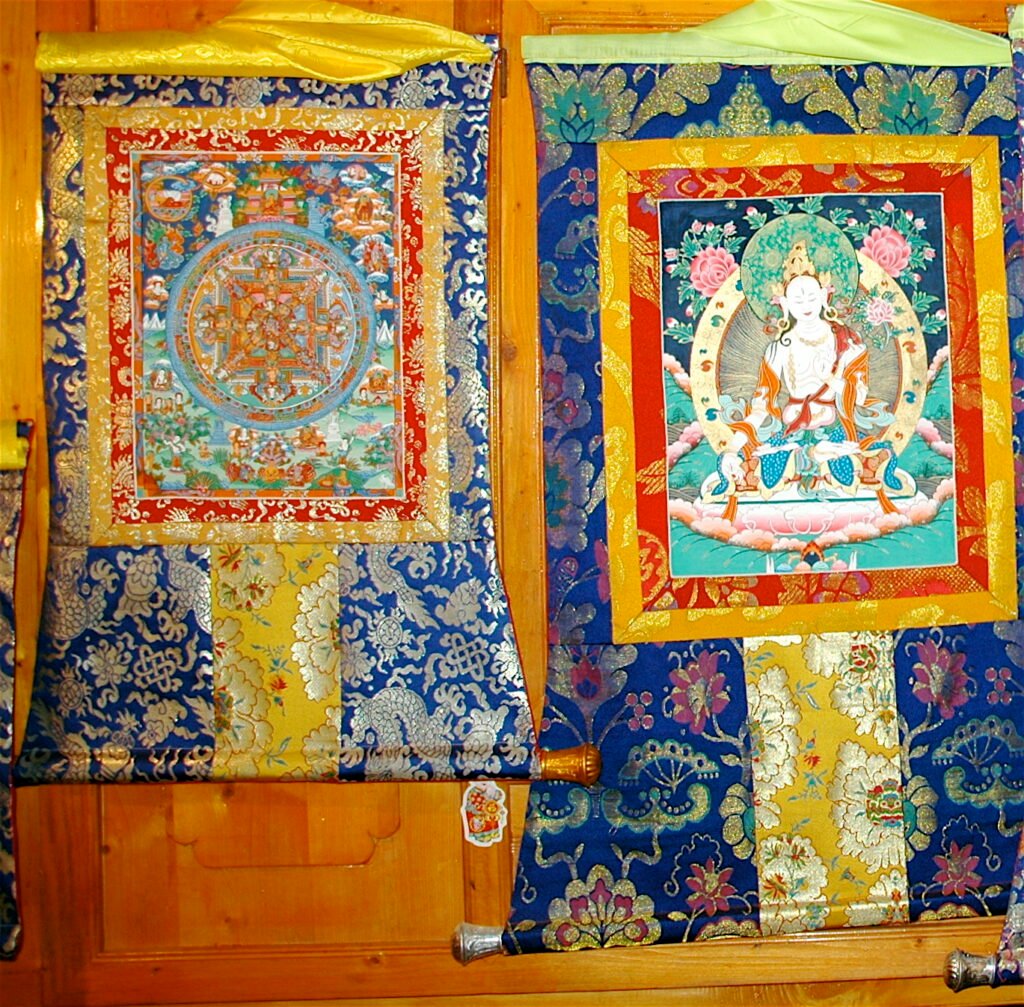
A living constellation of Tibetan Buddhist visual and material practices—painting, sculpture, engraving, architecture, and embroidery—rooted in the high-altitude valleys of Qinghai.
At a glance
Regong arts represent the visual theology and craft mastery of Tibetan Buddhist communities in Tongren County and along the Rongwo River. These five disciplines—painting, sculpture, engraving, embroidery, and architectural design—are inseparable from Buddhist devotion and local identity, transmitted across generations through apprenticeship and family practice.
Origins & history
The Regong arts tradition is deeply rooted in Tibetan Buddhist culture and the specific geography of the Rongwo valley in what is now Huangnan Tibetan Autonomous Prefecture. The arts flourished as an expression of religious belief and community craft heritage, with practitioners refining techniques across centuries of transmission.
The practice
Regong painters work with mineral pigments and plant dyes on cloth and wooden panels, depicting Buddhist deities and narratives with exacting iconographic precision. Sculptors carve and cast ritual objects and devotional figures in wood, clay, and metal. Engravers work wood and stone blocks with fine chisels. Embroiderers stitch silk and gold thread into liturgical textiles and ceremonial garments. Architectural practitioners apply these disciplines to the design and decoration of monasteries and sacred buildings, integrating painting, sculpture, and spatial harmony.
Cultural significance
These arts are far more than decoration. They serve as repositories of Buddhist knowledge, vehicles for prayer and meditation, and expressions of collective identity for Tibetan communities in the region. The five disciplines reinforce one another: a monastery’s architecture frames painted murals; sculptural detail echoes embroidered patterns. Together, they constitute a complete aesthetic theology.
Key facts
- Five core disciplines: painting, sculpture, engraving, embroidery, architecture
- Anchor community: Tongren County, Huangnan Tibetan Autonomous Prefecture, Qinghai Province, China
- UNESCO Intangible Cultural Heritage list, reference 00207, inscribed 2009
- Coordinates: 35.51569, 102.02344
Where to experience it
Tongren and the Rongwo valley remain the heartland of these living practices. Visitors encounter Regong arts in active monasteries, through resident artisans’ workshops, and in the decorated architecture of sacred and community buildings throughout the region.
Sources & resources
Find it on the map
See this place and what’s around it →📷 Become a Cultural Heritage Online photographer
Share your photos of places: they stay published under your name as the author. The more they're seen, the more you get noticed — and soon a contest will reward the most appreciated photos.
Log in or sign up free to add a photo