
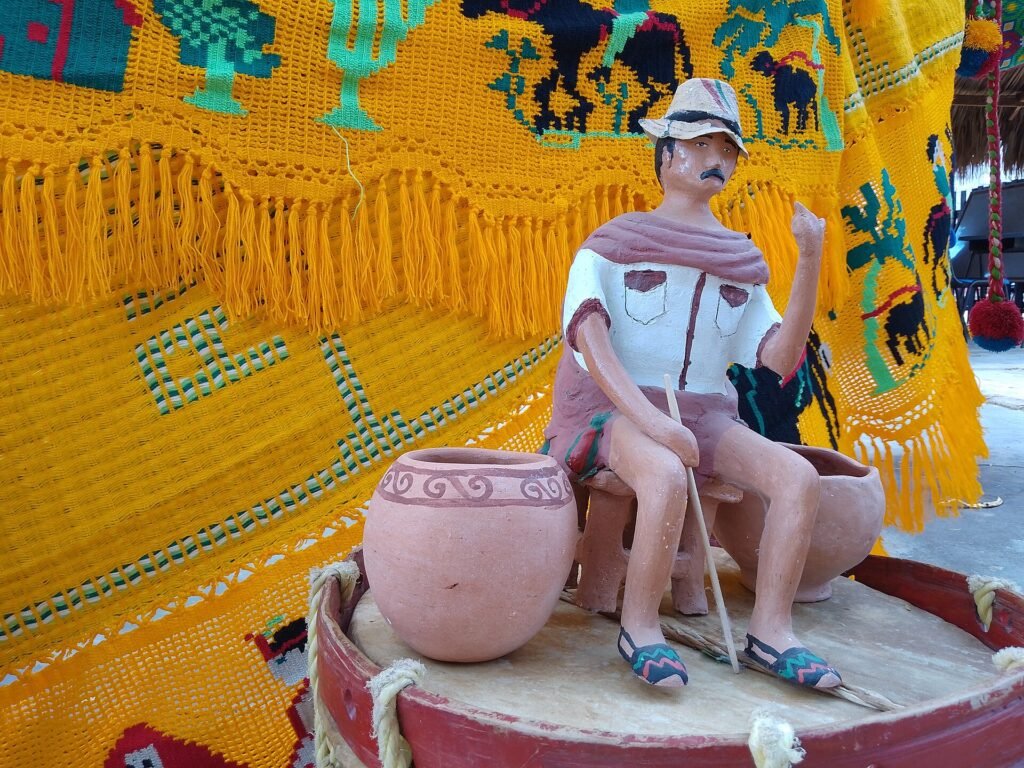
Among the Wayuu people of Colombia’s Caribbean coast, pütchipü’ü—word-messengers and mediators—resolve disputes through oratory and collective deliberation, maintaining a justice system rooted in community values and ancestral practice.
In UNESCO’s words
The Wayuu community inhabits the Guajira Peninsula straddling Colombia and Venezuela. Its legislative system comprises a body of principles, procedures and rites that govern the social and spiritual conduct of the community. The system, inspired by principles of reparation and compensation, is applied by the local moral authorities, the Pütchipü’üi or palabreros (orators), who are experts in resolving conflicts and disputes between the local matrilineal clans. When problems arise, the authority of the Pütchipü’üi is sought by both parties in a dispute, the offender and those offended against. After analysing the situation, the Pütchipü’üi informs the authorities concerned of his intention to resolve the conflict peacefully. In the event that the word – ''Pütchikalü'' – is accepted, dialogue is established, wherein the Pütchipü’üi acts with diplomacy, caution and intelligence. The compensation system employs symbolism, represented primarily by the offering of necklaces made of precious stones or sacrifices of cattle, sheep and goats. Even the most serious crimes are compensated, compensations being offered at special events to which the disputing families are invited to re-establish social harmony through reconciliation. The Pütchipü’üi acquires his role by virtue of being a maternal uncle – an honoured role in the Wayuu system of matrilineal clans – and by possessing a character grounded in ethics and morals.
Official description, UNESCO Intangible Cultural Heritage List — Wayuu normative system, applied by the Pütchipü’üi (palabrero)
At a glance
The Wayuu community's legislative system comprises principles, procedures and rites that govern social and spiritual conduct. Local moral authorities called Pütchipü'üi, or palabreros (orators), resolve conflicts and disputes between matrilineal clans. These experts apply a system inspired by reparation and compensation rather than punishment. When disputes arise, both parties seek the Pütchipü'üi's authority to resolve conflicts peacefully through dialogue and the spoken word.
Origins & history
The system originates within Wayuu social organization and has been transmitted through generations as the primary mechanism for administering justice. It reflects fundamental Wayuu values of dialogue and respect. The role of Pütchipü'üi is acquired by maternal uncles—an honoured position in the matrilineal clan structure—who possess a character grounded in ethics and morals.
The practice
When a dispute arises, both the offender and those offended against seek the Pütchipü'üi's guidance. The Pütchipü'üi analyzes the situation and, if his word (Pütchikalü) is accepted, establishes dialogue. He acts with diplomacy, caution and intelligence throughout. Compensation takes symbolic form, primarily through offerings of necklaces made of precious stones or sacrifices of cattle, sheep and goats. Even serious crimes are compensated at special events where disputing families gather to re-establish social harmony through reconciliation.
Cultural significance
This normative system is central to Wayuu identity and social cohesion. It preserves a distinctive approach to justice based on principles of reparation and compensation, prioritizing restoration of relationships over punishment. The practice transmits core values to younger generations and allows the Wayuu to sustain cultural autonomy through maintaining their own legislative and spiritual system.
Key facts
- Country: Colombia
- Inscribed: 2010
- UNESCO list: Representative List of the Intangible Cultural Heritage of Humanity
- UNESCO reference: 00435
- UNESCO vocabulary: Conflict resolution; Customary law; Rituals
- Map: Guajira Peninsula — the locality named in UNESCO’s official description of this element
Where to experience it
The Wayuu community of the Guajira Peninsula, which spans Colombia and Venezuela, keeps this justice system alive through daily practice. The pütchipü'üi continue to resolve disputes within their matrilineal clans, conducting dialogues and arranging compensation ceremonies where disputing families gather to restore social harmony. Visitors seeking to understand this tradition can engage with Wayuu cultural organizations and communities across the peninsula, though witnessing an active mediation requires invitation and deep respect for the sacred nature of the process.
Sources & resources
- UNESCO — official element page: Wayuu normative system, applied by the Pütchipü’üi (palabrero)
- UNESCO — open data record: Intangible Heritage List, reference 00435
- UNESCO — official photograph: Photograph of this element — Guillermo Jayariyu — 2009 by Jayariyu
- Reference — Wikipedia (secondary): P%C3%BCtchip%C3%BC'%C3%BC — consulted as a secondary reference, not as confirmation
- Cultural Heritage Online: Our archive and city guides

Find it on the map
See this place and what’s around it →📷 Become a Cultural Heritage Online photographer
Share your photos of places: they stay published under your name as the author. The more they're seen, the more you get noticed — and soon a contest will reward the most appreciated photos.
Log in or sign up free to add a photo