
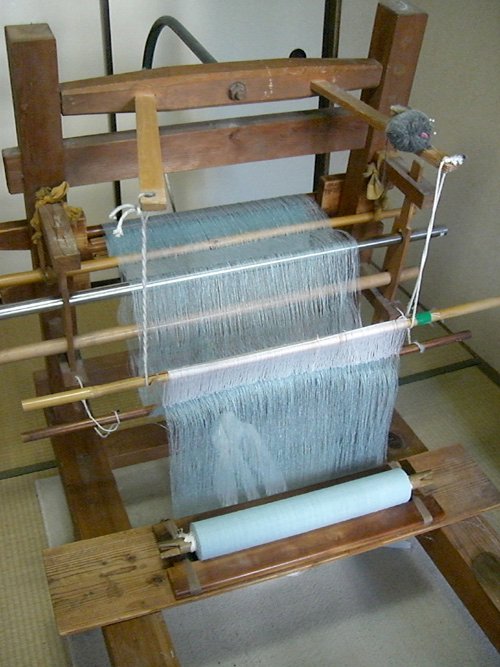
A lustrous handwoven silk textile produced in Japan’s Ibaraki Prefecture, yūki-tsumugi represents centuries of refined technique. Weavers transform raw silk through labor-intensive processes to create cloth prized for its distinctive texture and subtle sheen.
In UNESCO’s words
Yuki-tsumugi is a Japanese silk-weaving technique found principally in Yuki City and Oyama City, along the Kinu River, north of Tokyo. The region boasts a warm climate and fertile lands, which are ideal for the growth of mulberry trees and sericulture. The Yuki-tsumugi technique is employed to produce pongee silk (also called raw silk) – a light and warm material with a characteristic stiffness and softness, traditionally used to make kimonos. Production of the material includes several stages: silk floss is spun into yarn by hand, with patterns added by hand-tying bundles of yarn before dyeing the yarn, then the silk is woven using a back-tension loom. The silk floss for the yarn in Yuki-tsumugi weaving is produced from empty or deformed silkworm cocoons, otherwise unusable for the production of silk yarn. This recycling process plays a significant role in supporting local sericulture communities. The traditional techniques to produce Yuki-tsumugi are transmitted by members of the Association for the Preservation of Honba Yuki-tsumugi Weaving Technique. This association is directly engaged in maintaining traditions of spinning, dyeing and weaving, passed down from generation to generation within the community. It promotes transmission of Yuki-tsumugi through exchange of skills, training of young weavers, and practical demonstrations.
Official description, UNESCO Intangible Cultural Heritage List — Yuki-tsumugi, silk fabric production technique
At a glance
Yuki-tsumugi is a Japanese silk-weaving technique practiced principally in Yuki City and Oyama City, along the Kinu River north of Tokyo. Weavers produce pongee silk—a light, warm material with characteristic stiffness and softness—traditionally used for kimonos. The technique involves spinning silk floss into yarn by hand, adding patterns through hand-tied bundles before dyeing, and then weaving using a back-tension loom.
Origins & history
The technique developed in a region with warm climate and fertile lands ideal for growing mulberry trees and sericulture. Knowledge of spinning, dyeing, and weaving has been passed down from generation to generation within the community. The Association for the Preservation of Honba Yuki-tsumugi Weaving Technique maintains these traditional methods through direct engagement with transmission of skills.
The practice
Production involves several stages: silk floss is hand-spun into yarn, patterns are created by hand-tying bundles of yarn before dyeing, and the silk is woven using a back-tension loom. The silk floss itself comes from empty or deformed silkworm cocoons—materials otherwise unusable for silk yarn production. Young weavers train through skill exchange and practical demonstrations led by association members.
Cultural significance
Yuki-tsumugi supports local sericulture communities through a recycling process that transforms otherwise waste cocoons into usable silk floss. The tradition sustains community knowledge and identity. The Association for the Preservation of Honba Yuki-tsumugi Weaving Technique works to ensure these techniques are transmitted to future generations, protecting the craft from loss.
Key facts
- Country: Japan
- Inscribed: 2010
- UNESCO list: Representative List of the Intangible Cultural Heritage of Humanity
- UNESCO reference: 00406
- UNESCO vocabulary: Technical skills; Weaving
- Map: Yuki City — the locality named in UNESCO’s official description of this element
Where to experience it
Yuki-tsumugi is practised principally in Yuki City and Oyama City, located along the Kinu River north of Tokyo. Visitors to the region can encounter this silk-weaving tradition through local studios and demonstrations organised by the Association for the Preservation of Honba Yuki-tsumugi Weaving Technique. The association actively maintains and transmits the traditional techniques of spinning, dyeing and weaving to new generations, offering opportunities to observe artisans at work and learn about the intricate hand-processes that transform silk floss into the characteristic light, warm pongee fabric.
Sources & resources
- UNESCO — official element page: Yuki-tsumugi, silk fabric production technique
- UNESCO — open data record: Intangible Heritage List, reference 00406
- UNESCO — official video: UNESCO film on this element — embedded on this page
- UNESCO — official photograph: Photograph of this element — Association for the Preservation of Honba Yuki-tsumugi Weaving Techniques — 2009 by Association for the Preservation of Honba Yuki-tsumugi Weaving Techniques
- Reference — Wikipedia (secondary): Y%C5%ABki-tsumugi — consulted as a secondary reference, not as confirmation
- Cultural Heritage Online: Our archive and city guides

Find it on the map
See this place and what’s around it →📷 Become a Cultural Heritage Online photographer
Share your photos of places: they stay published under your name as the author. The more they're seen, the more you get noticed — and soon a contest will reward the most appreciated photos.
Log in or sign up free to add a photo