
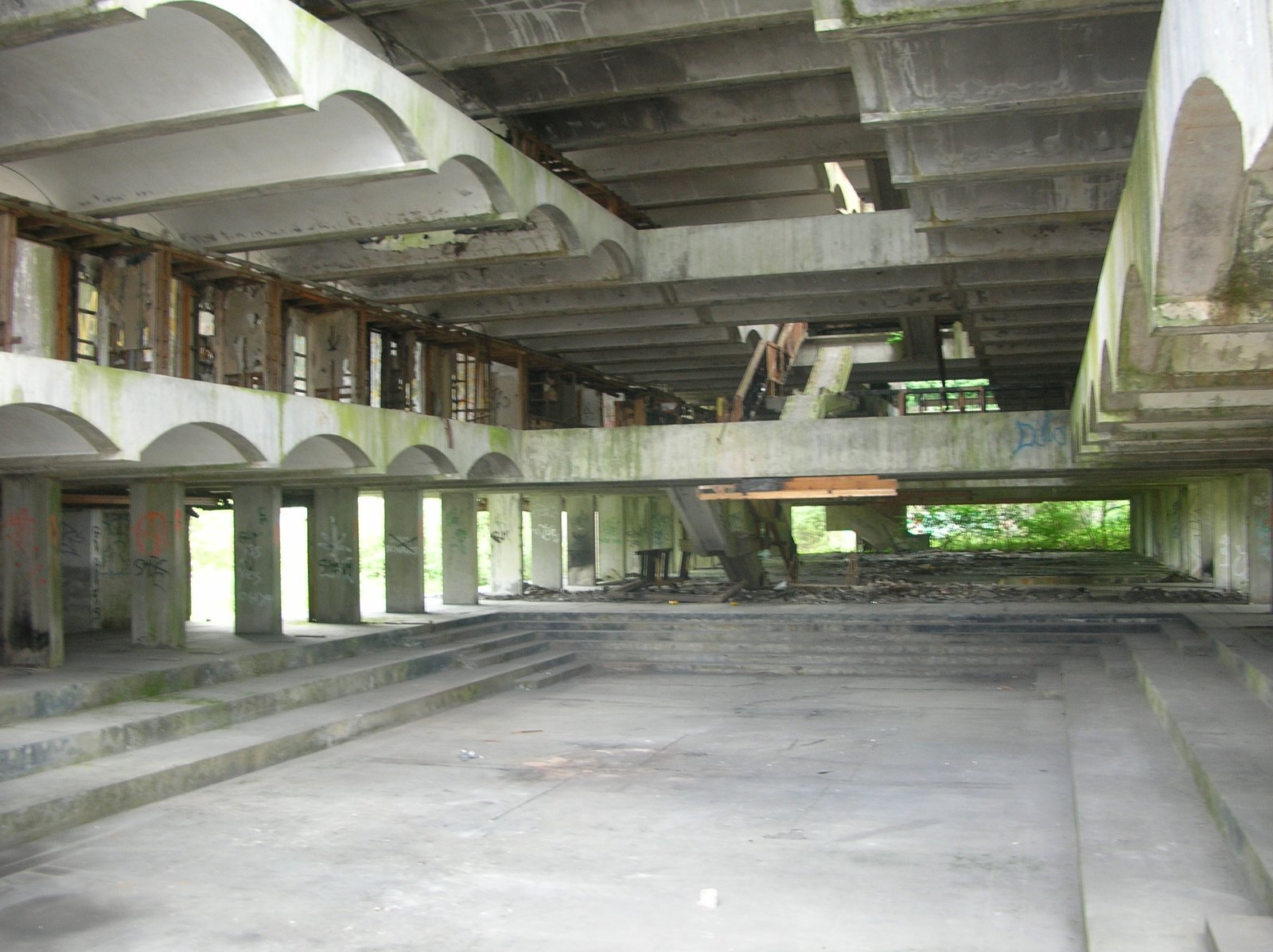
A landmark of modernist religious architecture, this abandoned seminary near Cardross was hailed by international experts as a building of world significance before its decline into ruin.
At a glance
St Peter’s Seminary stands as one of Scotland’s most architecturally significant post-war structures. Designed by the Glasgow firm Gillespie, Kidd & Coia, it ranks among only 42 post-war Scottish buildings granted Category A listing—the nation’s highest level of architectural protection. Today it remains in ruins, abandoned since 1987.
History
The seminary operated as a Roman Catholic training institution before closure in 1987. In July 2020, ownership transferred to the Kilmahew Education Trust Ltd, which has undertaken plans to conserve and restore the complex, reinstituting its educational mission.
What you see
Gillespie, Kidd & Coia’s design embodies modernist principles applied to sacred and educational space. The firm’s approach earned recognition from Docomomo International, the architecture conservation organisation that designated it a modern building of world significance.
Cultural significance
St Peter’s Seminary represents a pivotal moment in twentieth-century ecclesiastical architecture. Its Category A status reflects Scotland’s recognition of its exceptional architectural and historic value. The building exemplifies how modernism transformed institutional religious design in the post-war era.
Key facts
- Location: Near Cardross, Argyll and Bute, Scotland
- Coordinates: 55.9703, -4.6406
- Architect: Gillespie, Kidd & Coia
- Period: Post-war modernist
- Status: Category A listed building; abandoned since 1987
- Recognition: Docomomo International designation as building of world significance
Practical information & getting there
The seminary is located near Cardross in Argyll and Bute. As the site undergoes restoration under the Kilmahew Education Trust, access may be limited. Check locally for visiting information and conservation project updates.
Sources & resources
Find it on the map
See this place and what’s around it →📷 Become a Cultural Heritage Online photographer
Share your photos of places: they stay published under your name as the author. The more they're seen, the more you get noticed — and soon a contest will reward the most appreciated photos.
Log in or sign up free to add a photoIs this page about you?
This page is read by travellers and heritage enthusiasts who find it on Google. Tell us how you are connected to this place and we will take it from there.