

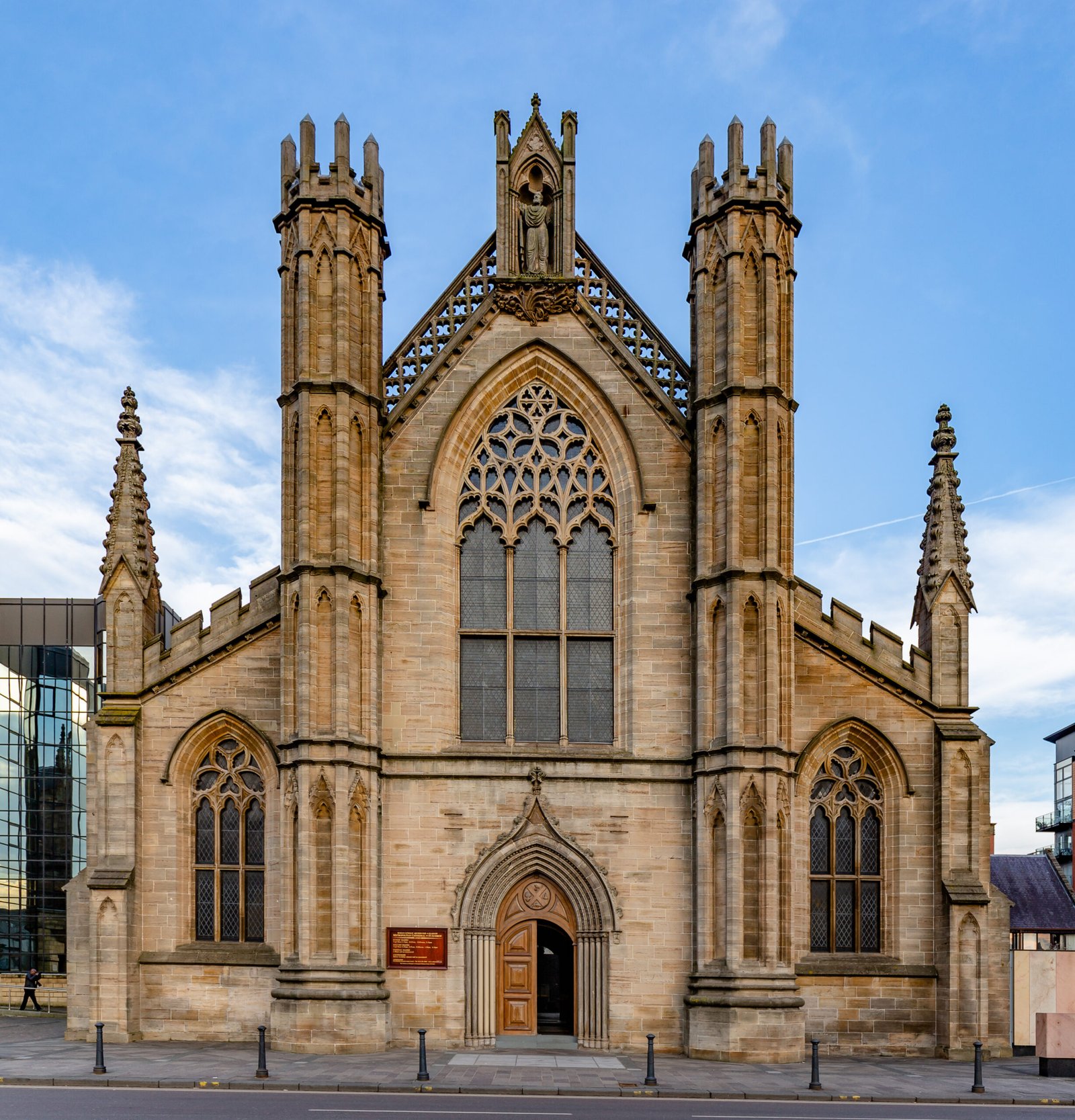
The mother church of the Archdiocese of Glasgow, this Neo-Gothic cathedral on the River Clyde’s north bank stands as Scotland’s principal Catholic place of worship.
At a glance
St Andrew’s Cathedral serves as the seat of the Archbishop of Glasgow and the spiritual heart of Scottish Catholicism. Designed by architect James Gillespie Graham, the cathedral exemplifies the Neo-Gothic revival that defined early 19th-century ecclesiastical architecture in Britain.
History
The cathedral was designed in 1814 by James Gillespie Graham, one of Scotland’s foremost architects of the period. It occupies a prominent position in Glasgow’s city centre, on Clyde Street along the north bank of the River Clyde. The building serves as the mother church of the Archdiocese of Glasgow and the official residence of the Archbishop.
What you see
The cathedral’s design reflects the Neo-Gothic style that was gaining prominence in the early 19th century. Gillespie Graham’s approach combined historical ecclesiastical forms with contemporary architectural sensibilities, creating a structure that commands attention within Glasgow’s urban landscape.
Cultural significance
St Andrew’s Cathedral is dedicated to Scotland’s patron saint, Andrew the Apostle. As the mother church of the Archdiocese of Glasgow, it holds profound importance for Catholic communities across the region and represents a significant architectural and spiritual landmark in Scotland’s religious heritage.
Key facts
- Country: United Kingdom
- City: Glasgow
- Coordinates: 55.8555, −4.2529
- Architect: James Gillespie Graham
- Designed: 1814
- Style: Neo-Gothic
Practical information & getting there
The cathedral is located in Glasgow’s city centre on Clyde Street, on the north bank of the River Clyde. For current visiting hours, services, and access information, contact the cathedral directly or consult the Archdiocese of Glasgow’s official resources.
Sources & resources
Find it on the map
See this place and what’s around it →📷 Become a Cultural Heritage Online photographer
Share your photos of places: they stay published under your name as the author. The more they're seen, the more you get noticed — and soon a contest will reward the most appreciated photos.
Log in or sign up free to add a photoIs this page about you?
This page is read by travellers and heritage enthusiasts who find it on Google. Tell us how you are connected to this place and we will take it from there.