
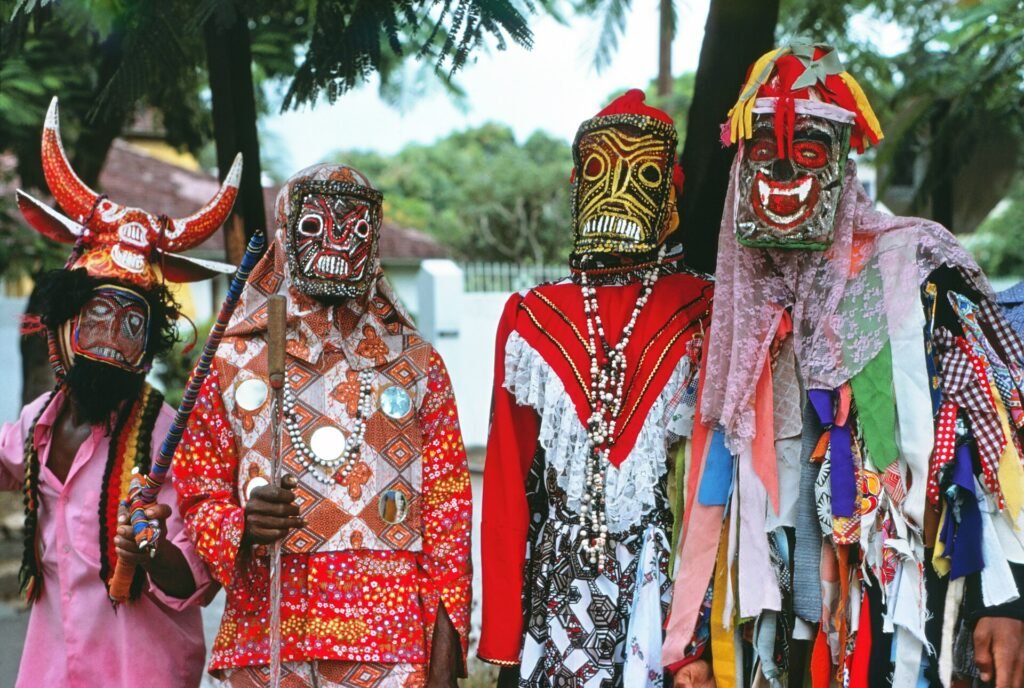
A masquerade festival born from African diaspora traditions, Junkanoo pulses through the Bahamas with drums, dance, and elaborate street parades that blend resilience and joy.
At a glance
Junkanoo is a dynamic festival of masking, drumming, and procession rooted in the experience of enslaved and formerly enslaved African people in the Caribbean and colonial Americas. Today it thrives most visibly in the Bahamas, Jamaica, and Belize, with echoes in Miami and Key West—wherever diaspora communities have gathered. The practice merges African rhythms with Caribbean street culture, performed by masked dancers, drummers, and paraders who move through towns in celebration.
Origins & history
Junkanoo originated during the period of African chattel slavery in British American colonies. In the Bahamas, it is said to date back to the 1700s, where it was initially called by this name. The festival persists across territories touched by the African diaspora—Jamaica, Belize, and historically North Carolina and Miami, where West Indian settlements flourished after emancipation.
The practice
Junkanoo unfolds as street pageantry rooted in masquerade. Performers don elaborate masks and costumes, move to the pulse of drums, and dance through public spaces in organized parades. The shared sonic and visual vocabulary—masking, drumming, dance, and procession—remains constant across variants, though spellings and performance styles vary considerably by location and era.
In many territories, Junkanoo clusters around Christmas week. The Bahamas celebrates it year-round, while Jamaica showcases predominantly Christmas-time parades. In Belize, where the music has entered the mainstream, competitive Junkanoo drives fervent audience engagement. In Florida, Miami hosts parades in June and Key West in October, drawing on black populations with Caribbean roots.
Cultural significance
Junkanoo stands as a living memorial to African creativity and resistance during enslavement, transformed into a joyful assertion of community identity and freedom. Its persistence across borders and centuries testifies to the power of drumming, masquerade, and collective movement to sustain culture through displacement and oppression.
Key facts
- Anchor community: Nassau, Bahamas (25.07502°N, 77.33976°W)
- Practiced in: Bahamas, Jamaica, Belize, and diaspora communities in Miami and Key West, Florida
- Core elements: masquerade, drumming, dance, street parades
- Timing: Christmas week in many territories; year-round in the Bahamas
- UNESCO ICH inscription: 01988
Where to experience it
Nassau remains the heartland of Junkanoo. The festival pulses through the Bahamas year-round, with performances during Christmas and New Year celebrations offering the most vivid expressions. In Jamaica, Christmas parades dominate. Belize’s competitive scene draws visitors who wish to witness how the tradition has evolved in the mainstream music world.
Sources & resources
Find it on the map
See this place and what’s around it →📷 Become a Cultural Heritage Online photographer
Share your photos of places: they stay published under your name as the author. The more they're seen, the more you get noticed — and soon a contest will reward the most appreciated photos.
Log in or sign up free to add a photo