
A long-necked plucked lute whose making and playing are inseparable arts, the tar embodies Azerbaijani musical tradition and identity across generations and communities.
In UNESCO’s words
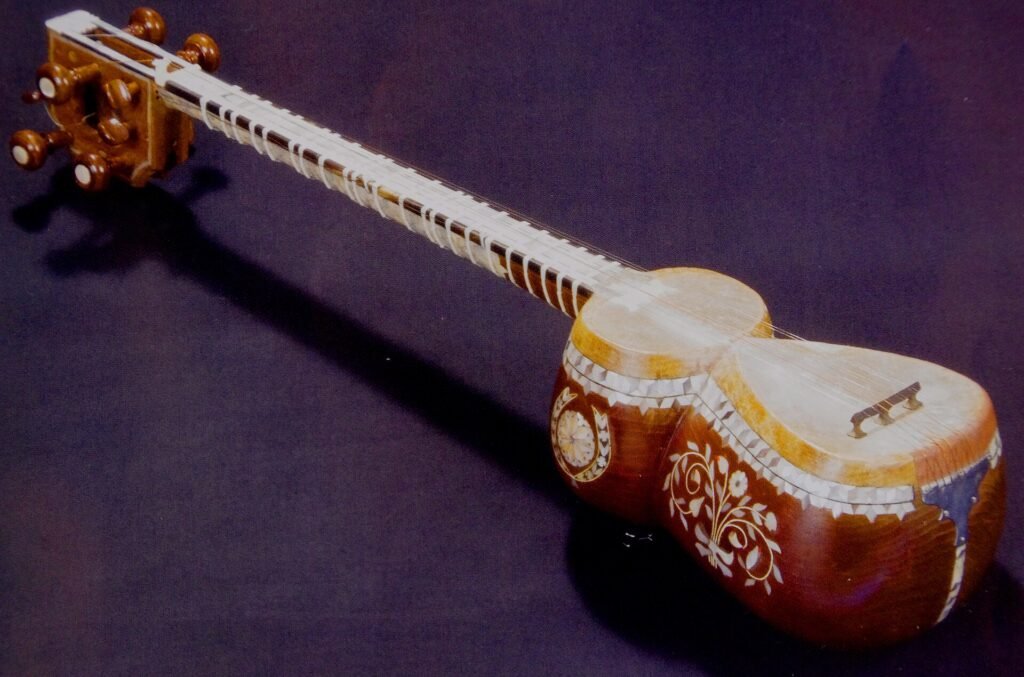
The Tar is a long-necked plucked lute, traditionally crafted and performed in communities throughout Azerbaijan. Considered by many to be the country’s leading musical instrument, it features alone or with other instruments in numerous traditional musical styles. Tar makers transmit their skills to apprentices, often within the family. Craftsmanship begins with careful selection of materials for the instrument: mulberry wood for the body, nut wood for the neck, and pear wood for the tuning pegs. Using various tools, crafters create a hollow body in the form of a figure eight, which is then covered with the thin pericardium of an ox. The fretted neck is affixed, metal strings are added and the body is inlaid with mother-of-pearl. Performers hold the instrument horizontally against the chest and pluck the strings with a plectrum, while using trills and a variety of techniques and strokes to add colour. Tar performance has an essential place in weddings and different social gatherings, festive events and public concerts. Players transmit their skills to young people within their community by word of mouth and demonstration, and at educational musical institutions. Craftsmanship and performance of the tar and the skills related to this tradition play a significant role in shaping the cultural identity of Azerbaijanis.
Official description, UNESCO Intangible Cultural Heritage List — Craftsmanship and performance art of the Tar, a long-necked string musical instrument
At a glance
The tar is a long-necked plucked lute traditionally made and played throughout Azerbaijan. It is considered the country's leading musical instrument and appears both as a solo performer and alongside other instruments in numerous traditional musical styles.
Origins & history
The Azerbaijani tar was developed from the Persian tar, adapting and evolving within Azerbaijani musical traditions. The instrument and its performance practice have shaped the cultural identity of Azerbaijani communities for centuries. In 2012, UNESCO recognized the craftsmanship and performance art of the tar as Intangible Cultural Heritage, acknowledging its role in transmitting knowledge, aesthetics, and social values across generations.
The practice
Tar makers select specific woods for different parts: mulberry for the body, nut wood for the neck, and pear wood for the tuning pegs. They carve the body into a figure-eight shape, cover it with thin ox pericardium, attach a fretted neck, add metal strings, and inlay the body with mother-of-pearl. Performers hold the instrument horizontally against the chest and pluck the strings with a plectrum, using trills and various techniques to create different sounds. Craftspeople teach apprentices through direct transmission, often within families, while musicians pass on performance skills through word of mouth, demonstration, and at musical institutions.
Cultural significance
The tar holds essential cultural importance in Azerbaijani life, featuring at weddings, social gatherings, festive events, and public concerts. Both the craftsmanship and performance of the tar, along with related skills, play a significant role in shaping Azerbaijani cultural identity. Knowledge of the instrument's construction and performance moves between generations, preserving traditional practices and values within communities.
Key facts
- Country: Azerbaijan
- Inscribed: 2012
- UNESCO list: Representative List of the Intangible Cultural Heritage of Humanity
- UNESCO reference: 00671
- UNESCO vocabulary: Instrument making; Instrumental music; Plucked string instruments
- Map: not shown — UNESCO’s official description of this element names no locality, and a living tradition is practised across a community, not at one address.
Where to experience it
The tar thrives in communities throughout Azerbaijan, where skilled craftsmen continue to handcraft the instrument using traditional methods and materials, while performers maintain the tradition through weddings, social gatherings, festive events, and public concerts. Visitors can encounter tar music at educational musical institutions and cultural performances, where both established players and apprentices demonstrate the instrument's techniques and its central role in Azerbaijani cultural identity. Learning about the tar's craftsmanship and performance happens through direct engagement with local musicians and makers who pass their knowledge to young people within their communities.
Sources & resources
- UNESCO — official element page: Craftsmanship and performance art of the Tar, a long-necked string musical instrument
- UNESCO — open data record: Intangible Heritage List, reference 00671
- UNESCO — official photograph: Photograph of this element — Mamed Rahimov — 2010 by M.Rahimov/Ministry of Culture and Tourism
- Reference — Wikipedia (secondary): Tar (Azerbaijani instrument) — consulted as a secondary reference, not as confirmation
- Cultural Heritage Online: Our archive and city guides

Sources
- S1 — During, Jean. La musique traditionnelle de l'Azerbaïdjan du Sud. Editions Recherche sur les Civilisations, 1988. ISBN 978-2-86538-189-0.
- S2 — Slobin, Mark, ed. Retuning Culture: Musical Changes in Central Asia and the Caucasus. Duke University Press, 1996. ISBN 978-0-8223-1847-7.
Spotted an error? Write to editorial@culturalheritageonline.com and we correct it the same day.