
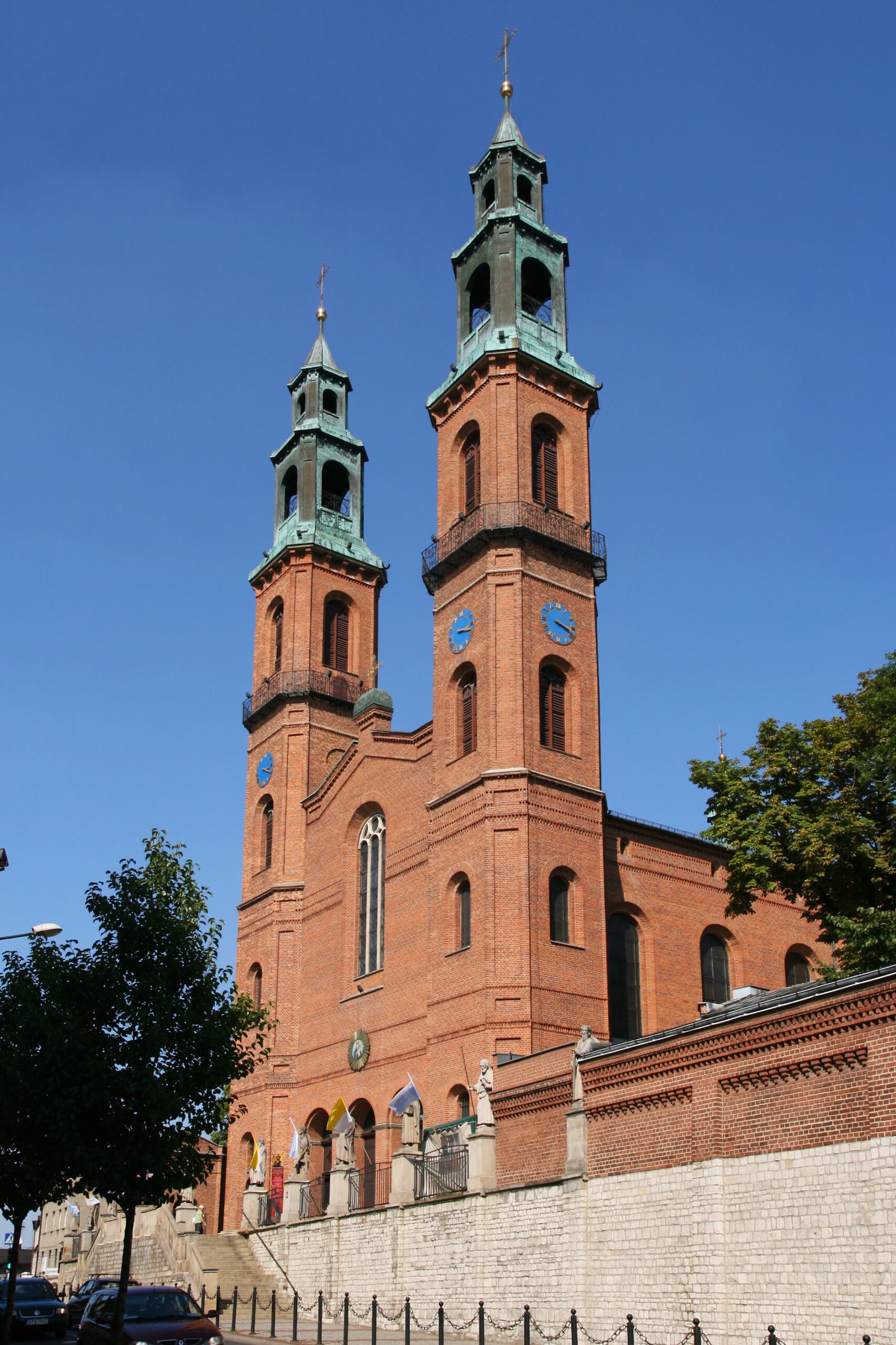
A Neo-Romanesque minor basilica in southern Poland, elevated to basilica status by Pope John XXIII in 1962, anchoring centuries of Catholic devotion in Piekary Śląskie.
At a glance
This Roman Catholic basilica stands as the spiritual centre of Piekary Śląskie. Its Neo-Romanesque architecture, completed in 1849, represents the nineteenth-century renewal of the site’s religious life. The basilica’s formal elevation to minor basilica status in 1962 confirmed its importance to Polish Catholicism.
History
A church has occupied this location since the fourteenth century, marking Piekary Śląskie as an established centre of worship for over six hundred years. The present basilica replaced its medieval predecessor, designed by architect Daniel Grötschel and completed in 1849. On 1 December 1962, Pope John XXIII elevated the church to minor basilica status, recognition of its pastoral and spiritual significance to the local Catholic community.
What you see
The basilica’s architecture follows the Neo-Romanesque style favoured in nineteenth-century church design. Grötschel’s composition reflects the revival aesthetic of its era, combining medieval references with contemporary construction techniques and materials typical of 1840s religious architecture in the region.
Cultural significance
The basilica represents continuity and renewal in Polish Catholic life. Its elevation to minor basilica status placed it among churches of particular liturgical and pastoral importance within the Roman Catholic Church. The site’s six-hundred-year history of worship underscores its role in the spiritual identity of Piekary Śląskie and the broader Silesian Catholic tradition.
Key facts
- Country: Poland
- City: Piekary Śląskie
- Coordinates: 50.3839, 18.9444
- Architect: Daniel Grötschel
- Completed: 1849
- Style: Neo-Romanesque
- Status: Roman Catholic minor basilica (elevated 1 December 1962)
Practical information & getting there
The basilica is located in Piekary Śląskie in the Silesian region of southern Poland. For current visiting hours, liturgical schedules and accessibility information, contact the basilica directly or consult the local diocese website.
Sources & resources
Find it on the map
See this place and what’s around it →📷 Become a Cultural Heritage Online photographer
Share your photos of places: they stay published under your name as the author. The more they're seen, the more you get noticed — and soon a contest will reward the most appreciated photos.
Log in or sign up free to add a photoIs this page about you?
This page is read by travellers and heritage enthusiasts who find it on Google. Tell us how you are connected to this place and we will take it from there.