
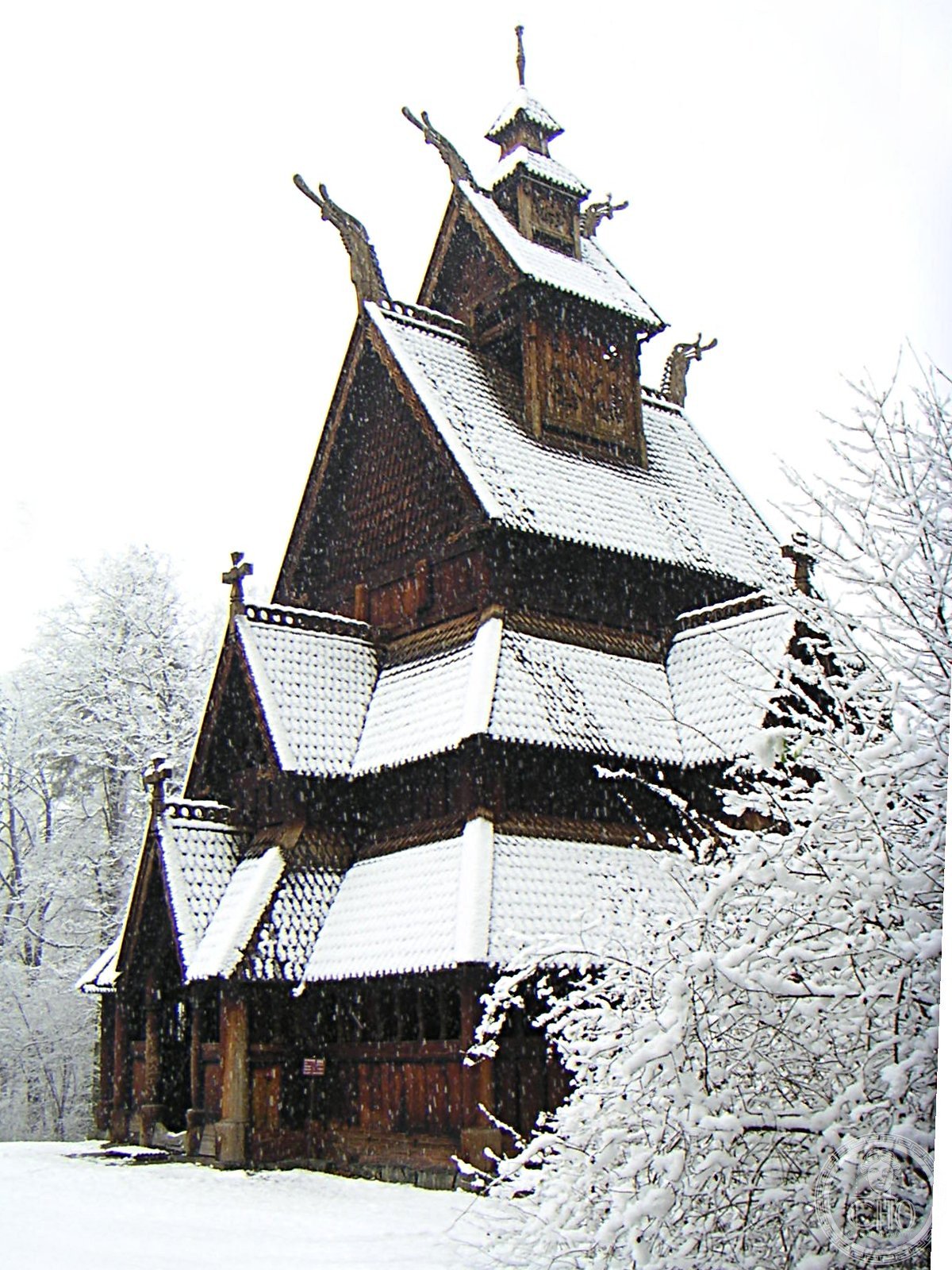
Norsk Folkemuseum is Norway’s largest museum of cultural history, situated on the Bygdøy peninsula in Oslo. Founded in 1894, it combines an extensive indoor collection of artefacts spanning all social classes and regions with an open-air sector featuring more than 150 historic buildings relocated from across the country. The museum’s centrepiece is the medieval Gol Stave Church, one of the best-preserved stave churches in the world, reconstructed on site in 1885.
At a glance
- Type
- Museum of cultural history; open-air museum
- Period
- Founded 1894; open-air sector established from 1881
- Style
- Mixed — historic relocated vernacular buildings; Norse and regional architectural traditions
- Location
- Bygdøy peninsula, Oslo, Norway · 59.9071° N, 10.6838° E
Overview
Norsk Folkemuseum at Bygdøy, Oslo, is a museum of cultural history with extensive collections of artefacts from all social groups and all regions of Norway. It also incorporates a large open-air museum with more than 150 buildings relocated from towns and rural districts throughout the country. Together, the indoor and outdoor collections offer a comprehensive picture of Norwegian life from the Middle Ages to the twentieth century.
History
The museum was founded in 1894 by ethnologist Hans Aall, who modelled it on Artur Hazelius’s Skansen in Stockholm — one of the world’s first open-air museums. The Gol Stave Church, originally built around 1200 in Numedal and relocated to Bygdøy in 1885, became one of the founding anchors of the outdoor collection. Over the following century the museum expanded its holdings to include urban townscapes, Sámi settlements, and a Hardanger farmstead representative of western Norwegian rural culture. In 1947 it merged with the Norwegian Folk Museum’s Bygdøy collections to reach its present scale.
What you see
Visitors can walk through reassembled farmsteads, urban streets, and a complete Sámi camp, experiencing Norwegian vernacular architecture across five centuries. Highlight interiors include furnished merchant houses, a 19th-century pharmacy, and a traditional Hardanger farm with original furnishings. The indoor galleries hold folk art, national costumes (bunad), tools, ceramics, and an important collection of Henrik Ibsen’s personal belongings. Seasonal demonstrations of traditional crafts — weaving, baking, and boat-building — bring the site to life throughout the year.
Cultural significance
Norsk Folkemuseum is the primary national repository for Norwegian material culture and folk heritage, housing over 300,000 objects. It played a formative role in establishing the open-air museum concept across Scandinavia and Europe, and remains one of the most visited cultural institutions in Norway.
Practical information
- Address
- Museumsveien 10, 0287 Oslo, Norway
- Admission
- Fee applies; check official website for current rates
- Website
- norskfolkemuseum.no
Getting there
Take bus line 30 from central Oslo towards Bygdøy, alighting at the Norsk Folkemuseum stop. The Bygdøynes ferry (summer only) runs from Rådhusbrygge pier 3, near Oslo City Hall. By car, follow the E18 westbound and exit at Bygdøy; parking is available on site.
Sources & resources
Find it on the map
See this place and what’s around it →📷 Become a Cultural Heritage Online photographer
Share your photos of places: they stay published under your name as the author. The more they're seen, the more you get noticed — and soon a contest will reward the most appreciated photos.
Log in or sign up free to add a photo