
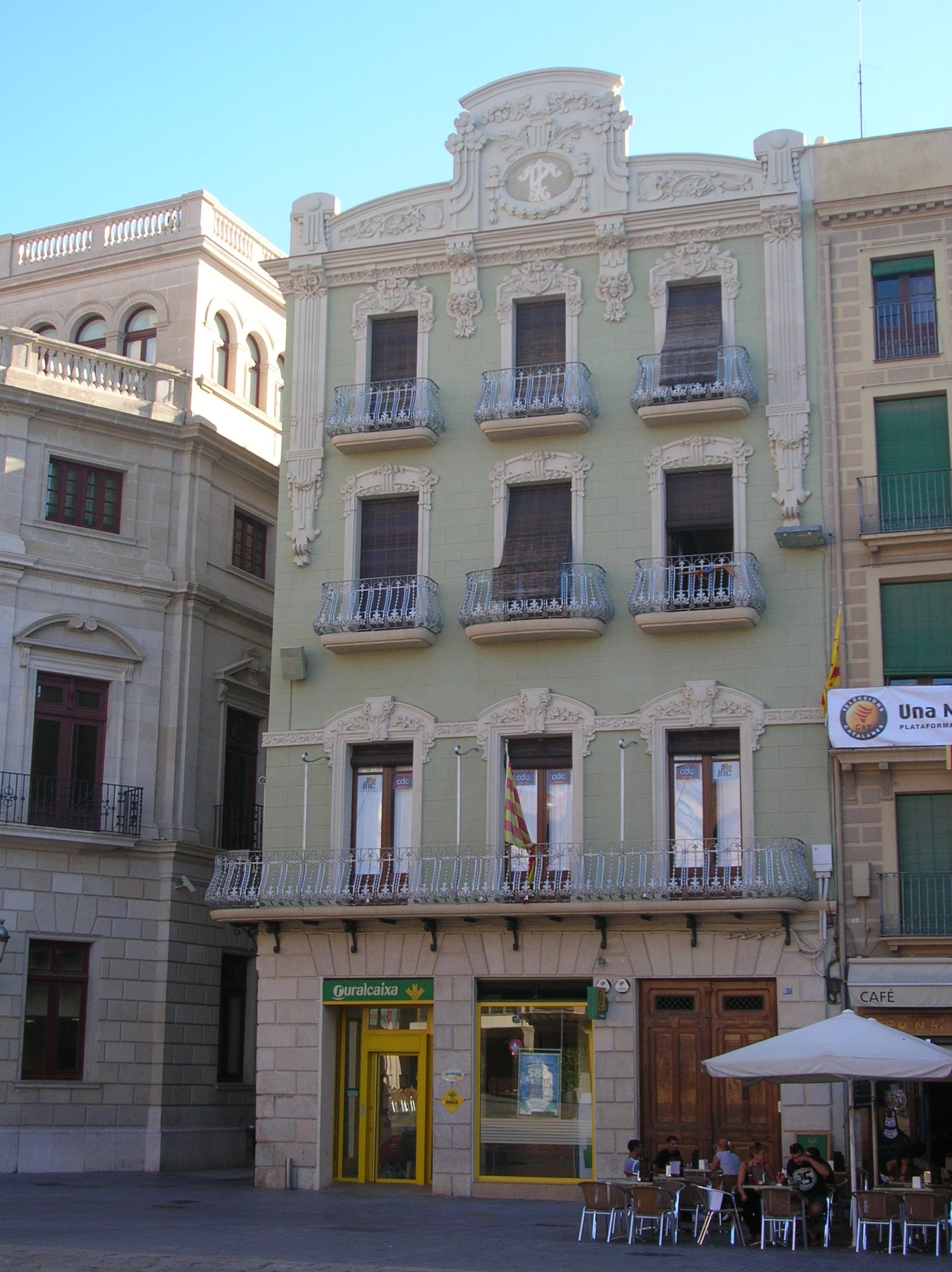
A Modernist residence in Catalonia, Casa Pinyol showcases the architectural vision of Pere Caselles i Tarrats and reflects the cultural ambitions of early-twentieth-century Reus.
At a glance
Casa Pinyol stands as a landmark of Catalan Modernism in the industrial city of Reus. Completed in 1910, the building represents the refined domestic architecture of its era, when local prosperity fueled investment in bold new design.
History
The house was built in 1910 under the direction of architect Pere Caselles i Tarrats, a key figure in Modernist design. By 2010, Casa Pinyol had been repurposed as the head office of Convergència Democràtica de Catalunya, a major Catalan political party—a transition that reflects the building’s enduring significance within Reus society.
What you see
The building exemplifies the Modernist aesthetic that transformed Reus during the early twentieth century. Caselles i Tarrats’s design balances decorative ambition with domestic functionality, characteristic of Catalan Modernism.
Cultural significance
Casa Pinyol embodies the architectural confidence of Reus during a period of industrial expansion. The building’s conversion to political use demonstrates how heritage structures remain active agents in community life, serving contemporary needs while preserving their historical identity.
Key facts
- Country: Spain
- City: Reus, Catalonia
- Architect: Pere Caselles i Tarrats
- Year completed: 1910
- Coordinates: 41.15529444, 1.10901111
- Current use: Head office of Convergència Democràtica de Catalunya (as of 2010)
Practical information & getting there
Casa Pinyol is located in Reus, a city in southern Catalonia approximately 130 kilometres south-west of Barcelona. Reus is accessible by train and road. The building’s current institutional use may restrict general access; verify opening hours and visiting arrangements in advance.
Sources & resources
- Casa Pinyol – Wikipedia
- Cultural Heritage Online
Find it on the map
See this place and what’s around it →📷 Become a Cultural Heritage Online photographer
Share your photos of places: they stay published under your name as the author. The more they're seen, the more you get noticed — and soon a contest will reward the most appreciated photos.
Log in or sign up free to add a photoIs this page about you?
This page is read by travellers and heritage enthusiasts who find it on Google. Tell us how you are connected to this place and we will take it from there.