
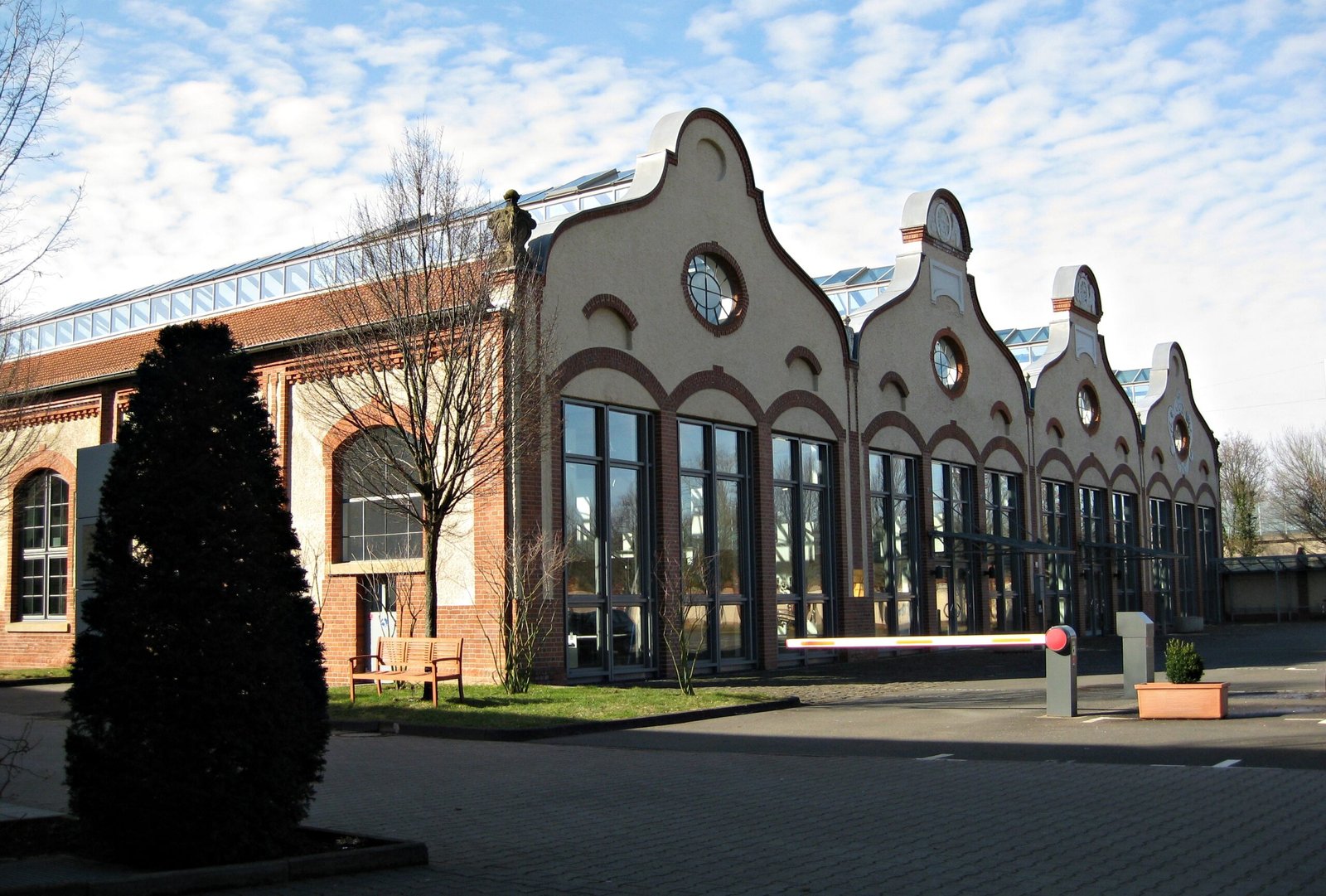
A landmark of industrial Art Nouveau design, this former tram depot in Bonn-Castell has been transformed into office space while retaining its architectural significance.
At a glance
The City of Bonn tram depot stands at Graurheindorfer Straße 157, a legally protected building that exemplifies early twentieth-century industrial design. Repurposed since 2000 as office space, it now houses the Pädagogischer Austauschdienst, a section of the Kultusministerkonferenz secretariat.
History
Built to serve Bonn’s expanding urban transport network, the depot functioned as a maintenance and storage facility for the city’s tram system. The structure remained in active use for its original purpose until its transition to office accommodation began in 2000. The Pädagogischer Austauschdienst relocated to the building in 2010, bringing new institutional life to the historic structure.
What you see
The depot exemplifies industrial Art Nouveau, an aesthetic movement that brought elegance to functional architecture. The design balances practical requirements with decorative flourishes characteristic of the period, making it an important example of how utilitarian buildings could achieve artistic merit.
Cultural significance
As one of Bonn’s better-preserved examples of early industrial modernism, the tram depot documents the city’s infrastructure development. Its legal protection recognizes the architectural and historical value of structures once considered merely functional.
Key facts
- Location: Graurheindorfer Straße 157, Bonn-Castell, Bonn
- Country: Germany
- Coordinates: 50.751734, 7.088724
- Architectural style: Industrial Art Nouveau
- Current use: Office building (since 2000)
Practical information & getting there
The depot is located in the Bonn-Castell district. As a privately occupied office building, public access is limited. Visitors interested in Bonn’s architectural heritage may view the exterior and appreciate its distinctive industrial Art Nouveau features from the street.
Sources & resources
Find it on the map
See this place and what’s around it →📷 Become a Cultural Heritage Online photographer
Share your photos of places: they stay published under your name as the author. The more they're seen, the more you get noticed — and soon a contest will reward the most appreciated photos.
Log in or sign up free to add a photoIs this page about you?
This page is read by travellers and heritage enthusiasts who find it on Google. Tell us how you are connected to this place and we will take it from there.