
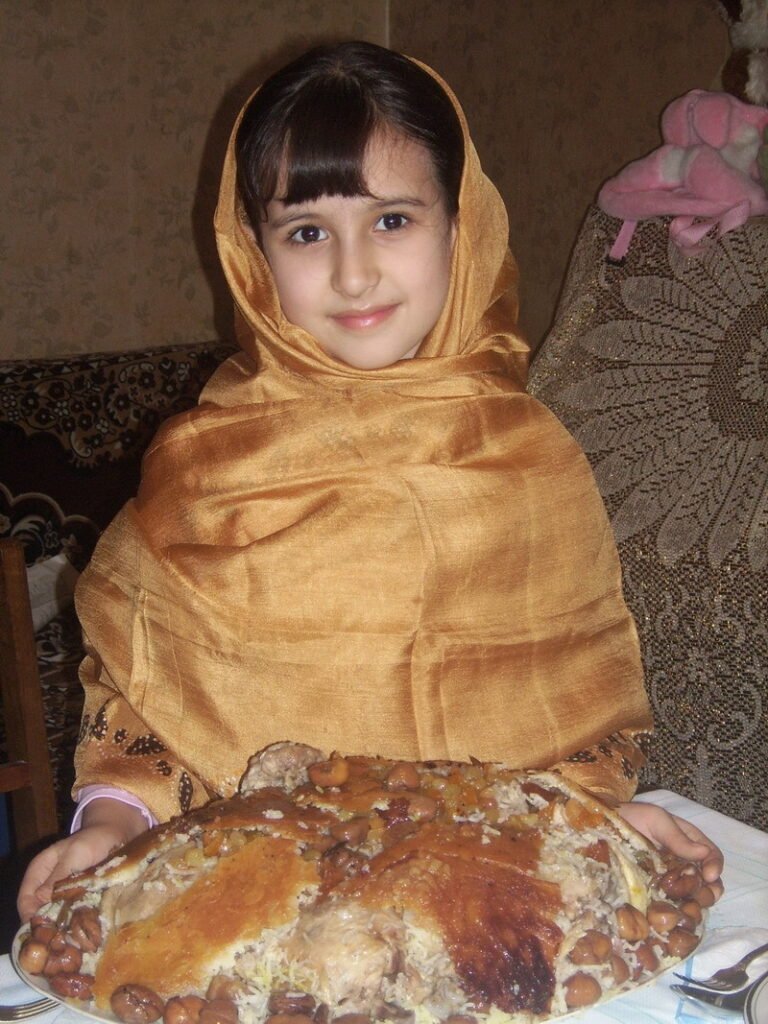
A square-shaped silk headscarf bearing intricate traditional prints, Kelaghayi represents centuries of Azerbaijani and Armenian women’s craftsmanship and cultural identity.
At a glance
Kelaghayi—known also as Hawri in Kurdish and charghat in Persian—is a hand-crafted women’s headscarf made from silk and decorated with symbolic patterns. The practice encompasses both the traditional art of its making and the cultural meanings embedded in its wearing, particularly among Azerbaijani and Armenian communities. The UNESCO inscription recognizes the craft as a living expression of regional identity and aesthetic knowledge passed between generations.
Origins & history
The Kelaghayi emerges from the textile traditions of the South Caucasus, where silk production and decorative arts flourished across trade routes. The practice of wearing a distinctive square headscarf carries both practical and ceremonial weight in Azerbaijani and Armenian cultures. Its specific motifs and wearing conventions developed within distinct regional and family lineages, making each scarf a record of knowledge and belonging.
The practice
Kelaghayi production begins with fine silk, which artisans then dye and print with patterns that hold symbolic meaning within their communities. The square format allows for multiple ways of wearing and draping—a flexibility that reflects the scarf’s role across different occasions, from daily wear to ceremonial dress. The prints themselves constitute a visual language; their specific designs, colors, and arrangements convey information about the wearer’s status, origin, and cultural affiliation. Wearing a Kelaghayi remains an active expression of cultural identity among women in Azerbaijan and Armenia.
Cultural significance
The Kelaghayi is far more than a garment. Its creation and wearing transmit cultural values, aesthetic principles, and social knowledge across families and communities. The practice binds artisans, wearers, and observers in a shared understanding of beauty, tradition, and regional pride. UNESCO’s recognition affirms that this intangible heritage—the skills of production, the meanings of symbols, the practices of wearing—deserves protection and transmission.
Key facts
- UNESCO Intangible Cultural Heritage inscription: 2014 (Reference 00669)
- Primary bearers: Azerbaijani and Armenian women and artisans
- Heartland: Shaki, Azerbaijan (41.1883°N, 47.17119°E)
- Materials: Silk, dyes, traditional print techniques
- Form: Square-shaped headscarf with symbolic prints
Where to experience it
Shaki, in northern Azerbaijan, remains the heartland of Kelaghayi production and wearing. Visitors may encounter the scarves in local markets, worn by women in daily life and at cultural events, and in craft workshops where artisans continue to dye and print silk according to traditional methods. Local museums and cultural centers document the practice’s history and variations.
Sources & resources
- Kelaghayi – Wikipedia
- Traditional art and symbolism of Kelaghayi – UNESCO Intangible Cultural Heritage
- Cultural Heritage Online
Find it on the map
See this place and what’s around it →📷 Become a Cultural Heritage Online photographer
Share your photos of places: they stay published under your name as the author. The more they're seen, the more you get noticed — and soon a contest will reward the most appreciated photos.
Log in or sign up free to add a photo