
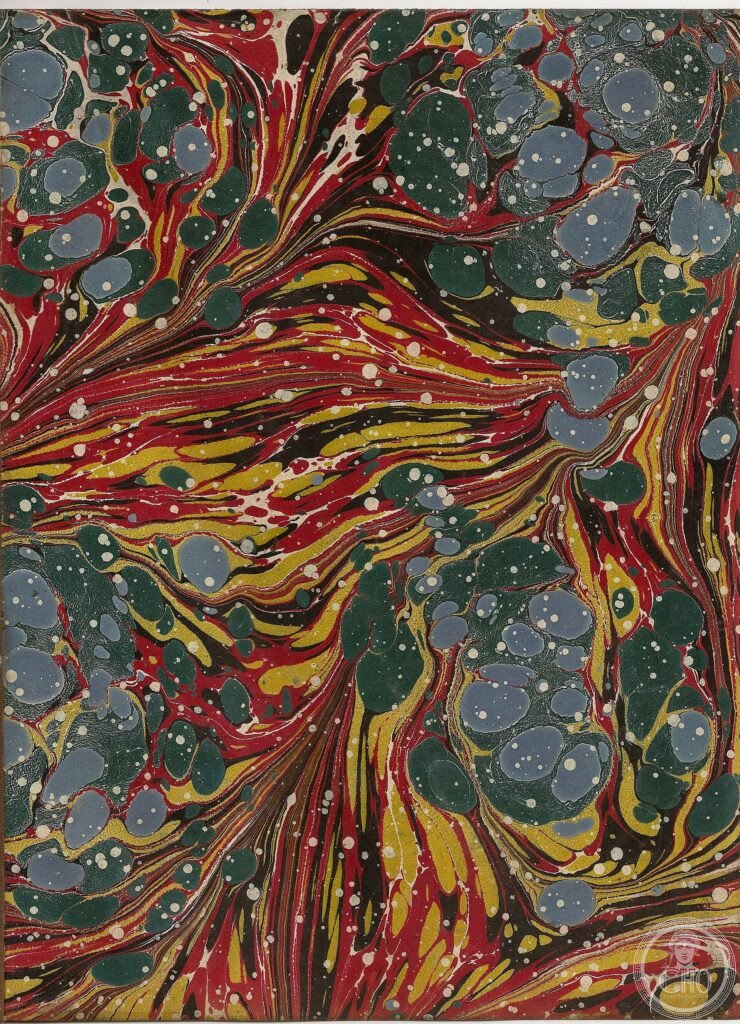
An ancient aqueous art where pigment floats on water or viscous size, then transfers to paper in patterns as unique as fingerprints. Each pull yields an unrepeatable monotype.
At a glance
Ebru is the Ottoman and Turkish method of creating marbled paper through carefully controlled floating and transfer of colored pigments. The artisan floats paint on water or a thickened solution, manipulates the surface with combs and tools, then lays absorbent paper or fabric atop to capture the design in a single, irreplaceable impression.
Origins & history
Paper marbling has been applied across several centuries and cultures to decorate surfaces ranging from book covers and endpapers to calligraphy grounds and stationery. The Turkish tradition, known as ebru, represents a refined distillation of this technique within the Ottoman and contemporary Turkish artistic heritage.
The practice
The marbler begins with plain water or a prepared viscous liquid called size. Pigments are floated across this surface in careful application, then combed, raked, or otherwise manipulated with hand-held tools to create intricate swirling and geometric patterns. The artisan reads the surface constantly, adjusting color placement and flow.
When the pattern achieves its desired form, absorbent paper or fabric is lowered horizontally onto the floating design and lifted away. The contact transfers the entire pattern in a single moment—no two pulls are identical. The marbled sheet is then dried and may be bound into books, folded into stationery, or left as standalone art.
Traditional materials include natural pigments, water, and plant-based sizing agents, though contemporary practitioners also work with modern paints and prepared solutions.
Cultural significance
The uniqueness of each print—its status as monotype—lies at the heart of ebru’s cultural value. No reproduction, digital or otherwise, can replicate the specific instant when pigment meets paper. This singularity has made marbled paper prized for centuries in Ottoman court culture, scholarly manuscripts, and fine bookbinding traditions across the Islamic world and Europe.
Ebru embodies the artisan’s intimate knowledge of fluid dynamics, color harmony, and material behavior. It demands patience, intuition, and years of apprenticeship. In contemporary Turkey and among diaspora communities, the practice remains a living connection to Ottoman aesthetic refinement and craft mastery.
Key facts
- Countries: Turkey
- Anchor community: Istanbul
- Coordinates: 41.00813, 28.95074
- UNESCO Intangible Cultural Heritage reference: 00644
- Each marbled print is a unique monotype
- Historically used for calligraphy grounds, bookbinding, and fine stationery
Where to experience it
Istanbul remains the heartland of ebru practice. Visitors and practitioners can observe and learn the technique from working marbling studios and artisan workshops in the city’s historic quarters, where the tradition continues to be transmitted through apprenticeship and direct instruction.
Sources & resources
Find it on the map
See this place and what’s around it →📷 Become a Cultural Heritage Online photographer
Share your photos of places: they stay published under your name as the author. The more they're seen, the more you get noticed — and soon a contest will reward the most appreciated photos.
Log in or sign up free to add a photo