
Vietnam’s premier repository of Cham stone sculpture, housing the world’s largest collection of works from the Southeast Asian civilization that flourished for over a millennium.
At a glance
Located in Hải Châu District near the Han River in central Đà Nẵng, this museum preserves and displays the artistic legacy of the Cham people through stone sculptures spanning centuries. The collection draws from archaeological sites across southern Vietnam, including Mỹ Sơn, Trà Kiệu, and Đồng Dương.
History
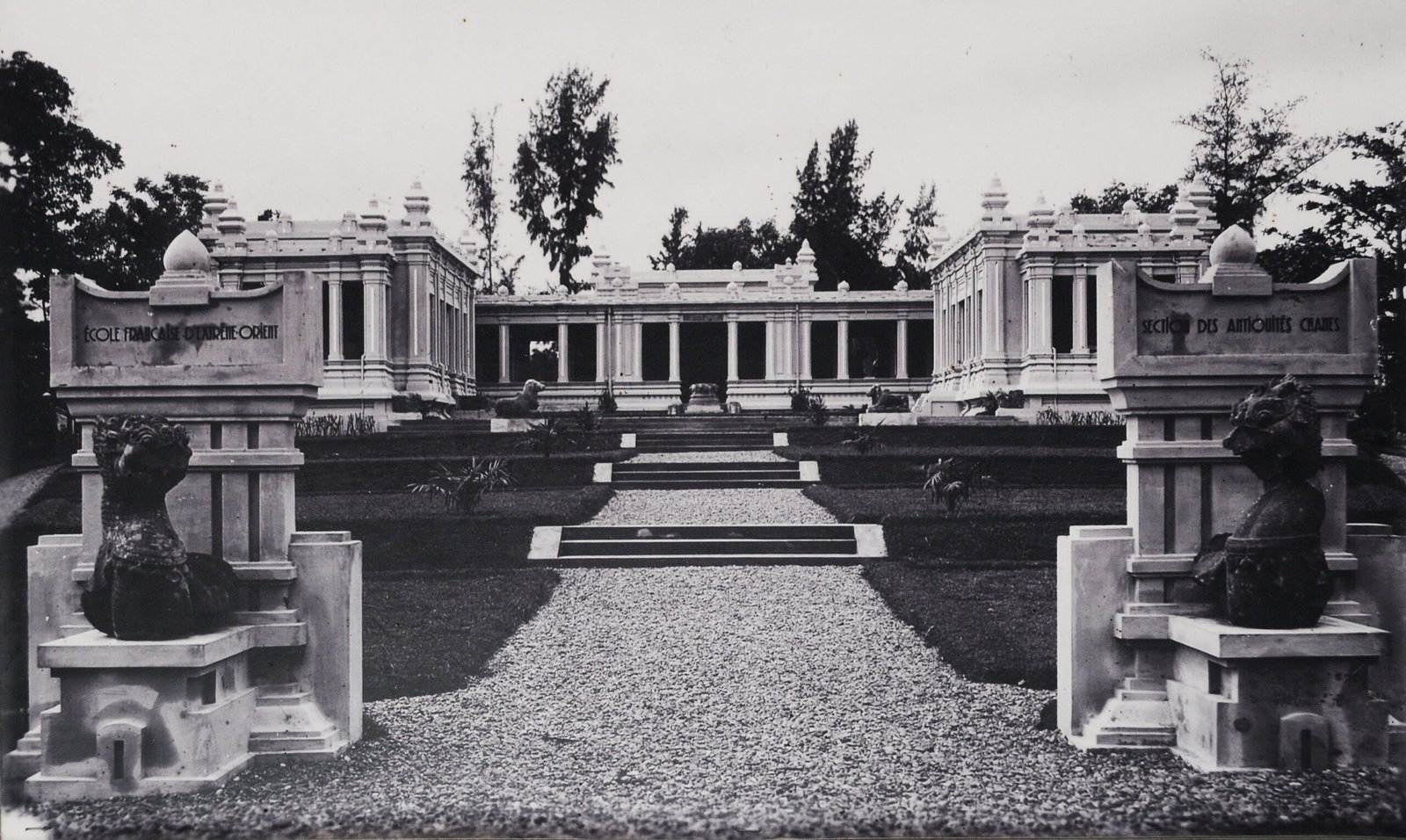
The establishment of a Cham sculpture museum in Đà Nẵng was first proposed in 1902 by the Department of Archaeology of the École Française d’Extrême-Orient (EFEO). Archaeologist Henri Parmentier championed the project, which was reportedly founded in 1915 under his name—the Musée Henri Parmentier.
Before the museum’s formal opening, the site functioned as a “garden of sculptures” where Cham works had been accumulated over two decades. The inaugural building opened in 1919, designed by French architects M. Deleval and M. Auclair, who incorporated traditional Cham architectural elements at Parmentier’s direction.
Two major expansions followed. The first, in the mid-1930s, added two new galleries for objects acquired during the 1920s and 1930s, with displays organized by archaeological site. A second expansion in 2002 introduced a two-story building doubling the exhibition space and adding facilities for storage, research, restoration, and administration.
What you see
The museum’s architecture reflects a Franco-Cham aesthetic, with the original 1919 building incorporating local sculptural traditions. The expanded complex now spans approximately 2,000 square meters of display and support facilities. Sculptures are organized thematically by their site of origin, allowing visitors to understand regional variations in Cham artistic practice.
Cultural significance
This museum safeguards the material heritage of the Champa Kingdom, a maritime trading power and sophisticated cultural center. Cham sculpture exemplifies the region’s unique synthesis of Indian, Hindu, and local Southeast Asian artistic traditions—a fusion evident in religious iconography, decorative elements, and architectural ornament.
The collection serves scholars, conservators, and the general public, functioning as a center for research into a civilization largely eclipsed by historical shifts in power and demographic change.
Key facts
- Country: Vietnam
- City: Đà Nẵng
- District: Hải Châu
- Coordinates: 16.059894°N, 108.222641°E
- Building date: 1919 (original); expanded 1930s and 2002
- Houses the world’s largest collection of Cham sculpture
Practical information & getting there
The museum is located in central Đà Nẵng near the Han River. For current visiting hours, admission fees, and access details, consult the museum’s official channels or your local tourism office before your visit.
Sources & resources
Find it on the map
See this place and what’s around it →📷 Become a Cultural Heritage Online photographer
Share your photos of places: they stay published under your name as the author. The more they're seen, the more you get noticed — and soon a contest will reward the most appreciated photos.
Log in or sign up free to add a photoIs this page about you?
This page is read by travellers and heritage enthusiasts who find it on Google. Tell us how you are connected to this place and we will take it from there.