
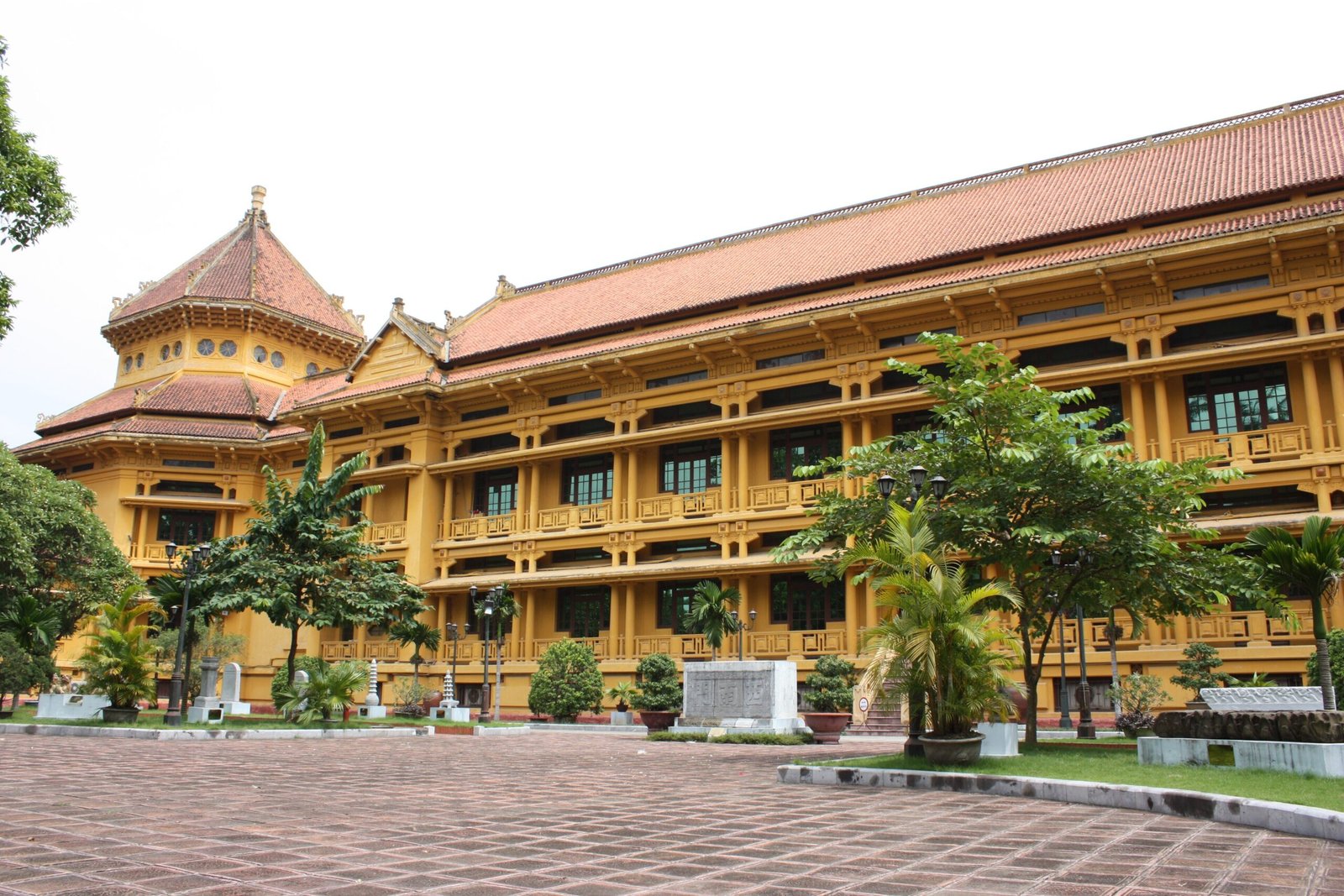
A repository of four millennia of Vietnamese heritage, from prehistoric cultures to the founding of the modern nation in 1945.
At a glance
The Vietnam National Museum of History holds over 200,000 artifacts spanning Vietnam’s prehistory to the August 1945 Revolution. Located in Hanoi’s Hoan Kiem district, the museum traces the arc of Vietnamese civilization across four major collections. Its building itself carries the traces of Vietnam’s colonial past, having originally served as a museum for the French School of the Far East.
History
The building was constructed during French colonial rule as a museum for the French School of the Far East. When North Vietnam’s government acquired the institution in 1958, curators undertook a systematic expansion of the collections to encompass eastern arts and a comprehensive national history. This transformation reflected the new state’s commitment to recovering and preserving Vietnamese cultural identity after independence.
What you see
The museum occupies a colonial-era building that exemplifies French architectural influence in Indochina. The structure itself offers visual testimony to Vietnam’s twentieth-century history—a physical reminder of the layers of governance and identity that shaped the nation.
Cultural significance
The museum’s collections document Vietnam’s 40,000-year journey from prehistory through the revolution that established the Democratic Republic. By preserving artifacts alongside narratives of national formation, the institution serves as custodian of Vietnamese identity and cultural continuity. The museum’s expansion after 1958 marks a pivotal moment in how independent Vietnam chose to represent its past.
Key facts
- Location: Hoan Kiem district, Hanoi, Vietnam
- Coordinates: 21.02°N, 105.86°E
- Collections: Over 200,000 items across four major sections
- Coverage: Vietnamese prehistory (c. 40,000–3,000 years ago) to August 1945 Revolution
- Acquired by North Vietnam: 1958
Practical information & getting there
The museum is situated in central Hanoi’s historic Hoan Kiem district, easily accessible by public transport or taxi from the Old Quarter. You can plan your visit around Hanoi’s moderate climate; spring and autumn offer the most pleasant conditions. Consult the museum’s hours and any current entry requirements before your visit.
Sources & resources
Find it on the map
See this place and what’s around it →📷 Become a Cultural Heritage Online photographer
Share your photos of places: they stay published under your name as the author. The more they're seen, the more you get noticed — and soon a contest will reward the most appreciated photos.
Log in or sign up free to add a photoIs this page about you?
This page is read by travellers and heritage enthusiasts who find it on Google. Tell us how you are connected to this place and we will take it from there.