
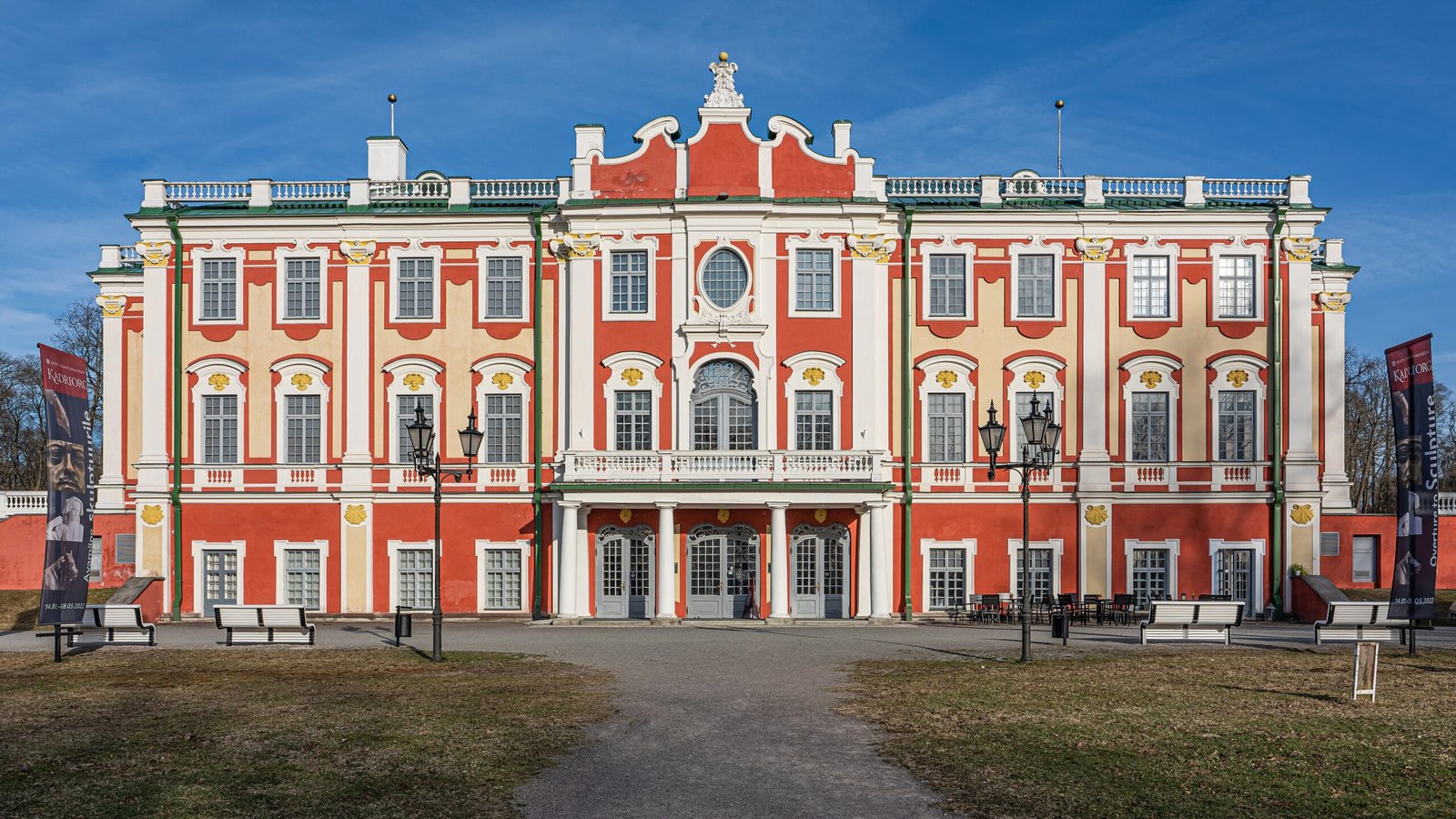
A Petrine Baroque palace built for Russian imperial glory, now home to one of Estonia’s finest art museums.
At a glance
Kadriorg Palace stands in the Kadriorg district of Tallinn as a masterwork of early 18th-century palace design. Both its Estonian and German names—Kadrioru loss and Schloss Katharinental—translate to “Catherine’s valley,” reflecting its imperial Russian origins. The palace now functions as the Kadriorg Art Museum, a branch of the Art Museum of Estonia.
History
Built between 1718 and 1725, the palace was constructed to designs by Italian architect Nicola Michetti. Gaetano Chiaveri and Mikhail Zemtsov oversaw its execution, bringing together Italian and Russian architectural expertise during the height of Peter the Great’s cultural ambitions. The palace embodied the tsar’s vision of European grandeur on the Baltic shore.
What you see
The building exemplifies Petrine Baroque style, characterized by ornamental detail, symmetrical proportions, and the integration of formal gardens. The palace’s design reflects the sophisticated taste of early 18th-century court architecture, blending Western European influences with Russian imperial tradition.
Cultural significance
As one of Tallinn’s most important historical structures, Kadriorg Palace represents the city’s role in Russian imperial history and Estonia’s complex past. Today it serves as a cultural anchor, housing an extensive collection of foreign art spanning the 16th to 20th centuries. The nearby Kumu building in Kadriorg Park complements it with exhibitions of Estonian art from the 18th century onward.
Key facts
- Country: Estonia
- City: Tallinn
- Coordinates: 59.43851°N, 24.79084°E
- Built: 1718–1725
- Architect: Nicola Michetti (design); Gaetano Chiaveri and Mikhail Zemtsov (execution)
- Current use: Kadriorg Art Museum
Practical information & getting there
The palace is located in the Kadriorg district of central Tallinn, readily accessible by public transport or car. Kadriorg Park surrounding the palace offers extensive grounds for exploration. For current hours, admission fees, and exhibition details, consult the Art Museum of Estonia’s official website.
Sources & resources
Find it on the map
See this place and what’s around it →📷 Become a Cultural Heritage Online photographer
Share your photos of places: they stay published under your name as the author. The more they're seen, the more you get noticed — and soon a contest will reward the most appreciated photos.
Log in or sign up free to add a photoIs this page about you?
This page is read by travellers and heritage enthusiasts who find it on Google. Tell us how you are connected to this place and we will take it from there.