
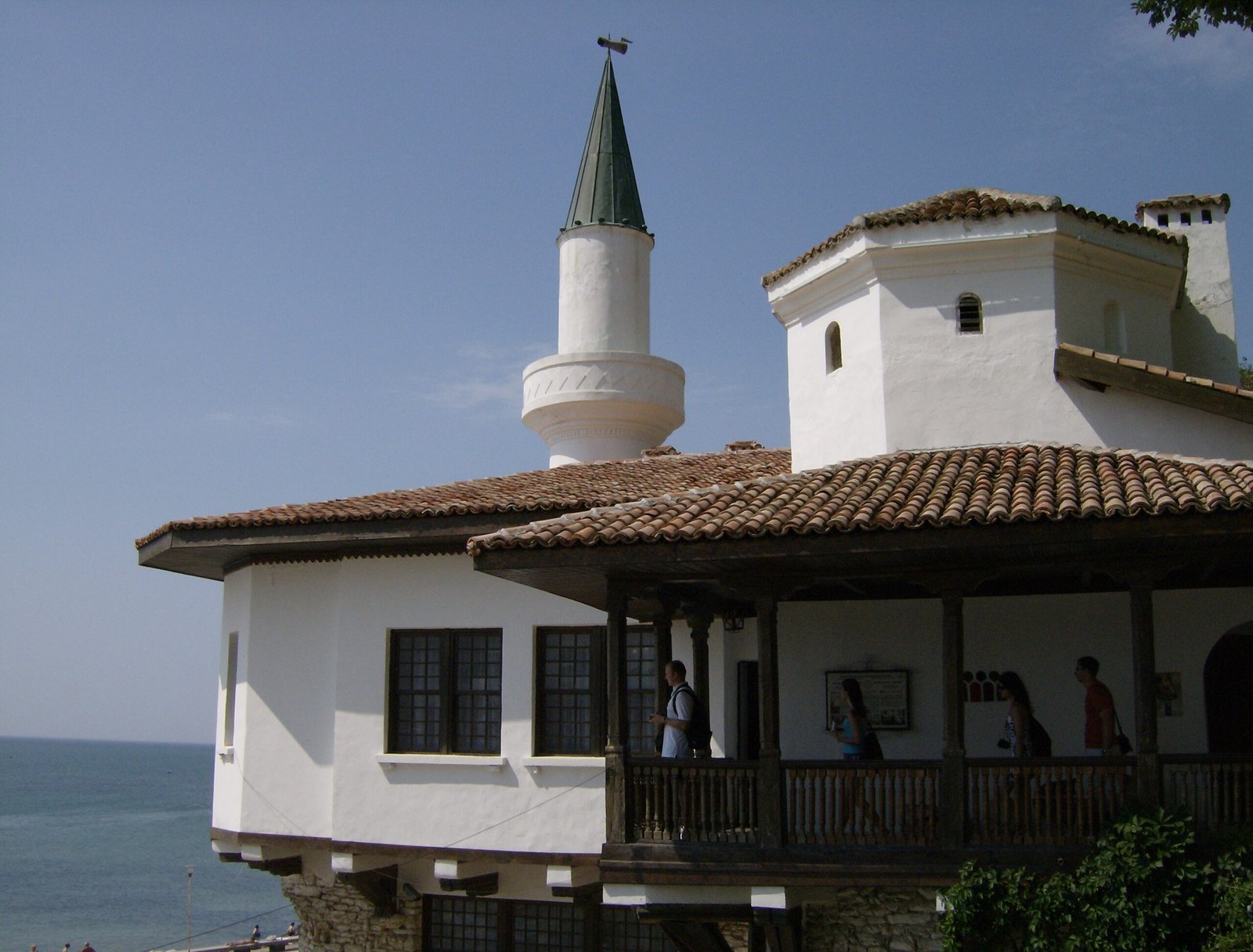
A seaside royal residence blending Bulgarian, Romanian, and Ottoman architectural traditions, built as Queen Marie’s summer retreat on the Black Sea coast.
At a glance
The Balchik Palace, known as the Quiet Nest, stands in northeastern Bulgaria’s premier coastal resort town. Originally conceived as a summer residence for Queen Marie during the period when the region formed part of Romania, the palace complex extends far beyond its main building to encompass villas, gardens, chapels, and service structures across its grounds.
History
Construction began around 1924, gathering momentum from 1926 until its official completion in 1937. The palace emerged during a complex historical moment when territorial boundaries and royal allegiances shaped architectural ambitions along the Black Sea. The palace complex grew organically, with multiple structures added to support the royal household and its functions.
What you see
The palace synthesizes three architectural traditions into a cohesive whole. Bulgarian vernacular forms blend with Romanian palatial conventions and Ottoman Turkish decorative motifs, creating a distinctive aesthetic suited to its coastal setting. Beyond the palace itself, the sprawling complex includes residential villas, a smoking hall, wine cellar, and a functioning monastery featuring a holy spring and chapel. A botanical garden completes the ensemble, reflecting the estate’s ambitions as both residence and cultivated retreat.
Cultural significance
The palace remains central to Bulgaria’s cultural tourism, drawing visitors to the Black Sea coast despite scholarly controversies surrounding its origins and historical context. The site represents an important chapter in early twentieth-century royal architecture and the region’s complex multicultural heritage.
Key facts
- Location: Balchik, Dobrich Province, Bulgaria
- Coordinates: 43.40°N, 28.15°E
- Construction period: 1924–1937
- Original function: Royal summer residence
- Also known as: the Quiet Nest
Practical information & getting there
Balchik is accessible by road from Sofia and other major Bulgarian cities. The palace complex remains open to visitors as a key cultural and touristic attraction on the Bulgarian coast. Contact local tourism authorities or check opening hours before planning your visit.
Sources & resources
Find it on the map
See this place and what’s around it →📷 Become a Cultural Heritage Online photographer
Share your photos of places: they stay published under your name as the author. The more they're seen, the more you get noticed — and soon a contest will reward the most appreciated photos.
Log in or sign up free to add a photoIs this page about you?
This page is read by travellers and heritage enthusiasts who find it on Google. Tell us how you are connected to this place and we will take it from there.