
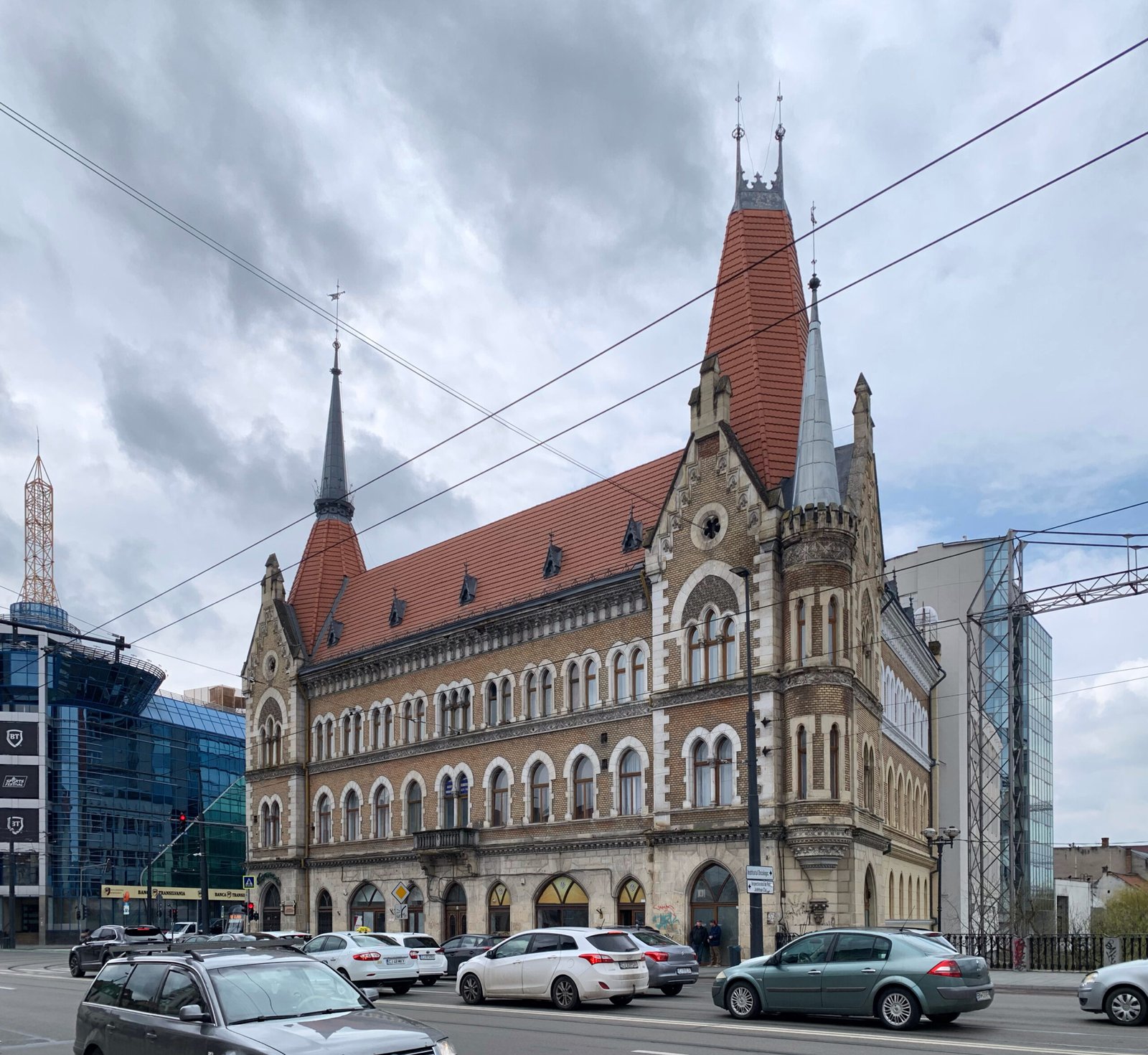
A Gothic Revival mansion on the Someşul Mic riverbank, built for a university teacher and pharmacist by one of Hungary’s foremost architects of the era.
At a glance
This yellow-brick palace represents the ambitions of Cluj-Napoca’s educated classes at the turn of the twentieth century. Its riverside location and architectural detail reflect both the owner’s status and the city’s cultural standing within the Austro-Hungarian Empire.
History
The palace was commissioned in 1893 by Miklós Széki, a university teacher and pharmacist of evident means and learning. The architect Samu Pecz, who had already established himself as a leading figure in Hungarian architectural practice, was selected to design the residence—a choice that signals Széki’s cultural aspirations and his network within the professional elite.
What you see
The building exemplifies Gothic Revival principles applied to domestic architecture. Its prominent siting on the Someşul Mic shore commands views of the river and the surrounding cityscape. Pecz employed distinctive stonework and ornamental detail characteristic of his style, creating a composition that balances romanticism with structural clarity.
Cultural significance
The Széki Palace is one of Cluj-Napoca’s surviving monuments to the urban expansion and architectural confidence of the late Austro-Hungarian period. It documents both the tastes of an educated professional class and the reach of Hungarian architects into Transylvania during this transformative era.
Key facts
- Country: Romania
- City: Cluj-Napoca
- Completed: 1893
- Architect: Samu Pecz
- Original owner: Miklós Széki, university teacher and pharmacist
- Style: Gothic Revival
- Status: Historic monument (classified by the Romanian Ministry of Culture)
- Coordinates: 46.773727, 23.587767
Practical information & getting there
The palace stands on the Someşul Mic riverbank in Cluj-Napoca, accessible via public transport and city roads. As a classified historic monument, it may have restricted visiting hours; consult local tourism information before planning a visit. The riverside setting makes it suitable for architectural walks through the city’s heritage districts.
Sources & resources
Find it on the map
See this place and what’s around it →📷 Become a Cultural Heritage Online photographer
Share your photos of places: they stay published under your name as the author. The more they're seen, the more you get noticed — and soon a contest will reward the most appreciated photos.
Log in or sign up free to add a photoIs this page about you?
This page is read by travellers and heritage enthusiasts who find it on Google. Tell us how you are connected to this place and we will take it from there.