
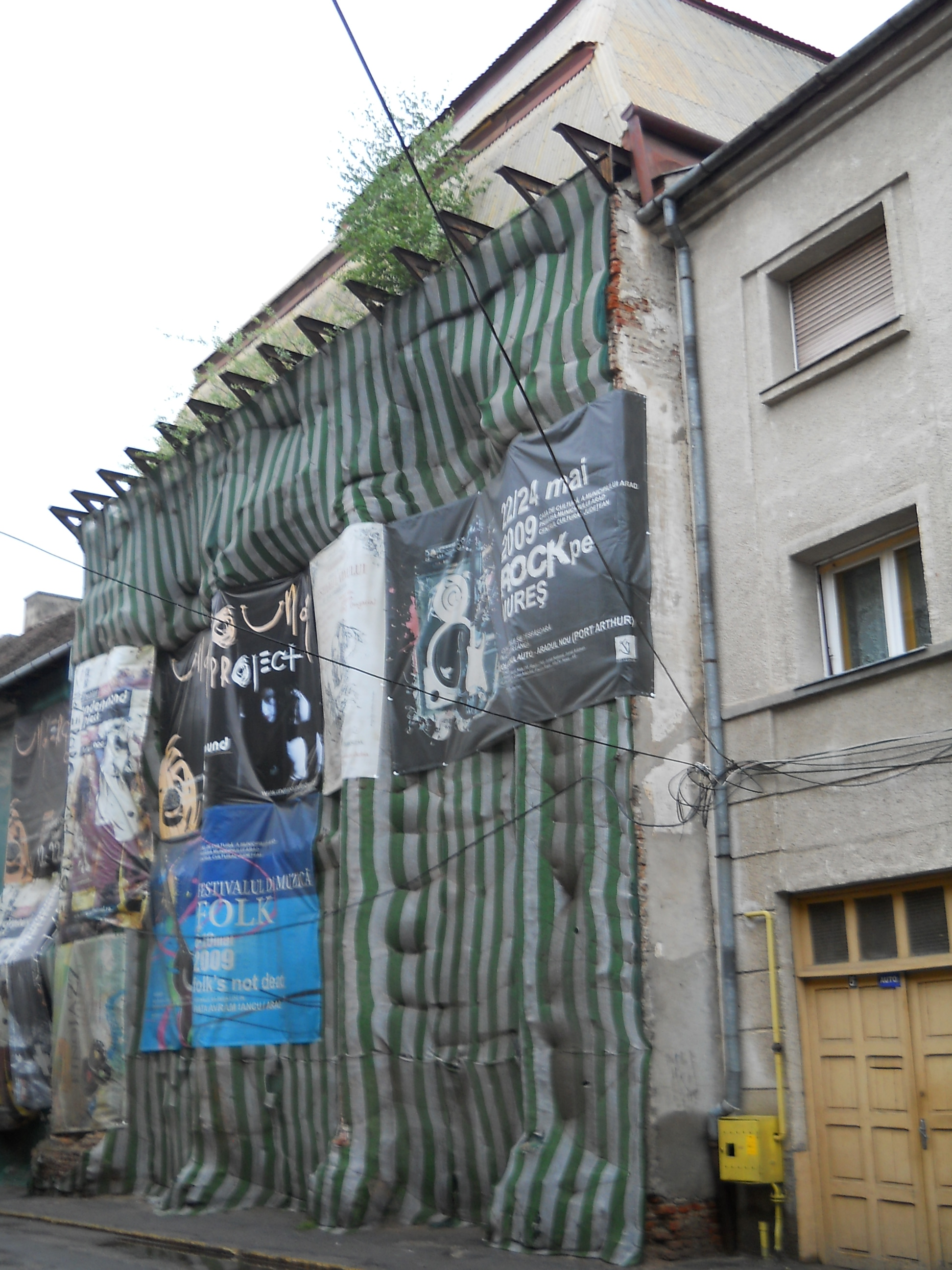
Romania’s first permanent theatre building stands as a landmark of cultural ambition in early 19th-century Arad, where performance and civic identity took architectural form.
At a glance
Built in 1817, the Old Theatre of Arad (also known as the Hirschl Theatre) occupies Gheorghe Lazăr Street in Arad municipality. It holds distinction as Romania’s first purpose-built permanent theatre—a status that reflects the city’s economic prosperity and intellectual life during the Austro-Hungarian period.
History
Constructed in 1817, the theatre emerged during a period when Arad was a significant commercial and administrative centre. The building’s creation marked a turning point in Romanian cultural infrastructure, replacing temporary performance spaces with a dedicated venue designed for theatrical productions.
What you see
The theatre building survives as a declared historical monument. Its architectural character reflects early 19th-century Central European design conventions adapted for a provincial Romanian city, though specific structural details require on-site inspection.
Cultural significance
As Romania’s first permanent theatre building, the Old Theatre of Arad represents a foundational moment in the country’s institutional cultural development. It signifies how prosperous provincial towns invested in permanent structures for drama, music and civic gatherings—tangible expressions of modernity and Enlightenment values.
Key facts
- Country: Romania
- City: Arad
- Built: 1817
- Alternative name: Hirschl Theatre
- Coordinates: 46.17544444, 21.31916667
- Status: Declared historical monument
Practical information & getting there
The theatre is located on Gheorghe Lazăr Street in Arad municipality. For current opening hours, performance schedules and visitor access, contact local tourist information in Arad.
Sources & resources
Find it on the map
See this place and what’s around it →📷 Become a Cultural Heritage Online photographer
Share your photos of places: they stay published under your name as the author. The more they're seen, the more you get noticed — and soon a contest will reward the most appreciated photos.
Log in or sign up free to add a photoIs this page about you?
This page is read by travellers and heritage enthusiasts who find it on Google. Tell us how you are connected to this place and we will take it from there.