

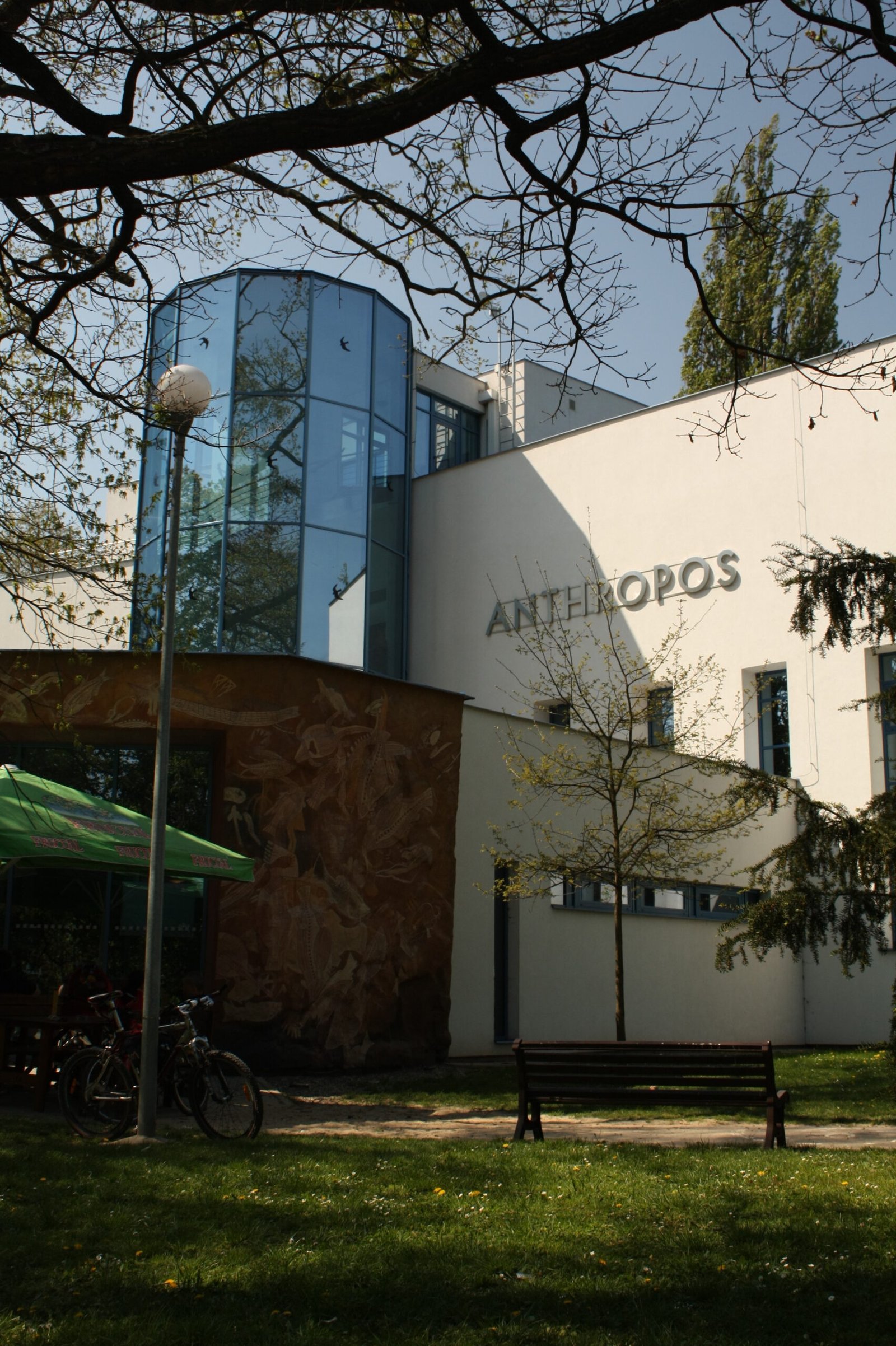
A museum devoted to Europe’s oldest cultures and the art of our earliest ancestors, housing rare Paleolithic sculptures rarely seen outside their countries of origin.
At a glance
Anthropos Pavilion—its name derived from the Greek word for human—forms part of the Moravian Museum in Brno. The museum specializes in exhibitions tracing the deep history of mankind through art and material culture spanning from the Paleolithic era onward.
History
The pavilion operates as a dedicated section within the Moravian Museum, an institution preserving the cultural heritage of South Moravia. Its curatorial focus centers on Europe’s earliest civilizations and the artistic achievements of prehistoric peoples.
What you see
The museum presents exhibitions of Paleolithic art and artifacts. In 2009, it mounted a landmark show featuring major works from the Stone Age, including the Venus of Willendorf—displayed outside Austria for the first time—alongside the Venus of Dolní Věstonice, both among humanity’s oldest sculptural traditions.
Cultural significance
These small carved figurines represent some of the oldest known artistic expression in Europe, dating back tens of thousands of years. The Anthropos Pavilion’s role in exhibiting such works internationally underscores their importance to understanding human creativity and cultural development.
Key facts
- Location: Brno, South Moravia, Czechia
- Coordinates: 49.19194444, 16.56694444
- Part of the Moravian Museum
- Focus: Paleolithic art and early human history
Practical information & getting there
The Anthropos Pavilion is integrated into the Moravian Museum in Brno. For visiting hours, admission fees, and current exhibitions, consult the museum’s official website.
Sources & resources
Find it on the map
See this place and what’s around it →📷 Become a Cultural Heritage Online photographer
Share your photos of places: they stay published under your name as the author. The more they're seen, the more you get noticed — and soon a contest will reward the most appreciated photos.
Log in or sign up free to add a photoIs this page about you?
This page is read by travellers and heritage enthusiasts who find it on Google. Tell us how you are connected to this place and we will take it from there.