
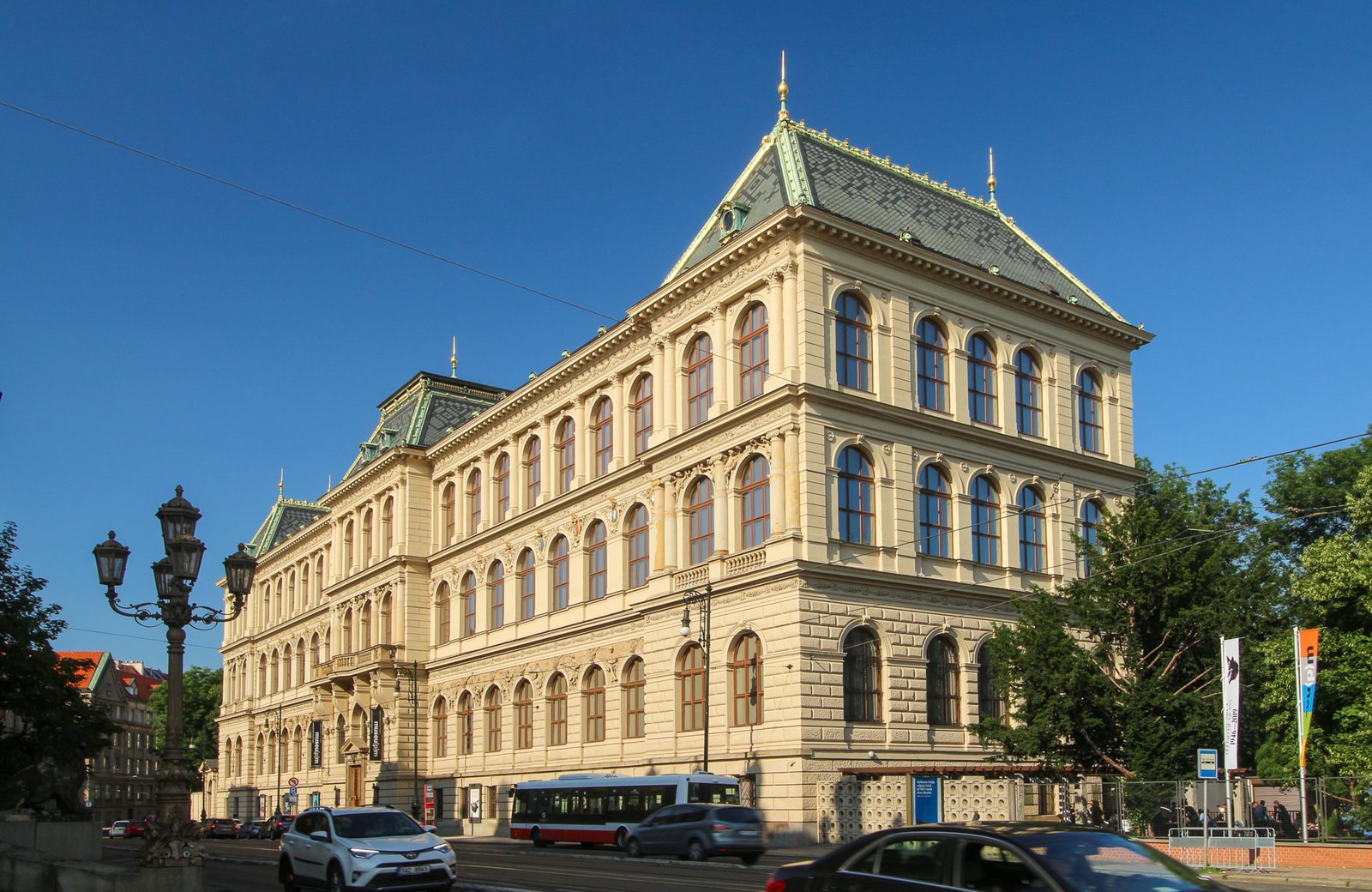
A Neo-Renaissance palace devoted to the decorative and applied arts, from Roman glass to contemporary design, with particular emphasis on the cultural heritage of the Bohemian lands.
At a glance
The Museum of Decorative Arts in Prague houses one of Europe’s finest collections of decorative and applied arts spanning from Late Antiquity to today. Its permanent exhibition, “Stories of Materials,” traces the evolution of craftsmanship through glass, ceramics, metalwork, wood, textiles and furniture, alongside jewellery, watches, toys and graphic design.
History
The institution was founded in 1885, establishing itself as a centre for the study and celebration of applied arts during the Czech National Revival. The museum’s Neo-Renaissance building was constructed between 1897 and 1899 according to designs by architect Josef Schulz. It opened to the public in 1900 with exhibitions occupying the first floor, reflecting Prague’s growing ambition as a cultural capital in the late Habsburg period.
What you see
The building’s Neo-Renaissance façade and interior spaces reflect turn-of-the-century Prague design principles. The permanent exhibition galleries guide visitors through centuries of European decorative tradition, organised thematically by material and object type—each section illuminating the technical and aesthetic developments that shaped domestic and luxury arts across centuries.
Cultural significance
The museum serves as a repository of Bohemian artistic achievement and broader European decorative traditions. Its comprehensive approach to craft history—treating ceramics, textiles, glass and metalwork with equal scholarly weight—reflects modern museum philosophy that values functional beauty alongside fine art.
Key facts
- Founded: 1885
- Building completed: 1900
- Architect: Josef Schulz
- Country: Czechia
- City: Prague
- Coordinates: 50.08972222, 14.41638889
Practical information & getting there
The museum is centrally located in Prague’s Old Town. For current opening hours, admission fees and visitor information, consult the museum’s official website or contact them directly before your visit.
Sources & resources
Find it on the map
See this place and what’s around it →📷 Become a Cultural Heritage Online photographer
Share your photos of places: they stay published under your name as the author. The more they're seen, the more you get noticed — and soon a contest will reward the most appreciated photos.
Log in or sign up free to add a photoDo you manage this place?
This page is read by travellers and heritage enthusiasts who find it on Google. Keep it accurate — and make it work for you. Free for non-profit heritage institutions.