
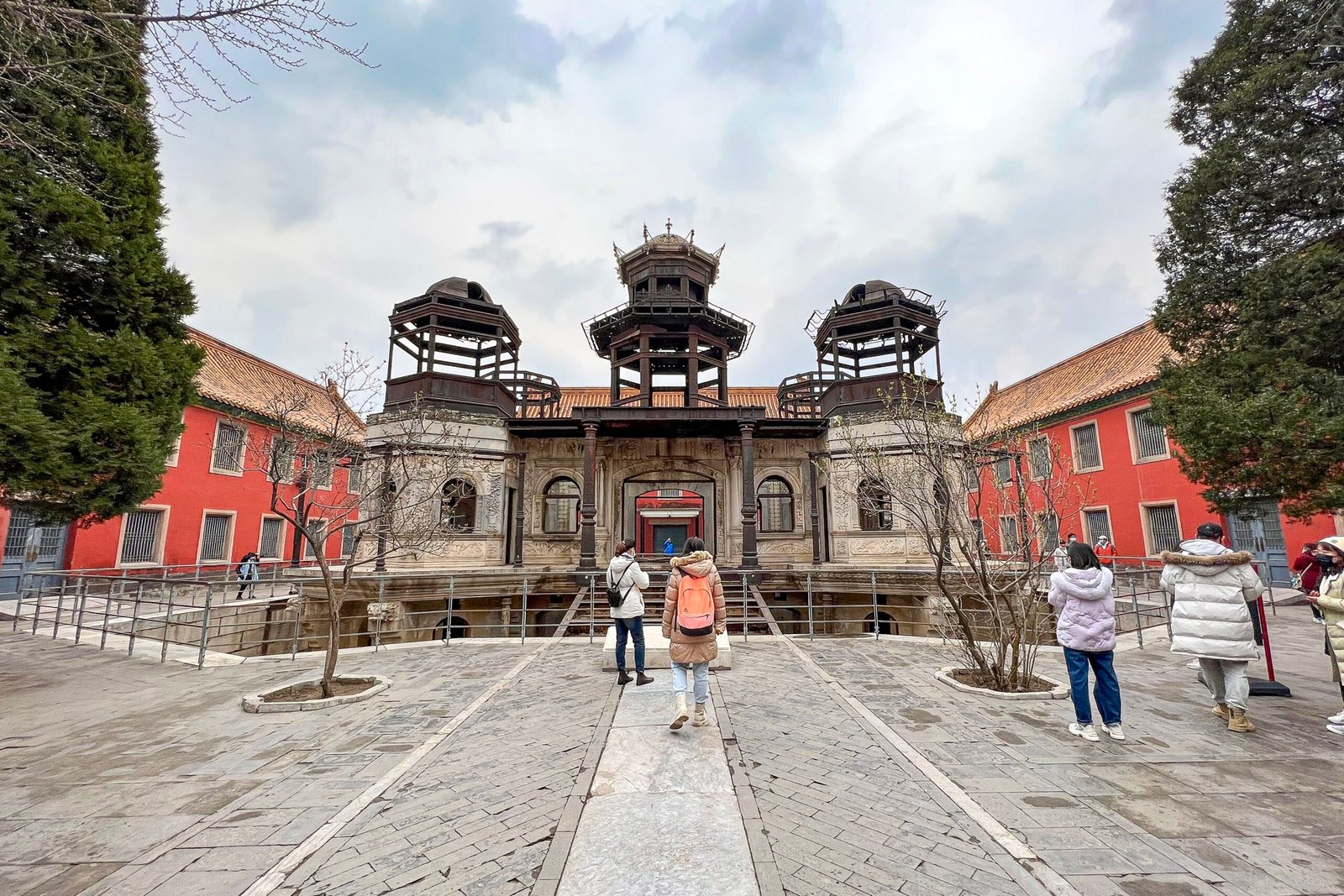
One of the Six Eastern Palaces within the Forbidden City’s inner court, located behind the Hall for Ancestral Worship.
At a glance
The Palace of Prolonging Happiness (延禧宫; Yánxǐgōng), known colloquially as Yanxi Palace, occupies a significant position within the imperial residence’s eastern precinct. Its name reflects classical Chinese aspirations for longevity and contentment—qualities central to imperial ideology.
History
This palace forms part of the Six Eastern Palaces, a cluster of residential and ceremonial structures reserved for imperial consorts and concubines. Positioned directly behind the Hall for Ancestral Worship, it maintained both practical and symbolic proximity to the court’s most sacred ritual spaces.
What you see
The palace exemplifies the architectural standards of the Forbidden City’s inner quarters. Its placement and design reflect the strict hierarchical organization that governed imperial domestic space.
Cultural significance
The Palace of Prolonging Happiness represents the complex domestic arrangements of the imperial court. As one of six symmetrically planned eastern palaces, it illustrates how Chinese imperial architecture encoded social rank, religious observance, and administrative function within a single compound.
Key facts
- Country: China
- Location: Forbidden City, Beijing
- Coordinates: 39.91887, 116.39241
- One of the Six Eastern Palaces
Practical information & getting there
The Palace of Prolonging Happiness is accessed as part of visits to the Forbidden City. Consult current opening hours and admission information before planning your visit.
Sources & resources
Find it on the map
See this place and what’s around it →📷 Become a Cultural Heritage Online photographer
Share your photos of places: they stay published under your name as the author. The more they're seen, the more you get noticed — and soon a contest will reward the most appreciated photos.
Log in or sign up free to add a photoIs this page about you?
This page is read by travellers and heritage enthusiasts who find it on Google. Tell us how you are connected to this place and we will take it from there.